
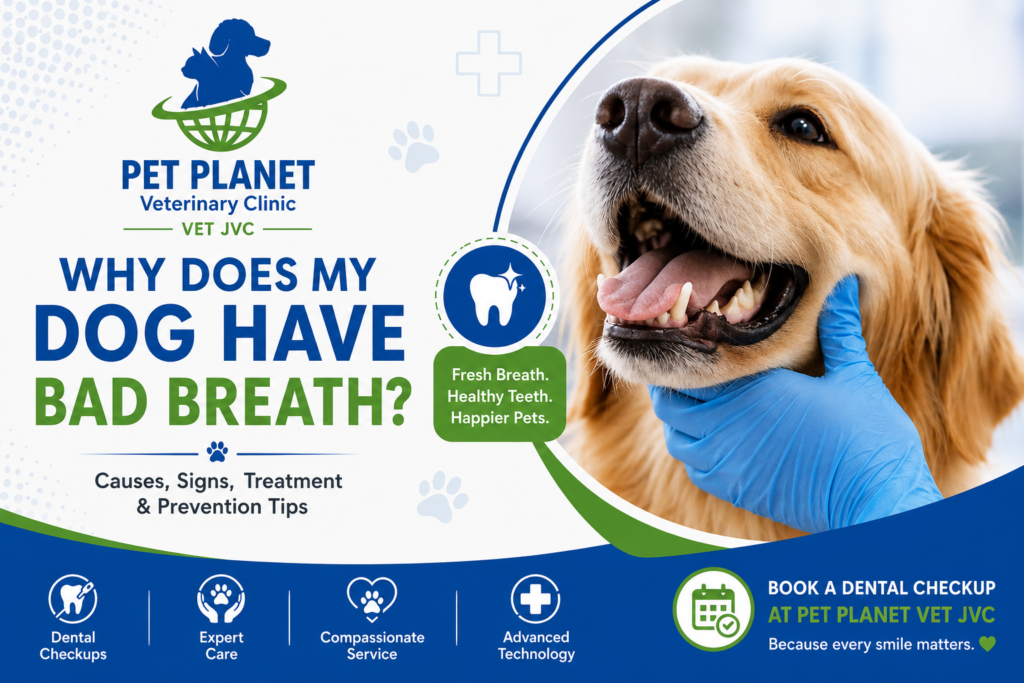
Many dog owners notice unpleasant odors coming from their dog’s mouth at some point. While mild “dog breath” can be normal occasionally, persistent bad breath is often a sign that something is wrong with your pet’s oral health or overall wellbeing. In many cases, bad breath in dogs is linked to dental disease, gum infections, plaque buildup, or even underlying medical conditions.
At Pet Planet Veterinary Clinic – VET JVC, we regularly help pet owners identify the causes of bad breath in dogs and provide professional dental care to improve their pet’s health, comfort, and quality of life.
In this guide, we’ll explain the most common causes of bad breath in dogs, when you should be concerned, and how professional veterinary dental care can help.
Is Bad Breath in Dogs Normal?
Occasional mild odor from your dog’s mouth may not always be a serious issue. For example, after eating certain foods or first thing in the morning, a slight smell can occur naturally. However, strong, persistent, or foul-smelling breath is usually not normal.
Healthy dogs should not have severely unpleasant breath. If your dog’s breath smells rotten, fishy, metallic, or unusually strong, it could indicate dental disease, infection, or an underlying health condition that requires veterinary attention.
Common Causes of Bad Breath in Dogs
Poor Dental Hygiene
The most common reason dogs develop bad breath is poor oral hygiene. Food particles, bacteria, and saliva combine to form plaque on the teeth. Over time, plaque hardens into tartar, which creates a strong odor and increases the risk of gum disease.
Without regular dental care, bacteria continue to multiply inside the mouth, causing persistent bad breath and inflammation.
Common signs include:
- Yellow or brown tartar buildup
- Red gums
- Difficulty chewing
- Mouth sensitivity
- Excessive drooling
Regular brushing and professional dental cleanings are essential for maintaining canine oral health.
Periodontal Disease
Periodontal disease is one of the leading causes of bad breath in dogs. This condition affects the gums and supporting structures around the teeth.
As bacteria spread beneath the gumline, infection and inflammation develop. If left untreated, periodontal disease can lead to:
- Bleeding gums
- Tooth loss
- Oral pain
- Bone damage
- Severe infection
Many dogs silently suffer from dental pain without obvious symptoms, which is why regular veterinary dental checkups are extremely important.
At Pet Planet Veterinary Clinic – VET JVC, our veterinary team performs comprehensive oral examinations to detect early signs of dental disease before they become severe.
Tooth Decay or Broken Teeth
Broken teeth, tooth fractures, or decayed teeth can expose sensitive nerves and create infections inside the mouth. These infections often produce a rotten or extremely foul odor.
Dogs that chew hard objects such as bones, rocks, or hard toys are more likely to develop dental fractures.
Signs may include:
- Pawing at the mouth
- Difficulty eating
- Swelling around the face
- Bleeding from the mouth
- Sudden refusal to chew food
Prompt veterinary treatment is necessary to prevent worsening infection and pain.
Something Stuck in the Mouth
Sometimes bad breath occurs because a foreign object becomes trapped between the teeth or gums. Sticks, bones, hair, food debris, or fabric fibers can remain lodged inside the mouth and cause bacterial growth.
This can lead to:
- Gum irritation
- Infection
- Swelling
- Mouth ulcers
- Severe odor
A professional oral examination can identify hidden debris that may not be visible at home.
Digestive Problems
In some cases, bad breath may originate from digestive issues rather than the mouth itself. Gastrointestinal disorders, acid reflux, or stomach infections can contribute to unpleasant-smelling breath.
Dogs with digestive problems may also experience:
- Vomiting
- Appetite loss
- Diarrhea
- Excessive gas
- Weight changes
If dental disease is ruled out, veterinarians may investigate digestive health as a possible cause.
Kidney Disease
Kidney disease can cause a dog’s breath to smell like ammonia or urine. This occurs because toxins build up in the bloodstream when the kidneys are not functioning properly.
Additional symptoms may include:
- Increased thirst
- Frequent urination
- Weakness
- Weight loss
- Loss of appetite
Kidney disease is a serious medical condition that requires immediate veterinary evaluation.
Diabetes
Dogs with diabetes sometimes develop sweet-smelling or fruity breath due to ketone buildup in the body.
Other signs of diabetes include:
- Excessive thirst
- Frequent urination
- Weight loss
- Increased hunger
- Fatigue
If your dog’s breath suddenly changes and is accompanied by these symptoms, it is important to seek veterinary care promptly.
Liver Disease
Liver problems may also contribute to unusual breath odors. Dogs with liver disease can develop musty or foul-smelling breath along with symptoms such as:
- Vomiting
- Yellow gums or eyes
- Appetite loss
- Lethargy
- Weight loss
A veterinary examination and blood testing can help diagnose underlying systemic diseases.
Why Does My Dog’s Breath Smell Like Fish?
Fishy-smelling breath in dogs is commonly associated with:
- Dental infections
- Severe tartar buildup
- Gum disease
- Anal gland issues
- Bacterial overgrowth
Sometimes dogs lick their anal area excessively, transferring odor-causing bacteria into the mouth. However, persistent fishy breath should still be professionally evaluated to rule out oral disease.
Why Does My Puppy Have Bad Breath?
Puppies can also experience bad breath, especially during the teething stage. As baby teeth fall out and adult teeth emerge, mild odor may temporarily occur.
However, severe bad breath in puppies can indicate:
- Retained baby teeth
- Oral infections
- Gum inflammation
- Foreign objects in the mouth
Routine veterinary dental examinations help ensure healthy tooth development in young dogs.
Signs Your Dog Needs a Veterinary Dental Checkup
You should schedule a dental evaluation if your dog shows any of the following symptoms:
- Persistent bad breath
- Bleeding gums
- Swollen or red gums
- Loose teeth
- Difficulty chewing
- Drooling excessively
- Facial swelling
- Tooth discoloration
- Pawing at the mouth
- Sudden appetite changes
Early treatment can prevent more serious dental complications and improve your dog’s comfort.
How Veterinarians Diagnose Bad Breath in Dogs
At Pet Planet Veterinary Clinic – VET JVC, diagnosing bad breath begins with a thorough oral and physical examination.
Our veterinary team may recommend:
- Oral health assessment
- Dental X-rays
- Blood tests
- Gum examination
- Infection screening
- Evaluation for systemic diseases
Dental X-rays are especially important because many dental problems develop below the gumline where they cannot be seen visually.
How to Treat Bad Breath in Dogs
Professional Dental Cleaning
Professional dental cleaning is one of the most effective ways to treat bad breath caused by plaque and tartar buildup.
A veterinary dental cleaning typically includes:
- Scaling and tartar removal
- Cleaning below the gumline
- Tooth polishing
- Oral examination
- Dental X-rays if necessary
Professional cleanings help remove bacteria and reduce the risk of periodontal disease.
At-Home Dental Care
Maintaining good oral hygiene at home is essential for preventing future dental issues.
Helpful dental care practices include:
- Brushing your dog’s teeth regularly
- Using veterinary-approved toothpaste
- Offering dental chews
- Providing oral rinses or water additives
- Scheduling routine dental exams
Consistency is key for maintaining healthy teeth and fresh breath.
Improving Diet and Nutrition
A balanced diet can also support better oral health. Certain dental diets and treats are specifically designed to reduce plaque accumulation and improve breath freshness.
Fresh water and proper hydration also help reduce bacterial buildup in the mouth.
Treating Underlying Medical Conditions
If bad breath is caused by kidney disease, diabetes, liver disease, or digestive disorders, treatment will focus on managing the underlying health condition.
Early diagnosis can significantly improve outcomes and your dog’s overall quality of life.
How to Prevent Bad Breath in Dogs
Preventive dental care is the best way to avoid bad breath and serious oral disease.
Here are some important prevention tips:
- Brush your dog’s teeth regularly
- Schedule annual dental examinations
- Use dental chews and oral care products
- Avoid giving unsafe chew objects
- Monitor for changes in breath odor
- Seek veterinary care early
Routine preventive care can help your dog maintain healthy teeth for years to come.
When Should You Be Concerned About Dog Bad Breath?
You should seek veterinary attention immediately if bad breath is accompanied by:
- Bleeding from the mouth
- Facial swelling
- Refusal to eat
- Vomiting
- Severe lethargy
- Sudden worsening odor
- Loose teeth
- Excessive drooling
These signs may indicate advanced dental disease or a serious underlying medical issue.
Frequently Asked Questions
Is bad breath in dogs always caused by dental disease?
No. While dental disease is the most common cause, bad breath can also result from kidney disease, diabetes, digestive problems, or oral infections.
Can bad breath in dogs go away on its own?
Mild temporary odor may improve, but persistent bad breath usually requires dental care or veterinary evaluation.
How often should dogs get professional dental cleanings?
Most dogs benefit from annual dental cleanings, although some may require more frequent care depending on their oral health.
Are dental chews enough to clean dog teeth?
Dental chews can help reduce plaque, but they should not replace regular brushing and professional dental cleanings.
Why does my dog’s breath smell rotten?
Rotten-smelling breath often indicates severe plaque buildup, gum disease, infection, or tooth decay.
Can puppies have bad breath?
Yes. Mild bad breath can occur during teething, but severe odor should be evaluated by a veterinarian.