

Dog’s Breath Smells Bad

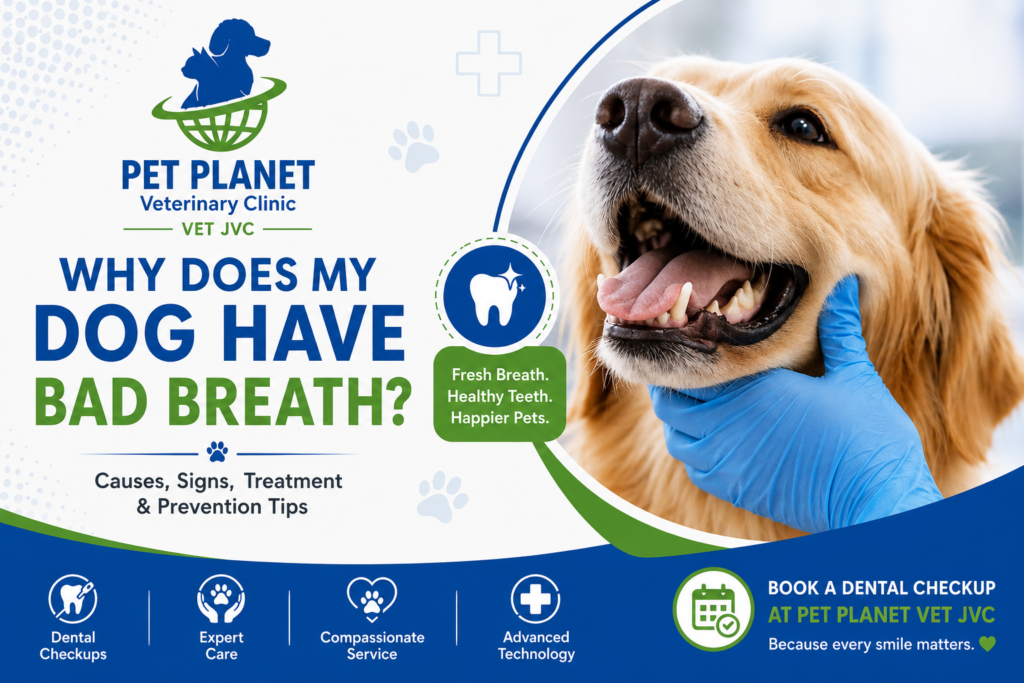
Why Does My Dog Have Bad Breath?

Many dog owners notice unpleasant odors coming from their dog’s mouth at some point. While mild “dog breath” can be normal occasionally, persistent bad breath is often a sign that something is wrong with your pet’s oral health or overall wellbeing. In many cases, bad breath in dogs is linked to dental disease, gum infections, plaque buildup, or even underlying medical conditions. At Pet Planet Veterinary Clinic – VET JVC, we regularly help pet owners identify the causes of bad breath in dogs and provide professional dental care to improve their pet’s health, comfort, and quality of life. In this guide, we’ll explain the most common causes of bad breath in dogs, when you should be concerned, and how professional veterinary dental care can help. Is Bad Breath in Dogs Normal? Occasional mild odor from your dog’s mouth may not always be a serious issue. For example, after eating certain foods or first thing in the morning, a slight smell can occur naturally. However, strong, persistent, or foul-smelling breath is usually not normal. Healthy dogs should not have severely unpleasant breath. If your dog’s breath smells rotten, fishy, metallic, or unusually strong, it could indicate dental disease, infection, or an underlying health condition that requires veterinary attention. Common Causes of Bad Breath in Dogs Poor Dental Hygiene The most common reason dogs develop bad breath is poor oral hygiene. Food particles, bacteria, and saliva combine to form plaque on the teeth. Over time, plaque hardens into tartar, which creates a strong odor and increases the risk of gum disease. Without regular dental care, bacteria continue to multiply inside the mouth, causing persistent bad breath and inflammation. Common signs include: Yellow or brown tartar buildup Red gums Difficulty chewing Mouth sensitivity Excessive drooling Regular brushing and professional dental cleanings are essential for maintaining canine oral health. Periodontal Disease Periodontal disease is one of the leading causes of bad breath in dogs. This condition affects the gums and supporting structures around the teeth. As bacteria spread beneath the gumline, infection and inflammation develop. If left untreated, periodontal disease can lead to: Bleeding gums Tooth loss Oral pain Bone damage Severe infection Many dogs silently suffer from dental pain without obvious symptoms, which is why regular veterinary dental checkups are extremely important. At Pet Planet Veterinary Clinic – VET JVC, our veterinary team performs comprehensive oral examinations to detect early signs of dental disease before they become severe. Tooth Decay or Broken Teeth Broken teeth, tooth fractures, or decayed teeth can expose sensitive nerves and create infections inside the mouth. These infections often produce a rotten or extremely foul odor. Dogs that chew hard objects such as bones, rocks, or hard toys are more likely to develop dental fractures. Signs may include: Pawing at the mouth Difficulty eating Swelling around the face Bleeding from the mouth Sudden refusal to chew food Prompt veterinary treatment is necessary to prevent worsening infection and pain. Something Stuck in the Mouth Sometimes bad breath occurs because a foreign object becomes trapped between the teeth or gums. Sticks, bones, hair, food debris, or fabric fibers can remain lodged inside the mouth and cause bacterial growth. This can lead to: Gum irritation Infection Swelling Mouth ulcers Severe odor A professional oral examination can identify hidden debris that may not be visible at home. Digestive Problems In some cases, bad breath may originate from digestive issues rather than the mouth itself. Gastrointestinal disorders, acid reflux, or stomach infections can contribute to unpleasant-smelling breath. Dogs with digestive problems may also experience: Vomiting Appetite loss Diarrhea Excessive gas Weight changes If dental disease is ruled out, veterinarians may investigate digestive health as a possible cause. Kidney Disease Kidney disease can cause a dog’s breath to smell like ammonia or urine. This occurs because toxins build up in the bloodstream when the kidneys are not functioning properly. Additional symptoms may include: Increased thirst Frequent urination Weakness Weight loss Loss of appetite Kidney disease is a serious medical condition that requires immediate veterinary evaluation. Diabetes Dogs with diabetes sometimes develop sweet-smelling or fruity breath due to ketone buildup in the body. Other signs of diabetes include: Excessive thirst Frequent urination Weight loss Increased hunger Fatigue If your dog’s breath suddenly changes and is accompanied by these symptoms, it is important to seek veterinary care promptly. Liver Disease Liver problems may also contribute to unusual breath odors. Dogs with liver disease can develop musty or foul-smelling breath along with symptoms such as: Vomiting Yellow gums or eyes Appetite loss Lethargy Weight loss A veterinary examination and blood testing can help diagnose underlying systemic diseases. Why Does My Dog’s Breath Smell Like Fish? Fishy-smelling breath in dogs is commonly associated with: Dental infections Severe tartar buildup Gum disease Anal gland issues Bacterial overgrowth Sometimes dogs lick their anal area excessively, transferring odor-causing bacteria into the mouth. However, persistent fishy breath should still be professionally evaluated to rule out oral disease. Why Does My Puppy Have Bad Breath? Puppies can also experience bad breath, especially during the teething stage. As baby teeth fall out and adult teeth emerge, mild odor may temporarily occur. However, severe bad breath in puppies can indicate: Retained baby teeth Oral infections Gum inflammation Foreign objects in the mouth Routine veterinary dental examinations help ensure healthy tooth development in young dogs. Signs Your Dog Needs a Veterinary Dental Checkup You should schedule a dental evaluation if your dog shows any of the following symptoms: Persistent bad breath Bleeding gums Swollen or red gums Loose teeth Difficulty chewing Drooling excessively Facial swelling Tooth discoloration Pawing at the mouth Sudden appetite changes Early treatment can prevent more serious dental complications and improve your dog’s comfort. How Veterinarians Diagnose Bad Breath in Dogs At Pet Planet Veterinary Clinic – VET JVC, diagnosing bad breath begins with a thorough oral and physical examination. Our veterinary team may recommend: Oral health assessment Dental X-rays Blood tests Gum examination Infection screening Evaluation for systemic diseases Dental X-rays are

Why Does My Dog Have Bad Breath? Read More »

🏡 Dental Care at Home

Why Dental Health Is Essential for Pets in Dubai When thinking about pet health, most owners focus on vaccinations, nutrition, and exercise. But one of the most common diseases in dogs and cats is dental disease  and it can silently affect their heart, kidneys, and overall well-being. At Pet Planet Veterinary Clinic in Dubai, we believe prevention is always better than cure. Let’s explore how to keep your pet’s teeth clean and healthy. 🏡 At-Home Dental Care for Dogs and Cats Brushing Your Pet’s Teeth https://youtube.com/shorts/RlD93CtUtM4?feature=share The gold standard of dental care is daily tooth brushing using pet-safe toothpaste (never human toothpaste). Flavours like poultry or fish make it more enjoyable for pets. 💡 Dr Abdelwahab’s Tip: Hold the brush at a 45° angle and focus on the outer surfaces of the upper molars, where tartar builds up the most.

🏡 Dental Care at Home Read More »

Worm Protection for Pets in Dubai

At Pet Planet Veterinary Clinic, Dubai’s leading veterinary care provider, we’ve helped over 5,000 pets overcome dangerous worm infestations. Our veterinary team, led by Dr Abdelwahab, shares this comprehensive guide to protect your furry family members.     Section 1: Dubai’s Most Common Pet Worms 1. Roundworms (Toxocara) Dubai Prevalence: 62% of puppies affected Risk Areas: Parks, beaches, and shared pet spaces Pet Planet’s Detection Method: Advanced fecal PCR testing 2. Tapeworms Hotspots: Jumeirah, Marina, and communities with stray cats Unique Risk: Flea transmission is 3x higher in coastal areas 3. Heartworms Dubai Alert: 30% increase in cases since 2022 Critical Prevention: Monthly chewables (ask about our ProHeart® program) Section 2: Warning Signs Every Dubai Pet Owner Should Know 🆘 Emergency Symptoms Coffee-ground vomit Sudden weight loss >10% Lethargy lasting >24 hours Section 3: Pet Planet’s Proven Protection Plan For Puppies/Kittens First deworming at 2 weeks Monthly treatments until 6 months Complimentary fecal exam at 12 weeks For Adult Pets Basic Protection: Quarterly treatments (AED 120/session) Premium Protection: Our VIP Wellness Package includes: Biannual faecal tests Flea/tick prevention 15% discount on all medications Section 4: Why Dubai Chooses Pet Planet Veterinary Clinic Our Advanced Services DNA-based worm detection Weight-adjusted dosing Multilingual veterinary staff

Worm Protection for Pets in Dubai Read More »

🚫 Forbidden Foods for Dogs & Cats

A Quick Guide for Pet OwnersPrepared by Dr. Abdel Wahab     ⚠️ Toxic Foods List 1. Chocolate Toxic to: Dogs & Cats Harmful ingredient: Theobromine & caffeine Dangers: Vomiting, diarrhea, seizures, death 2. Onions, Garlic, Leeks, Chives (Allium family) Toxic to: Dogs & Cats Form: Raw, cooked, powdered Dangers: Anemia, pale gums, weakness 3. Grapes & Raisins Toxic to: Mainly Dogs Dangers: Kidney failure, vomiting, lethargy 4. Xylitol (Artificial Sweetener) Toxic to: Dogs Found in: Sugar-free gum, candy, peanut butter, toothpaste Dangers: Low blood sugar, liver failure, seizures 5. Alcohol & Raw Dough Toxic to: Dogs & Cats Dangers: Ethanol poisoning, bloating, tremors, coma 6. Caffeine (Coffee, Tea, Energy Drinks) Toxic to: Dogs & Cats Dangers: Rapid heart rate, restlessness, tremors, seizures 7. Cooked Bones Dangerous for: Dogs & Cats Dangers: Choking, digestive tract tears, blockages 8. Milk & Dairy Products Problematic for: Many adult pets Dangers: Diarrhea, bloating (due to lactose intolerance) 9. Fatty Meats, Skin & Grease Dangerous for: Dogs & Cats Dangers: Pancreatitis, vomiting, abdominal pain 10. Raw Meat, Eggs, or Fish (Without Vet Guidance) Risk: Bacteria (Salmonella, E. coli), nutrient deficiency Cats: Raw fish destroys thiamine → neurological issues ✅ Safe Foods for Humans in Small Quantities Plain cooked chicken or turkey (no seasoning) Carrot sticks or cucumber slices Apple slices (no seeds) Green beans Vet-approved treats 🧠 Final Tips Never give human food without checking safety first Avoid sharing sweets, sauces, or leftovers Keep all harmful foods out of reach Read ingredient labels carefully

🚫 Forbidden Foods for Dogs & Cats Read More »

Why Your Pet’s Hair Won’t Grow Back

Prepared by Dr. Abdelwahab – Pet Planet Veterinary Clinic, JVC Dubai, UAE Grooming is essential for your pet’s hygiene, comfort, and overall well-being. However, if your dog or cat’s hair doesn’t grow back after grooming, it may indicate a deeper medical concern. At Pet Planet Veterinary Clinic, Dr. Abdelwahab sees this issue frequently and offers expert insight into why it happens and how to treat it. 🩺 1. Hormonal Imbalance According to Dr. Abdelwahab at Pet Planet Veterinary Clinic – JVC Dubai, conditions like hypothyroidism (low thyroid hormone levels) and Cushing’s disease can stop hair from growing back by disrupting the hair growth cycle. 🦠 2. Skin Infections Dr. Abdelwahab explains that fungal infections (like ringworm) or bacterial skin infections can damage hair follicles and lead to patchy or delayed regrowth. If your pet has been groomed recently and you notice bald patches, Pet Planet Veterinary Clinic recommends a skin examination to rule out infections. 🔄 3. Post-Clipping Alopecia This condition, also known as shaving syndrome, happens when hair doesn’t regrow after clipping. Dr. Abdelwahab notes that double-coated breeds like Huskies, Chow Chows, and Pomeranians are especially prone. Shaving these breeds too closely can shock the hair follicles, resulting in temporary or even permanent hair loss. Pet Planet Veterinary Clinic educates owners on the safest grooming techniques for such breeds. 🧬 4. Genetic Factors or Breed Predisposition Some dogs and cats may be genetically prone to hair regrowth issues. Dr. Abdelwahab has observed this particularly in breeds like Shih Tzus, Samoyeds, and Chow Chows at Pet Planet Veterinary Clinic – JVC Dubai. 🐾 5. Allergies or Autoimmune Diseases In rare cases, autoimmune conditions or chronic allergies can damage the hair follicles. Dr. Abdelwahab at Pet Planet Veterinary Clinic uses advanced diagnostics such as skin scrapings, biopsies, and allergy testing to identify and treat these cases effectively. ✅ What Should Pet Owners Do? If your pet’s hair hasn’t grown back within 6–8 weeks, it’s time to consult a veterinarian. Dr. Abdelwahab and the experienced team at Pet Planet Veterinary Clinic, JVC Dubai, UAE can perform thorough skin and hormonal assessments to find the root cause and recommend tailored treatments. 📞 Contact Dr. Abdelwahab TodayPet Planet Veterinary Clinic – JVC Dubai, UAE

Why Your Pet’s Hair Won’t Grow Back Read More »

Breed-Specific Dog Disease Tips 🐶

🐶 Breed-Related Diseases in Dogs – A Must-Read for Every Dog Owner   Written by DrAbdelwahab | Pet Planet Veterinary Clinic – JVC Dubai, UAE At Pet Planet Veterinary Clinic, we care not just for pets—but for pet parents too. One of the most important things dog owners can do is educate themselves about breed-related diseases. Many beloved breeds are genetically predisposed to specific health conditions. Early awareness can lead to early action—and a better quality of life for your dog. 🩺 1. Breathing Problems in Flat-Faced Breeds Affected breeds: Pugs, Bulldogs, Shih TzusThese brachycephalic breeds are adorable—but prone to brachycephalic obstructive airway syndrome (BOAS).Common signs: Loud snoring, even while awake Shortness of breath after minimal activity Overheating easily 🔎 Dr Abdelwahab’s Tip: Avoid walks in high heat and monitor for laboured breathing. At Pet Planet Veterinary Clinic, we can assess severity and recommend solutions, including surgical correction if needed. 🦴 2. Hip Dysplasia in Large Breeds Affected breeds: German Shepherds, Golden Retrievers, LabradorsThis condition affects the hip joint’s development, leading to pain and arthritis.Signs to notice: Trouble standing or climbing stairs Limping or stiffness Reduced activity levels 💡 Prevention by Dr Abdelwahab: Keep your dog at a healthy weight, avoid excessive jumping in puppies, and get screening done early at Pet Planet Veterinary Clinic in Dubai. 👁️ 3. Progressive Retinal Atrophy (PRA) Affected breeds: Cocker Spaniels, Dachshunds, PoodlesThis genetic eye disease leads to gradual vision loss and blindness.Watch for: Bumping into furniture Night blindness Large, glowing pupils 👁️ Pro Tip: While PRA has no cure, early diagnosis through genetic testing at Pet Planet Veterinary Clinic – JVC Dubai helps prepare a safer environment for your pet. ❤️ 4. Dilated Cardiomyopathy (DCM) Affected breeds: Dobermans, Great Danes, BoxersThis heart condition weakens the heart muscles and can lead to heart failure.Symptoms: Exercise intolerance Coughing or breathing difficulty Collapse or sudden death 🩺 Dr Abdelwahab recommends: Annual heart scans and ECGs, especially after age 3, can be life-saving. Visit Pet Planet Veterinary Clinic for early screening. 🧬 5. Von Willebrand’s Disease (vWD) Affected breeds: Dobermans, Shetland Sheepdogs, Golden RetrieversThis inherited bleeding disorder may go unnoticed until surgery or trauma.Signs include: Prolonged bleeding Nosebleeds Blood in urine or stool 🧪 At Pet Planet Veterinary Clinic, we perform pre-surgical screening and DNA tests to protect at-risk dogs. 🧠 6. Epilepsy in Popular Family Dogs Affected breeds: Beagles, Border Collies, Labrador RetrieversThis inherited neurological disorder causes recurrent seizures.Symptoms: Sudden, uncontrolled shaking Drooling or unconsciousness Confusion post-seizure 🧠 Dr Abdelwahab’s advice: Keep a seizure diary and bring your pet for a full neurological checkup at Pet Planet Veterinary Clinic – JVC Dubai. ✅ Final Word from Dr Abdelwahab As a veterinarian with over 13 years of experience, I’ve seen how early awareness and proactive care save lives. Your dog’s breed might be loveable, but it may come with hidden health risks. That’s why we at Pet Planet Veterinary Clinic are dedicated to educating pet owners and providing breed-specific care plans. 🐾 “Awareness is the first step to prevention. Let us help your pet live their healthiest life.” – Dr. Abdelwahab 📍 Visit Us or Book a Consultation Today Pet Planet Veterinary Clinic – JVC, Dubai, UAE📞 +971 54 267 6038

Breed-Specific Dog Disease Tips 🐶 Read More »

🐶 Dr. Abdelwahab’s Dog Training Secrets

Training your dog isn’t just about teaching commands—it’s about building a lifelong bond built on trust, respect, and communication. Whether you’re dealing with a mischievous puppy or a strong-willed adult, Dr Abdelwahab, experienced veterinarian at Pet Planet Veterinary Clinic, shares essential tips to turn your pet into a calm, confident, and obedient companion. 🧠 Why Dog Training Matters A well-trained dog is: Less anxious Safer around people and other animals Easier to care for (vet visits, grooming, walking) More confident and happier The earlier you start, the better—but it’s never too late to begin. ✅ Basic Training Principles Every Owner Should Follow 1. Be Consistent Dogs learn best when commands, routines, and rewards are consistent. Everyone in your household should use the same cues and rules. 2. Use Positive Reinforcement Reward the good, ignore the bad. Use treats, praise, and affection to encourage good behaviour. Never punish with fear—it causes stress and worsens behaviour. 3. Keep Training Sessions Short & Fun Train for 5–10 minutes at a time, a few times a day. End on a positive note, and always praise your dog’s effort. 4. Start with the Basics Teach core commands like: Sit Stay Come Down Leave it These commands improve safety and build trust. 🐾 Tips & Tricks from Dr Abdelwahab 🔹 Leash Training:If your dog pulls, stop walking. Wait until they come back or look at you—then move forward. This teaches them that pulling gets them nowhere. 🔹 Jumping on People:Ignore the dog until they calm down. Don’t push them away—it’s attention. Reward calm greetings. 🔹 Chewing on Furniture or Shoes:Redirect to chew toys. Rotate toys often to keep things interesting. Bitter sprays can discourage chewing. 🔹 Barking at Visitors:Teach the “quiet” command. Reward when your dog stays calm after someone enters. Ask visitors to ignore your dog until they settle. 🔹 Socialisation:Expose your dog gradually to new people, animals, sounds, and environments from a young age. This reduces fear and aggression later on. 🧩 Common Mistakes to Avoid ❌ Yelling or hitting your dog❌ Inconsistent rules❌ Expecting instant results❌ Skipping mental stimulation and exercise 💡 Pro Tip from Dr Abdelwahab: “Your dog doesn’t misbehave to annoy you—they’re either confused, anxious, or full of energy. Training is about communication, not control.” 📍 Need Help with Your Dog’s Behaviour? At Pet Planet Veterinary Clinic – JVC, Dubai, we offer behavioural consultations, customised training plans, and wellness care to support your dog’s development at every stage of life. 📞 Call or WhatsApp us at +971 54 267 6038 to book your visit.🐾 ⁣Let’s help your dog become the best version of themselves—together.

🐶 Dr. Abdelwahab’s Dog Training Secrets Read More »

🐾 Dr Abdelwahab’s Cat Training Secrets

By Pet Planet Veterinary Clinic – JVC Dubai, UAE📞 +971 54 267 6038 Training your cat might sound like an impossible task, but with the right approach, it’s not only achievable—it can strengthen the bond between you and your pet. At Pet Planet Veterinary Clinic JVC Dubai, Dr Abdelwahab shares tried-and-true feline training techniques that have helped hundreds of cat owners turn their kitties into confident, well-behaved companions. 🧠 1. Understand How Your Cat Thinks Cats are independent and curious and respond best to positive reinforcement. At Pet Planet Veterinary Clinic, we encourage cat parents to understand their pet’s unique personality to tailor training effectively. Whether your cat is playful, anxious, or assertive, patience and consistency are key. ✅ Tip from Dr. Abdelwahab: Never punish a cat. Negative reactions can damage trust and cause behavioral setbacks. 🍗 2. Use Rewards That Motivate Training works best when there’s a clear reward. Use your cat’s favourite treats or toys. At Pet Planet JVC, we often recommend clicker training to reinforce behaviours like “sit”, “high-five”, or even using the scratching post. 🧀 Use treats immediately after your cat responds correctly, so they link the behavior to the reward. 🧻 3. Master Litter Box Habits Improper litter box use is one of the most common complaints we see at Pet Planet Veterinary Clinic JVC Dubai. In most cases, the solution is environmental: Clean the box daily Use unscented, clumping litter Place the box in a quiet, low-traffic area 🚫 Avoid drastic changes or moving the box suddenly—cats dislike surprises! 🪵 4. Redirect Bad Behavior, Don’t Punish Scratching, biting, or jumping on counters can be managed with smart redirection. At Pet Planet, we teach owners to replace bad behaviour with acceptable alternatives: Offer scratching posts near favorite furniture End play when biting occurs Use cat-safe deterrents or training sprays for forbidden zones 🧴 We also offer calming pheromone products at our clinic to help anxious or aggressive cats. 🧠 5. Keep Their Mind Stimulated Cats need mental stimulation to stay happy. Behavioural problems often stem from boredom. At Pet Planet Veterinary Clinic, we advise owners to create enriching home environments with: Puzzle feeders Rotating toys Cat trees and vertical spaces Window views for birdwatching 🩺 6. Know When to Ask for Help Not all behaviour is training-related. Sometimes, a sudden change in behaviour signals an underlying health issue. At Pet Planet JVC, we provide complete behavioural consultations to rule out medical causes and design a custom training plan for your cat. 🐾 Book a behavior check-up with Dr. Abdelwahab if your cat suddenly becomes aggressive, stops using the litter box, or hides more than usual. 💬 Final Advice from Dr Abdelwahab “At Pet Planet Veterinary Clinic JVC Dubai, we believe training is not about control—it’s about communication. When you speak your cat’s language and respect their needs, you’ll have a pet that listens, trusts, and thrives.” 📍 Visit Us at Pet Planet Veterinary Clinic – JVC Dubai, UAE Prepared by Dr Abdelwahab📞 +971 54 267 6038

🐾 Dr Abdelwahab’s Cat Training Secrets Read More »

🐾 Hidden Home Dangers for Pets

Your home is your pet’s safe space—but did you know that many everyday items can be dangerous or even deadly to dogs and cats? As a pet parent, being informed is your first line of defence. This guide helps you identify common toxins, recognise the signs of poisoning, and take safe first aid steps before reaching your veterinarian. ⚠️ Top Common Household Toxins for Pets Item Toxic To Why It’s Dangerous Chocolate Dogs, Cats Contains theobromine – causes seizures, heart issues Xylitol (sugar-free gum/candy) Dogs Causes low blood sugar, liver failure Grapes & Raisins Dogs Leads to kidney failure Onions & Garlic Dogs, Cats Destroys red blood cells (causes anemia) Paracetamol / Acetaminophen Cats (very toxic), Dogs Liver failure, fatal for cats Rodenticides (rat poison) Dogs, Cats Internal bleeding or brain swelling Cleaning Products (bleach, disinfectants) Dogs, Cats Corrosive burns, toxic absorption Essential Oils (tea tree, eucalyptus, etc.) Cats Severe liver toxicity Lilies (flowers) Cats Causes kidney failure Alcohol Dogs, Cats Depresses brain function, can be fatal 🚨 Signs of Poisoning – When to Call the Vet Vomiting or diarrhea Excessive drooling Weakness or collapse Seizures or muscle tremors Pale gums, abnormal breathing Bleeding from nose/mouth or in urine Abdominal swelling or pain 🩺 First Aid Until You Reach the Vet ⚠️ Do NOT induce vomiting unless instructed by a vet. ✅ What to Do: Remove the toxin sourceSecure your pet and keep others away. Keep the label or productIt helps the vet identify the poison quickly. Rinse skin or eyes (for chemical exposure)Use lukewarm water for at least 15 minutes. If toxin is ingested, rinse the mouth gentlyDon’t use milk or food unless advised. Avoid giving meds or home remediesSome can worsen the situation. Call your vet immediately📞 Pet Planet Veterinary Clinic – JVC: +971 54 267 6038 🛡️ How to Prevent Poisoning Lock away medications, cleaners, and food. Never give human meds to pets. Avoid using toxic plants or essential oils in your home. Educate family members about pet safety. 🐶🐱 Emergency? We’re Here for You If you suspect your pet has ingested a toxin, time is critical. Call or visit us immediately. 📞 Pet Planet Veterinary Clinic – JVC – DubaiPhone: +971 54 267 6038 Prepared by Dr AbdelwahabPet Planet Veterinary Clinic – JVC

🐾 Hidden Home Dangers for Pets Read More »

🐱 Decode Your Cat’s Body Language

Cats are famously mysterious creatures. But did you know your cat is constantly “talking” to you — through their body and face? Learning to read your cat’s expressions can he lp you understand their needs, moods, and even health concerns. Here’s a guide every cat parent should know! 😺 Ears, Eyes, and Whiskers: What Are They Saying? 🔹 Ears Forward: Alert, interested, or happy🔹 Ears Sideways or Back: Nervous or overstimulated🔹 Eyes Wide Open with Dilated Pupils: Excited or scared🔹 Slow Blinks: Trust and affection – like kitty kisses🔹 Staring Without Blinking: Feeling threatened or dominant🔹 Whiskers Forward: Curious or hunting mode🔹 Whiskers Pulled Back: Frightened or defensive 🐈 Tail Talks: Watch the Wag 🐾 Tail Up with a Curl at the Tip : Friendly and confident🐾 Tail Puffed Up: Scared or startled🐾 Tail Tucked Under: Fear or submission🐾 Twitching Tail Tip: Mild irritation or focus🐾 Thrashing Tail: Agitated or ready to pounce 🧍‍♀️ Body Posture: Relaxed vs. Defensive ✅ Relaxed Posture: Soft body, lying on side, purring⚠️ Crouched with Tense Muscles: Anxious or unsure❗ Arched Back with Fur Up: Fear or self-defense🛑 Rolling Over Showing Belly: N OT always an invite to pet — can be a defensive pose 🐾 Sounds + Body = Complete Message Purring + Relaxed Body: Happy and content Purring + Tense Body: Self-soothing in pain or fear Hissing or Growling: Back off! They feel unsafe Meowing Excessively: Seeking attention, hungry, or feeling unwell 🏥 Need Help Understanding Your Cat’s Behaviour? At Pet Planet Veterinary Clinic – JVC, we help pet parents decode feline behaviour and improve their cats’ well-being. Whether your cat is acting out or you just want to understand them better, we’re here to guide you. 📞Call us at 0542676038!

🐱 Decode Your Cat’s Body Language Read More »