
What Is Included in the PCH Vaccine for Cats? Complete Guide for Cat Owners
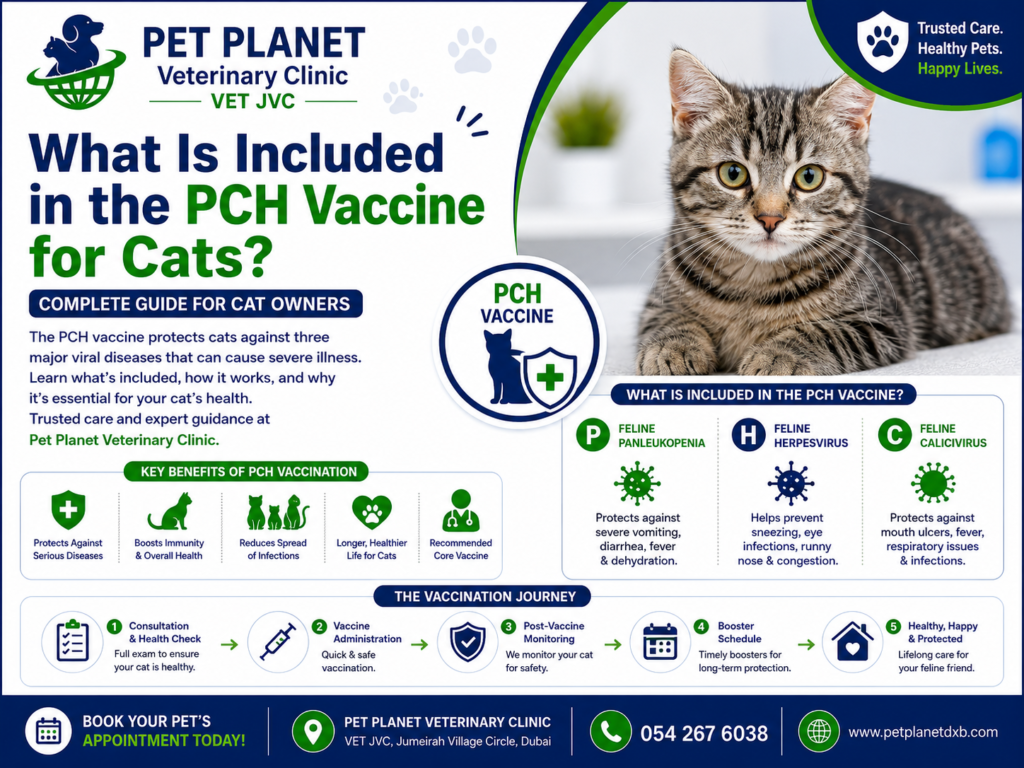
Vaccinations play a crucial role in protecting cats from serious infectious diseases that can affect their health, quality of life, and even survival. Whether you have recently welcomed a kitten into your family or are keeping up with your cat’s annual wellness care, you’ve probably heard your veterinarian mention the PCH vaccine. The PCH vaccine for cats protects against three major diseases: Feline Panleukopenia (P), Feline Herpesvirus (H), and Feline Calicivirus (C). These highly contagious infections can cause severe illness, especially in kittens, making the PCH vaccine one of the most important core vaccinations recommended by veterinarians. But what exactly is included in the PCH vaccine, and why is it considered one of the most important vaccinations for cats? At Pet Planet Veterinary Clinic, we believe that informed pet owners make better healthcare decisions for their pets. This guide explains everything you need to know about the PCH vaccine, including the diseases it protects against, vaccination schedules, benefits, possible side effects, and why it is essential for both indoor and outdoor cats. What Is the PCH Vaccine for Cats? The PCH vaccine is a core feline vaccination designed to protect cats against three highly contagious and potentially life-threatening diseases: P – Feline Panleukopenia H – Feline Herpesvirus C – Feline Calicivirus These diseases are commonly found in cat populations worldwide and can cause severe illness, especially in kittens and cats with weakened immune systems. The PCH vaccine is often referred to as: FVRCP Vaccine Triple Cat Vaccine Core Cat Vaccine Veterinarians recommend this vaccine as part of every cat’s preventive healthcare plan. What Does PCH Stand For? Let’s take a closer look at each component of the vaccine and the diseases it helps prevent. Letter Disease Main Symptoms P Feline Panleukopenia Vomiting, diarrhea, fever H Feline Herpesvirus Sneezing, eye discharge C Feline Calicivirus Oral ulcers, respiratory disease Each disease can have serious health consequences if left untreated. Feline Panleukopenia: What the P Component Protects Against What Is Feline Panleukopenia? Feline Panleukopenia, often called feline distemper, is a highly contagious viral disease caused by the feline parvovirus. It attacks rapidly dividing cells in the body, particularly those in: Bone marrow Intestinal lining Immune system Young kittens are especially vulnerable. Symptoms of Feline Panleukopenia Common signs include: Vomiting Severe diarrhea Fever Extreme lethargy Loss of appetite Dehydration Without prompt treatment, the disease can become fatal. Why Vaccination Matters The PCH vaccine is the most effective way to protect cats against Panleukopenia. Prevention is far safer and less expensive than treating a severe infection. Feline Herpesvirus: Understanding the H Component What Is Feline Herpesvirus? Feline Herpesvirus (FHV-1) is one of the leading causes of upper respiratory infections in cats. Once infected, many cats carry the virus for life. Common Symptoms Signs of Feline Herpesvirus may include: Sneezing Runny nose Watery eyes Eye inflammation Conjunctivitis Nasal congestion Long-Term Effects Although infected cats may recover, the virus often remains dormant and can reactivate during periods of stress. Vaccination helps reduce both the severity and frequency of symptoms. Feline Calicivirus: Understanding the C Component What Is Feline Calicivirus? Feline Calicivirus is another common viral infection affecting a cat’s respiratory system and oral tissues. Common Symptoms Cats infected with Calicivirus may develop: Mouth ulcers Fever Sneezing Nasal discharge Eye discharge Difficulty eating Why Vaccination Helps While vaccination may not always prevent infection entirely, it significantly reduces disease severity and complications. Why Is the PCH Vaccine Considered a Core Vaccine? Veterinary organizations worldwide classify the PCH vaccine as a core vaccine because it protects against diseases that: Are highly contagious Can cause severe illness Are widespread in cat populations Can affect indoor and outdoor cats This means the vaccine is recommended for: Kittens Adult cats Indoor cats Outdoor cats Regardless of lifestyle, every cat benefits from protection against these diseases. Do Indoor Cats Need the PCH Vaccine? One of the most common misconceptions among cat owners is that indoor cats don’t need vaccinations. Why Indoor Cats Are Still at Risk Viruses can enter your home through: Visitors Clothing Shoes Veterinary clinic visits Contact with other pets Even cats that never leave the house can be exposed to infectious diseases. Veterinary Recommendation At Pet Planet Veterinary Clinic, we strongly recommend core vaccinations for both indoor and outdoor cats to provide the best possible protection. When Should Kittens Receive the PCH Vaccine? Kittens receive temporary immunity from their mother’s milk, but this protection gradually decreases as they grow. Typical Kitten Vaccination Schedule Age Vaccination 6–8 Weeks First PCH Vaccine 10–12 Weeks Booster Vaccine 14–16 Weeks Final Kitten Booster Following the complete series helps build strong, long-lasting immunity. PCH Vaccine Schedule for Adult Cats After completing the kitten vaccination series, adult cats require booster vaccinations to maintain protection. Your veterinarian may recommend: Annual boosters Every three years (depending on vaccine type and risk factors) The ideal schedule depends on your cat’s age, lifestyle, and overall health. Benefits of the PCH Vaccine for Cats Vaccination offers numerous health advantages. Protection Against Serious Diseases The vaccine helps prevent three major feline diseases that can cause severe illness and death. Reduced Risk of Hospitalization Vaccinated cats are less likely to develop severe infections requiring intensive treatment. Stronger Immune Defense Vaccination prepares your cat’s immune system to recognize and fight harmful viruses. Longer and Healthier Life Preventive healthcare helps cats live longer, healthier lives. Reduced Disease Transmission Vaccinated cats help reduce the spread of infectious diseases within the feline community. Is the PCH Vaccine Safe for Cats? Yes. The PCH vaccine has an excellent safety record and is routinely administered by veterinarians worldwide. Before vaccination, your veterinarian will perform a health assessment to ensure your cat is healthy enough to receive the vaccine. Modern vaccine technology continues to improve safety and effectiveness. Common Side Effects After PCH Vaccination Most cats experience little to no discomfort following vaccination. Mild Side Effects You may notice: Slight sleepiness Reduced appetite Mild fever Temporary soreness at the injection site These symptoms typically resolve within 24–48 hours. When to
What Is Included in the PCH Vaccine for Cats? Complete Guide for Cat Owners Read More »