

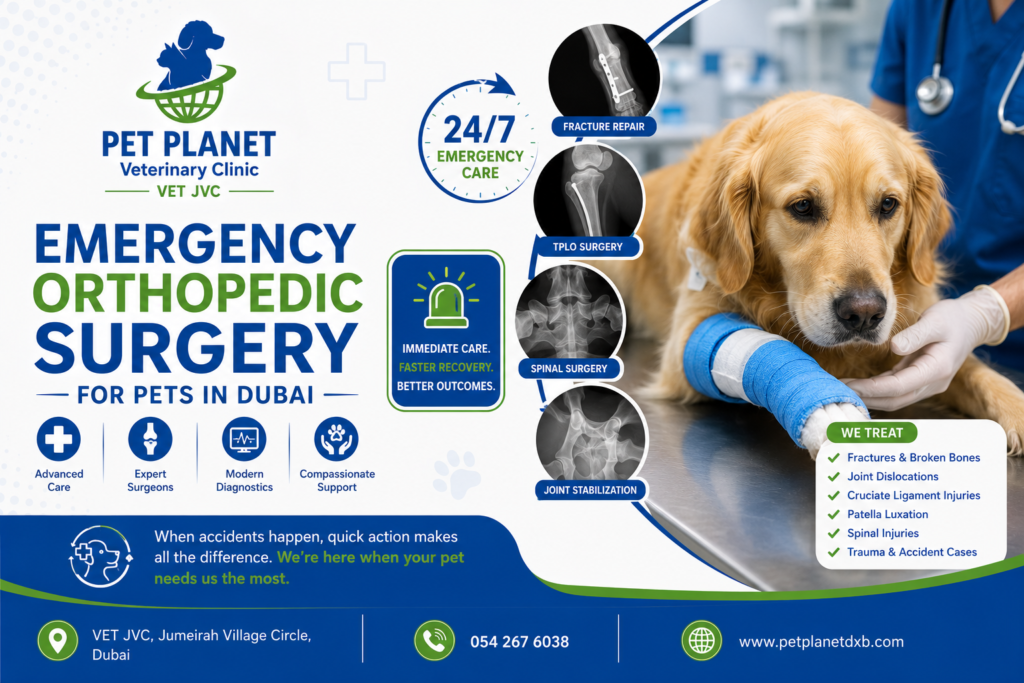
Orthopedic emergencies in pets can happen suddenly and without warning. Whether caused by a road accident, a fall, a sports injury, or trauma during play, orthopedic injuries often require immediate veterinary attention to prevent long-term complications. Broken bones, joint dislocations, spinal injuries, and ligament tears can cause severe pain and may permanently affect your pet’s mobility if not treated quickly.
At Pet Planet Veterinary Clinic – VET JVC, we provide advanced emergency orthopedic surgery and trauma care for dogs and cats in Dubai. Our experienced veterinary team uses modern diagnostic imaging, advanced surgical techniques, and comprehensive post-operative care to help pets recover safely and comfortably.
What Is Emergency Orthopedic Surgery for Pets?
Emergency orthopedic surgery is a specialized branch of veterinary medicine focused on treating injuries affecting bones, joints, ligaments, muscles, and the spine.
These procedures are often performed urgently after traumatic injuries to:
- Restore mobility
- Stabilize fractures
- Reduce pain
- Repair damaged joints
- Prevent long-term complications
Orthopedic surgery may involve:
- Bone plating
- Pins and screws
- External fixation
- Ligament repair
- Joint stabilization
- Spinal decompression procedures
Fast diagnosis and treatment significantly improve recovery outcomes.
Common Orthopedic Emergencies in Pets
Bone Fractures
Fractures are among the most common orthopedic emergencies seen in veterinary clinics. Pets can suffer fractures from:
- Car accidents
- Falls from balconies or stairs
- Rough play
- Sports injuries
- Trauma
Common fractures include:
- Leg fractures
- Pelvic fractures
- Jaw fractures
- Tail fractures
- Spinal fractures
Symptoms of fractures may include:
- Severe limping
- Swelling
- Pain
- Inability to walk
- Visible deformity
Prompt surgical stabilization is often necessary to ensure proper healing.
Joint Dislocations
Joint dislocations occur when bones move out of their normal position within a joint.
Common dislocations include:
- Hip dislocation
- Elbow dislocation
- Knee dislocation
Pets with dislocations often experience:
- Severe pain
- Swelling
- Sudden inability to use the limb
- Abnormal limb positioning
Emergency treatment helps restore joint stability and reduce long-term arthritis risk.
Cruciate Ligament Tears
Cruciate ligament injuries are extremely common in dogs, especially active and larger breeds.
This condition affects the knee joint and can cause:
- Sudden limping
- Difficulty standing
- Pain during movement
- Reduced activity
Many dogs with cruciate ligament injuries require TPLO surgery (Tibial Plateau Leveling Osteotomy) or other orthopedic stabilization procedures.
Patella Luxation
Patella luxation occurs when the kneecap slips out of place. This condition may be congenital or caused by trauma.
Common symptoms include:
- Skipping while walking
- Intermittent limping
- Difficulty jumping
- Knee pain
Surgical correction may be required for severe cases.
Spinal Injuries
Spinal trauma is one of the most serious orthopedic emergencies in pets. Spinal injuries can occur after:
- Road traffic accidents
- Falls
- Blunt trauma
- Severe impact injuries
Symptoms may include:
- Paralysis
- Weakness
- Difficulty walking
- Loss of bladder control
- Severe pain
Emergency neurological evaluation and advanced imaging are critical for spinal injuries.
Signs Your Pet Needs Emergency Orthopedic Care
Pet owners should seek immediate veterinary attention if they notice:
- Sudden limping
- Inability to stand
- Severe swelling
- Visible bone deformity
- Dragging limbs
- Crying or vocalizing in pain
- Bleeding after trauma
- Refusal to bear weight
- Sudden paralysis
- Severe pain during movement
Delaying treatment can worsen injuries and increase the risk of permanent complications.
What Causes Orthopedic Injuries in Pets?
Orthopedic injuries can happen for many reasons, including:
Road Accidents
Traffic accidents are a major cause of severe fractures and trauma in pets.
Falls From Heights
Cats and small dogs may suffer fractures after falling from balconies, stairs, or furniture.
Sports & Play Injuries
Active dogs may injure ligaments, joints, or bones during intense physical activity.
Obesity
Excess weight places additional stress on joints and increases injury risk.
Age-Related Degeneration
Older pets are more prone to arthritis, ligament weakness, and fractures.
How Emergency Orthopedic Conditions Are Diagnosed
At Pet Planet Veterinary Clinic – VET JVC, accurate diagnosis is the foundation of successful orthopedic treatment.
Physical Examination
Veterinarians first assess:
- Pain level
- Limb positioning
- Joint stability
- Neurological function
- Swelling and inflammation
Digital X-Rays
Digital X-rays are essential for diagnosing:
- Bone fractures
- Joint dislocations
- Spinal injuries
- Bone alignment problems
X-rays also help veterinarians plan surgical procedures accurately.
CT Scan & Advanced Imaging
Advanced imaging may be recommended for:
- Complex fractures
- Spinal injuries
- Neurological conditions
- Surgical precision
CT scans provide detailed images that improve treatment planning.
Neurological Evaluation
Pets with spinal trauma often require neurological assessment to determine:
- Nerve function
- Paralysis severity
- Surgical urgency
Types of Emergency Orthopedic Surgery for Pets
Fracture Repair Surgery
Fracture repair surgery stabilizes broken bones using the following:
- Plates
- Screws
- Pins
- External fixators
The goal is to restore normal bone alignment and healing.
TPLO Surgery
TPLO surgery is commonly performed for cruciate ligament injuries in dogs.
This procedure:
- Stabilizes the knee joint
- Improves mobility
- Reduces pain
- Supports long-term recovery
TPLO is considered one of the most effective surgical solutions for ACL injuries in dogs.
Patella Luxation Surgery
This procedure corrects kneecap instability by realigning the patella and stabilizing the joint.
Joint Stabilization Procedures
Joint stabilization surgery may be necessary for severe joint trauma or dislocations.
Spinal Surgery
Emergency spinal surgery may help relieve pressure on the spinal cord and improve neurological recovery.
What Happens During Emergency Orthopedic Surgery?
Orthopedic emergencies are managed carefully through multiple stages.
Step 1: Emergency Assessment
Veterinarians stabilize the pet and assess injuries.
Step 2: Diagnostic Imaging
X-rays or CT scans identify fractures and internal damage.
Step 3: Pain Management & Stabilization
Pain relief and emergency stabilization are provided before surgery.
Step 4: Anesthesia Preparation
The pet undergoes anesthesia monitoring and surgical preparation.
Step 5: Surgical Repair
Orthopedic surgeons repair fractures, stabilize joints, or perform ligament surgery.
Step 6: Recovery Monitoring
Pets are monitored carefully after surgery to ensure safe recovery.
Step 7: Rehabilitation Planning
Recovery plans include rest, medications, and rehabilitation exercises.
Recovery After Pet Orthopedic Surgery
Recovery is an important part of successful orthopedic treatment.
Post-operative care may include the following:
- Pain medication
- Restricted activity
- Bandage care
- Rehabilitation therapy
- Follow-up examinations
Pet owners play a major role in ensuring successful healing at home.
How Long Does Recovery Take?
Recovery times vary depending on the injury and surgical procedure.
General Recovery Estimates:
- Minor injuries: a few weeks
- Bone fractures: 6–12 weeks
- TPLO surgery: 8–12 weeks
- Spinal injuries: several months
Factors affecting recovery include:
- Pet age
- Overall health
- Surgery complexity
- Rehabilitation compliance
How Much Does Emergency Orthopedic Surgery Cost in Dubai?
The cost of emergency orthopedic surgery in Dubai varies depending on:
- Injury severity
- Type of surgery
- Hospitalization
- Diagnostic imaging
- Surgical implants
- ICU care
Emergency surgeries involving advanced orthopedic implants or spinal procedures are generally more expensive than routine fracture repair.
A detailed treatment plan and estimate are usually provided after examination and imaging.
Why Immediate Treatment Is Important?
Delaying orthopedic treatment can lead to serious complications, including:
- Permanent mobility loss
- Chronic pain
- Improper bone healing
- Severe arthritis
- Nerve damage
- Paralysis
Early diagnosis and treatment improve surgical success and recovery outcomes significantly.
Why Choose Pet Planet Veterinary Clinic – VET in JVC?
At Pet Planet Veterinary Clinic – VET JVC, we provide advanced orthopedic and emergency surgical care for pets in Dubai.
Our clinic offers:
- Experienced veterinary surgeons
- Advanced orthopedic diagnostics
- Digital X-rays
- Modern surgical equipment
- Emergency trauma care
- Comprehensive pain management
- Post-operative rehabilitation support
We are committed to helping pets recover safely and regain mobility as quickly as possible.
How to Prevent Orthopedic Injuries in Pets
Weight Management
Maintaining a healthy weight reduces stress on joints and ligaments.
Safe Exercise
Avoid excessive jumping or intense activity that may strain joints.
Joint Supplements
Veterinarian-approved supplements may help support joint health.
Home Safety
Prevent falls by securing slippery floors and balconies.
Regular Veterinary Checkups
Routine examinations help identify orthopedic issues early.
Frequently Asked Questions
What is emergency orthopedic surgery for pets?
Emergency orthopedic surgery treats serious bone, joint, ligament, or spinal injuries requiring urgent veterinary care.
How do I know if my pet has a broken bone?
Common signs include severe limping, swelling, pain, inability to walk, and visible deformity.
Is TPLO surgery safe for dogs?
Yes. TPLO surgery is a widely performed and effective procedure for treating cruciate ligament injuries in dogs.
How long does recovery take after fracture surgery?
Most fractures require approximately 6–12 weeks of healing depending on severity.
Can cats undergo orthopedic surgery?
Yes. Cats can safely undergo fracture repair, joint stabilization, and other orthopedic procedures.
What should I do if my pet suddenly cannot walk?
Seek emergency veterinary care immediately, especially if spinal injury or severe trauma is suspected.
