 Skip to content

PCH & FVRCP Cat Vaccination in JVC, Dubai
Looking for a PCH cat vaccine in Dubai? PCH refers to panleukopenia, calicivirus and herpesvirus — the same three disease targets commonly described as FVRCP. At Pet Planet Veterinary Clinic in JVC, every cat receives a veterinary health check before vaccination, with guidance tailored to their age, lifestyle and vaccination history.
- Veterinary health check before every vaccination
- Personalised guidance for kittens, adults and rescue cats
- Gentle handling and clear vaccination records
📍 BinGhatti Emerald, Jumeirah Village Circle (JVC), Dubai — also serving Al Barsha, JVT and nearby communities
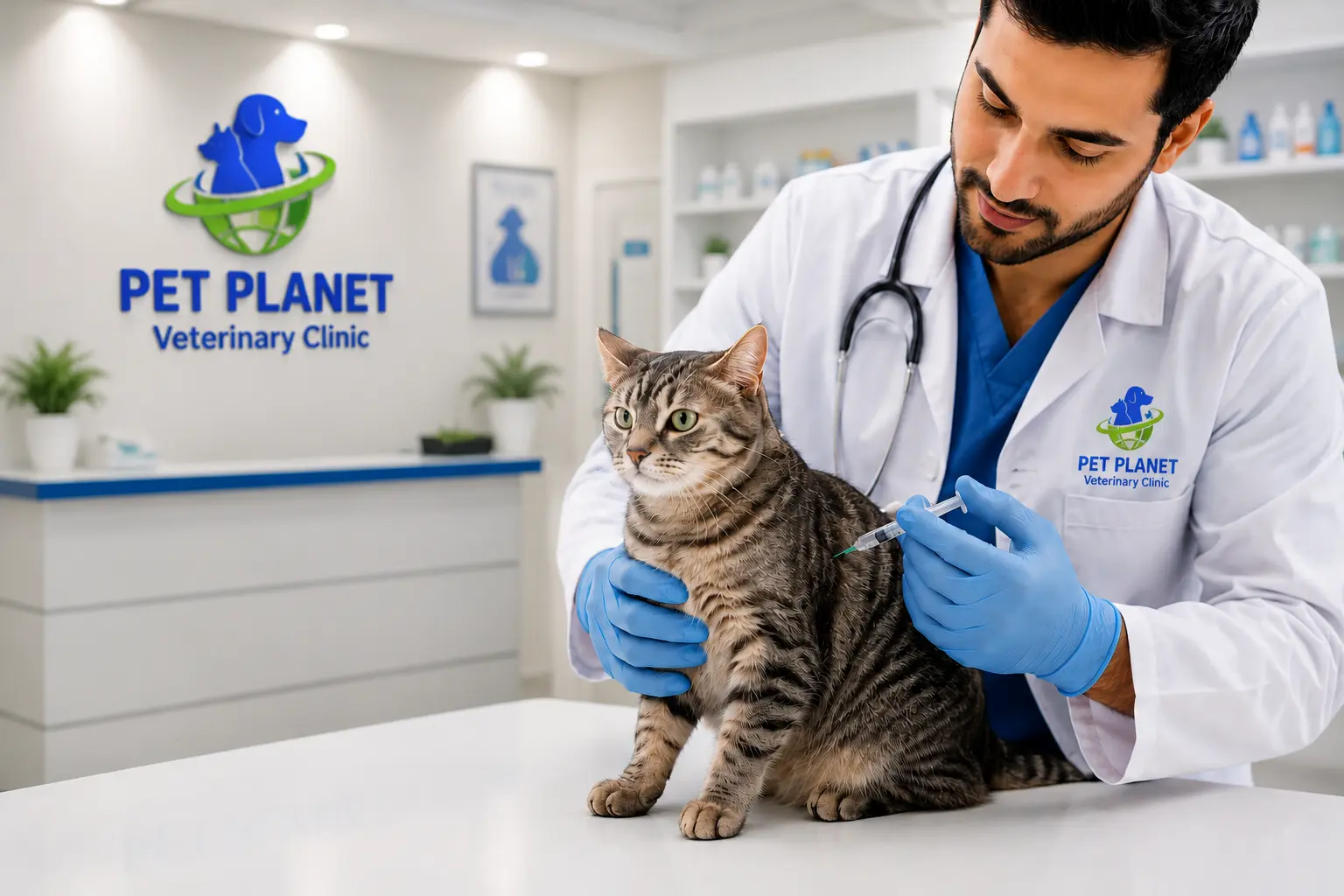
FVRCP is a combination vaccine commonly given to cats to help protect against three viruses: feline viral rhinotracheitis, feline calicivirus and feline panleukopenia. It is widely regarded as a core vaccine, meaning most veterinarians recommend it for cats and kittens regardless of lifestyle, because these viruses spread easily and can affect cats that never leave the house.
FVRCP does not guarantee complete protection against every strain of these viruses, and it is not the same vaccine as rabies. Your veterinarian will confirm whether FVRCP is appropriate for your cat and set the right timing after reviewing their age, health and vaccination history.
Is PCH the same as FVRCP?
PCH and FVRCP describe protection against the same three feline disease targets. They are naming conventions, not a guarantee that every vaccine product is identical.
| PCH | Disease target | FVRCP terminology |
|---|---|---|
| P | Feline panleukopenia | P — panleukopenia |
| C | Feline calicivirus | C — calicivirus |
| H | Feline herpesvirus-1 | FVR — feline viral rhinotracheitis, caused by herpesvirus-1 |
RCP is another naming convention for this combination. Product names, formulations, minimum ages and booster instructions can differ. Some combination products contain additional components, so your veterinarian will check the label and your cat's record rather than rely on the abbreviation alone.
PCH does not by itself mean protection against rabies or feline leukaemia virus (FeLV). These require a separate assessment of the relevant vaccine components. Learn about our cat and kitten vaccination options.
What does the FVRCP vaccine protect against?
FVRCP takes its name from the three viruses it targets. Here is a simple explanation of each one.
Feline Viral Rhinotracheitis
A common cause of cat "colds"
Feline viral rhinotracheitis is generally associated with feline herpesvirus and can cause sneezing, nasal discharge and eye irritation. Some cats that recover can carry the virus long-term and may show symptoms again during times of stress, which is one reason vaccination is considered valuable.
Feline Calicivirus
Affects the mouth and airways
Feline calicivirus commonly affects the mouth, nose and airways, and can lead to mouth ulcers, sneezing and general discomfort in affected cats. Because it spreads easily between cats, especially in multi-cat households, prevention is an important part of routine feline health care.
Feline Panleukopenia
Highly contagious, especially in kittens
Feline panleukopenia is a highly contagious viral disease that can be serious, particularly for kittens and unvaccinated cats. It can affect the gut and immune system, which is why it is treated as a priority within the core kitten vaccination course.
Does my cat need the FVRCP vaccine?
FVRCP is generally recommended for cats at every life stage, though the right approach depends on your individual cat. Your veterinarian will confirm suitability after an assessment.
Does an indoor cat need the FVRCP vaccine?
Yes, indoor cats can still benefit from FVRCP vaccination. Exposure to these viruses is not limited to the outdoors — it can occur through contact with other animals, contaminated objects, carriers, bedding, veterinary visits, boarding, grooming, relocation, an accidental escape, or a change in living circumstances such as a new housemate cat. Because these viruses can be resilient in the environment, many veterinarians recommend core vaccination for indoor cats as part of routine preventive care. Your veterinarian can discuss what makes sense for your cat specifically.
A typical FVRCP vaccination journey
Every cat's plan is individual. This is a general outline of how the process usually unfolds at Pet Planet.
-
Review of age and medical history
The veterinary team reviews your cat's age, previous records and any known health conditions.
-
Pre-vaccination health check
A veterinarian examines your cat to help confirm that vaccination is appropriate on the day.
-
Personalised recommendation
The vet discusses the recommended approach based on your cat's individual circumstances.
-
Gentle vaccine administration
The FVRCP vaccine is administered using calm, low-stress handling techniques.
-
Vaccination record update
Your cat's vaccination card or digital record is updated on the same visit.
-
Aftercare guidance
You will be told what to watch for at home and how to contact the clinic if needed.
-
Reminder for the next visit
The team can help you keep track of when the next recommended visit falls due.
Kittens starting their course
A kitten's core course commonly begins at 6–8 weeks, subject to the product's minimum age. Doses are usually repeated every 3–4 weeks through at least 16 weeks; higher-risk kittens may need vaccination through 20 weeks. Maternal antibodies can interfere with early doses, which is why one injection is not a complete kitten course.
Adult cats with current records
After the kitten course, revaccination around six months may be considered. Later booster intervals depend on the product, disease component and exposure risk. An annual health review does not automatically mean that every vaccine component must be repeated annually.
Overdue or unknown records
An adult cat with unknown history may need a primary course; for many injectable core products, two doses 2–4 weeks apart are recommended. A previously vaccinated cat with an overdue booster needs a records-based assessment and does not automatically need to restart the whole course.
Your veterinarian will recommend the appropriate timing based on your cat's individual health, age, lifestyle and vaccination history. Nothing on this page should be treated as a fixed schedule for every cat.
What happens during the appointment?
Here is what a typical FVRCP vaccination visit looks like, from check-in to check-out.
Check-in
You'll be welcomed and asked a few short questions about your cat.
Records review
The team reviews any previous vaccination records you bring along.
Health assessment
A general veterinary examination is carried out before proceeding.
Reaction history discussion
You'll be asked about any previous vaccine reactions or sensitivities.
Veterinary recommendation
The vet explains what they recommend for your cat and why.
Vaccination
The FVRCP vaccine is given using gentle, low-stress handling.
Observation & aftercare
You'll receive clear guidance on what is normal and what to watch for.
Records & next visit
Your cat's record is updated and, if needed, the next visit is scheduled.
A calm, cat-friendly visit


Why choose Pet Planet for your cat's FVRCP vaccination?
Convenient JVC location
Easy to reach from JVC, JVT, Al Barsha, Dubai Sports City and Motor City.
Health check before every vaccine
A veterinary assessment takes place before any vaccine is given.
Individual guidance
Recommendations are based on your cat's age, lifestyle and history — not a generic schedule.
Gentle handling
The team uses calm, low-stress techniques suited to nervous or first-time cats.
Clear aftercare advice
You'll know exactly what to watch for once you're home.
Easy WhatsApp booking
Message the clinic directly to check availability and confirm your visit.
How to prepare your cat for an FVRCP vaccination appointment
- Bring any previous vaccination records or cards
- Tell the vet about any medication or recent illness
- Mention any previous vaccine reactions
- Use a secure, well-ventilated carrier for travel
- Try to keep your cat calm before the journey
- Ask the team whether any feeding instructions apply
- Bring adoption or rescue paperwork if you have it
- Write down any questions you'd like to ask the vet
This checklist is general guidance and does not replace instructions given to you directly by your veterinarian.
Possible side effects and aftercare
Most cats tolerate FVRCP vaccination well. As with any vaccine, mild and temporary reactions can occur.
Mild, temporary reactions may include
- Mild tiredness or a quieter-than-usual mood
- Temporary reduced appetite
- Mild soreness at the injection site
- Small, temporary swelling that settles on its own
Seek urgent veterinary advice if you notice
- Facial swelling or hives
- Difficulty breathing
- Repeated vomiting or persistent lethargy
- Any symptom that feels severe or does not settle
FVRCP versus other cat vaccines
FVRCP is one part of a wider preventive care plan. It is not a substitute for other vaccines your cat may need.
| Vaccine | General purpose | Typical relevance |
|---|---|---|
| FVRCP | Combination core vaccine covering feline viral rhinotracheitis, calicivirus and panleukopenia | Generally recommended for most cats and kittens |
| Rabies | Protects against a serious viral disease that can affect mammals, including cats | A separate vaccine from FVRCP; requirements should be confirmed with your veterinarian |
| FeLV (Feline Leukaemia) | Considered for cats with particular lifestyle or exposure factors | Recommended selectively, based on veterinary assessment |
| Other lifestyle vaccines | Considered case by case, depending on your cat's environment and risk factors | Discussed individually with your veterinarian |
FVRCP and rabies are different vaccines, and one does not replace the other. Any additional vaccines your cat may need depend on their lifestyle and your veterinarian's recommendation. This table is for general understanding only and is not legal or regulatory advice.
How much does a PCH cat vaccine cost in Dubai?
The total depends on whether your cat needs one booster, a primary course or a vaccination package. Ask for a quote based on your cat's age and vaccination record.
What is included in the quote?
Confirm whether the price covers the vaccine, veterinary examination, VAT and any later doses. Rabies vaccination, microchipping, registration, tests and deworming should not be assumed to be included unless listed in the package.
View our current veterinary prices and vaccination packages, or contact the team for a specific PCH/FVRCP quote. A package price is not necessarily the price of a single injection.
Related vaccination plans and services
Frequently asked questions
PCH stands for panleukopenia, calicivirus and herpesvirus. FVRCP refers to the same three disease targets, with FVR describing feline viral rhinotracheitis caused by herpesvirus-1. Products and schedules can differ, so your vet will check the actual vaccine label.
PCH alone does not imply rabies or FeLV protection. These are different disease targets. Your veterinarian will confirm which vaccine components your cat needs and what is included in the proposed visit.
Protection is not immediate. It depends on the product, your cat's immune response and completion of the recommended course. Ask your vet when contact with unfamiliar cats or boarding is appropriate; vaccination does not prevent every respiratory infection.
Inclusions depend on the quoted service or package. Ask the clinic to confirm the examination, vaccine, VAT, any additional doses and separately priced services before booking.
FVRCP stands for Feline Viral Rhinotracheitis, Calicivirus and Panleukopenia — the three viruses this combination vaccine is intended to help protect against.
It targets feline viral rhinotracheitis (generally associated with feline herpesvirus), feline calicivirus and feline panleukopenia — three viruses that commonly affect cats.
Yes, FVRCP is widely regarded as a core vaccine, meaning it is generally recommended for most cats regardless of lifestyle. Your veterinarian will confirm what applies to your cat specifically.
Indoor cats can still benefit from FVRCP vaccination, since exposure can happen through other animals, contaminated objects, boarding, grooming, relocation or an accidental escape. Your veterinarian can advise on your cat's specific situation.
Your veterinarian will recommend the appropriate age to begin the kitten vaccination course after assessing your kitten's health, and will schedule follow-up doses as needed.
Booster timing varies from cat to cat. Your veterinarian will recommend an interval based on your cat's age, health, lifestyle and previous vaccination records.
The veterinary team will assess your cat's current health and vaccination history, then recommend a suitable way forward. There's no need to feel judged about a missed or overdue vaccination.
Yes. If records are unavailable, the veterinarian will assess your cat's current health and may recommend starting a fresh, appropriate vaccination plan.
No. FVRCP and rabies are different vaccines that protect against different diseases. FVRCP does not replace rabies vaccination.
Most cats tolerate the vaccine well. Mild, temporary effects such as tiredness or slight injection-site soreness can occur. Contact the clinic promptly if you notice anything more severe.
A health assessment takes place before every vaccination. If your cat is unwell, the veterinarian will advise whether to proceed or reschedule.
You can book by calling 054 267 6038, messaging on WhatsApp, or using the booking button on this page.
PCH / FVRCP vaccination near you in JVC Dubai
Pet Planet Veterinary Clinic is located at BinGhatti Emerald in Jumeirah Village Circle, serving JVC and nearby Dubai communities including Jumeirah Village Triangle, Al Barsha, Dubai Sports City, Motor City and The Springs.
Keep Your Cat's Core Vaccinations Up to Date
Book a veterinary health check and PCH / FVRCP vaccination appointment for your cat or kitten at Pet Planet Veterinary Clinic in JVC, Dubai.