
Dog owners are often surprised to learn that a luxating patella—commonly known as a “slipping kneecap”—is one of the most frequently diagnosed orthopedic conditions in dogs, especially in small breeds. While some dogs experience only occasional limping, others may suffer from chronic pain, reduced mobility, and progressive arthritis if the condition is left untreated.
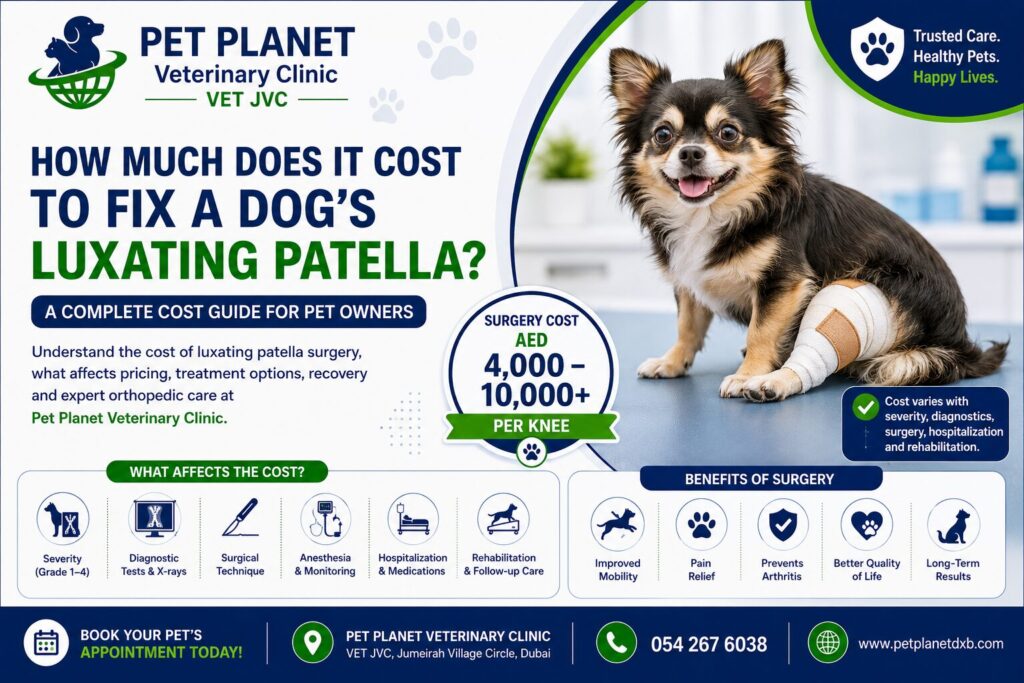
One of the first questions dog owners ask after their pet is diagnosed with a luxating patella is, “How much will the surgery cost?” While the exact price varies depending on your dog’s condition and the treatment required, luxating patella surgery in Dubai typically ranges from AED 4,000 to AED 10,000+ per knee. The total cost depends on factors such as the severity of the luxation (Grade 1–4), diagnostic imaging, anesthesia, surgical techniques, hospitalization, medications, and post-operative rehabilitation. After examining your dog, your veterinarian can provide a personalized treatment plan and an accurate cost estimate.
A luxating patella, also known as a slipping kneecap, is oneIn this comprehensive guide, the orthopedic team at Pet Planet Veterinary Clinic explains everything you need to know about luxating patella treatment costs, what influences pricing, the surgical procedure, recovery, and how to choose the right veterinary orthopedic surgeon for your dog.
What Is a Luxating Patella in Dogs?
A luxating patella occurs when the kneecap (patella) slips out of its normal position within the groove of the femur. Instead of moving smoothly as your dog walks, the kneecap temporarily or permanently shifts out of place, causing discomfort and instability in the knee joint.
This condition may affect one or both hind legs and can range from mild to severe.
Many owners first notice their dog:
- Skipping while walking
- Suddenly holding one leg up
- Limping for a few steps
- Running normally before hopping briefly
- Difficulty jumping onto furniture
- Reduced willingness to exercise
Without appropriate treatment, repeated dislocation of the kneecap can gradually damage cartilage, increase pain, and contribute to arthritis.
Medial vs. Lateral Luxating Patella
Veterinarians classify luxating patella into two main types:
Medial Patellar Luxation (MPL)
The kneecap slips toward the inside of the leg. This is by far the most common type, particularly in small and toy breeds.
Lateral Patellar Luxation (LPL)
The kneecap moves toward the outside of the leg. This form is less common and is more frequently seen in larger dog breeds.
Which Dogs Are Most at Risk?
Although any dog can develop a luxating patella, certain breeds are genetically predisposed.
Commonly affected breeds include:
- Pomeranian
- Chihuahua
- Yorkshire Terrier
- Toy Poodle
- Maltese
- Shih Tzu
- Cavalier King Charles Spaniel
- French Bulldog
- Boston Terrier
- Pekingese
Larger breeds such as Labrador Retrievers, Golden Retrievers, Akitas, and Great Pyrenees may also develop the condition, particularly following trauma or due to skeletal abnormalities.
Risk factors include:
- Genetics
- Congenital limb deformities
- Trauma or injury
- Obesity
- Poor limb alignment
- Previous orthopedic disease
Does Every Dog with Luxating Patella Need Surgery?
No. Not every dog diagnosed with a luxating patella requires surgery.
The best treatment depends on your dog’s age, activity level, clinical signs, and the severity (grade) of the luxation.
Dogs That May Not Need Surgery
Dogs with mild luxating patella often respond well to conservative management.
Treatment may include:
- Weight management
- Joint supplements
- Anti-inflammatory medications
- Controlled exercise
- Physiotherapy
- Regular orthopedic monitoring
Dogs with Grade 1 and some Grade 2 luxating patellas can often enjoy a good quality of life without immediate surgery, provided they are monitored by an experienced veterinarian.
When Surgery Is Usually Recommended
Surgical treatment is often advised when dogs experience:
- Frequent kneecap dislocation
- Persistent limping
- Pain while walking
- Difficulty standing
- Progressive arthritis
- Muscle loss
- Reduced activity
- Grade 3 or Grade 4 luxation
Early surgical correction can help restore normal knee function and prevent long-term joint damage.
What Factors Affect the Cost of Luxating Patella Surgery?
There is no single fixed price for luxating patella surgery because every patient is unique. The overall cost depends on several medical and surgical factors.
1. Severity of the Luxating Patella
Veterinarians classify the condition into four grades.
Grade 1
The kneecap occasionally slips out but returns to its normal position on its own.
Treatment is often conservative.
Grade 2
The kneecap dislocates more frequently but can still return to position manually or naturally.
Some dogs benefit from surgery depending on symptoms.
Grade 3
The kneecap remains displaced most of the time and requires manual repositioning.
Surgery is commonly recommended.
Grade 4
The kneecap is permanently displaced and cannot be returned to its normal position manually.
This grade almost always requires orthopedic surgery.
Higher-grade luxations typically involve more complex procedures, which can influence the overall treatment cost.
2. Diagnostic Tests
Before surgery, your veterinarian performs several diagnostic procedures to accurately evaluate the knee joint.
These may include:
- Comprehensive orthopedic examination
- Digital X-rays
- Sedated imaging
- Blood tests
- Pre-anesthetic evaluation
In complex cases, advanced imaging may also be recommended.
3. Type of Surgical Procedure
Every luxating patella surgery is customized based on the dog’s anatomy and severity of the condition.
The surgeon may perform one or more procedures, including:
Trochlear Groove Deepening
The groove where the kneecap sits is reshaped so the patella remains securely in place.
Tibial Tuberosity Transposition (TTT)
The attachment point of the patellar tendon is repositioned to improve knee alignment.
Soft Tissue Reconstruction
Tight tissues on one side of the knee are released while loose tissues on the opposite side are tightened.
Corrective Bone Surgery
In severe cases, corrective bone procedures may be necessary to restore proper limb alignment.
The complexity of these procedures varies depending on each patient, which is why treatment plans are individualized.
4. Anesthesia and Surgical Monitoring
Modern veterinary anesthesia is carefully planned to maximize patient safety.
This typically includes:
- Pre-anesthetic blood work
- Intravenous fluids
- Continuous ECG monitoring
- Blood pressure monitoring
- Oxygen monitoring
- Temperature regulation
- Dedicated anesthesia technician
Advanced monitoring improves patient safety throughout the procedure.
5. Hospitalization and Nursing Care
Following surgery, dogs are closely monitored as they recover from anesthesia.
Hospital care may include:
- Pain management
- Fluid therapy
- Nursing observation
- Assisted walking
- Bandage care
- Recovery assessments
Some dogs return home the same day, while others may require an overnight stay depending on the complexity of the surgery and their overall health.
6. Medications
Post-operative medications are an important part of recovery and may include:
- Pain relief medication
- Anti-inflammatory drugs
- Antibiotics (when appropriate)
- Joint-support supplements
These medications help keep your dog comfortable and support healing during the recovery period.
7. Rehabilitation and Follow-Up Care
Successful recovery does not end after surgery.
Many dogs benefit from structured rehabilitation programs that may include:
- Controlled leash walking
- Range-of-motion exercises
- Physiotherapy
- Hydrotherapy
- Follow-up orthopedic examinations
- Repeat X-rays when indicated
What Is Usually Included in the Total Treatment Cost?
When discussing the cost of luxating patella surgery, it’s important to understand what is typically included in your dog’s treatment plan. While every veterinary clinic may have a slightly different pricing structure, comprehensive orthopedic care usually covers much more than the surgery itself.
| Treatment Component | Typically Included |
|---|---|
| Initial Veterinary Consultation | ✔ |
| Orthopedic Examination | ✔ |
| Digital X-rays | ✔ |
| Pre-Anesthetic Blood Tests | ✔ |
| General Anesthesia | ✔ |
| Surgical Procedure | ✔ |
| Surgical Monitoring | ✔ |
| Pain Management | ✔ |
| Hospitalization | ✔ |
| Post-Operative Medications | ✔ |
| Follow-Up Appointments | Often Included |
| Rehabilitation & Physiotherapy | May Be Separate |
Before scheduling surgery, ask your veterinarian for a detailed treatment estimate so you understand exactly what is included in your dog’s care.
What Happens During Luxating Patella Surgery?
Although every dog receives an individualized treatment plan, luxating patella surgery generally follows the same sequence of steps.
Step 1: Orthopedic Evaluation
Your veterinarian performs a detailed examination to confirm the severity of the luxating patella and determine the most appropriate surgical technique.
This may include:
- Orthopedic assessment
- Gait evaluation
- Knee manipulation
- Digital X-rays
- Blood testing before anesthesia
Step 2: General Anesthesia
Your dog is placed under carefully monitored general anesthesia to ensure they remain comfortable and pain-free throughout the procedure.
Advanced monitoring equipment continuously checks:
- Heart rate
- Blood pressure
- Oxygen levels
- Temperature
- Respiratory function
Step 3: Correcting the Knee Alignment
Depending on the severity of the condition, the surgeon may perform one or more corrective procedures, such as:
- Deepening the trochlear groove
- Repositioning the patellar tendon
- Tightening or releasing surrounding soft tissues
- Correcting bone alignment when necessary
These techniques work together to stabilize the kneecap and restore normal joint movement.
Step 4: Joint Stabilization
Once the kneecap is correctly aligned, the surgeon carefully checks that it moves smoothly through its normal range of motion before closing the surgical site.
Step 5: Recovery and Monitoring
After surgery, your dog is monitored closely while waking from anesthesia.
Veterinary nurses ensure your pet is:
- Comfortable
- Alert
- Eating normally
- Managing pain effectively
- Ready to return home safely
Recovery After Luxating Patella Surgery
Recovery plays a vital role in achieving the best possible outcome. Following your veterinarian’s instructions significantly improves healing and reduces the risk of complications.
First Week After Surgery
During the first few days, your dog will need:
- Strict rest
- Short leash walks only
- Pain medication
- Anti-inflammatory medication
- Continuous monitoring of the incision
Most dogs begin placing weight on the operated leg within several days.
Weeks 2–6
During this stage, healing continues and controlled activity gradually increases.
Your veterinarian may recommend:
- Gentle walking exercises
- Passive range-of-motion exercises
- Rehabilitation therapy
- Hydrotherapy (when appropriate)
Avoid:
- Running
- Jumping
- Climbing stairs
- Playing with other dogs
Months 2–3
As healing progresses, your dog gradually returns to normal daily activities.
Most dogs experience:
- Improved stability
- Better mobility
- Reduced pain
- Increased confidence while walking
Some dogs may require longer rehabilitation depending on the severity of the condition.
When Can Dogs Walk Normally Again?
Every patient is different, but many dogs begin walking comfortably within a few weeks.
Full recovery generally occurs over several months, depending on:
- Severity of luxation
- Surgical technique
- Age
- Body weight
- Overall health
- Owner compliance with recovery instructions
Regular follow-up appointments help ensure healing is progressing as expected.
Is Luxating Patella Surgery Worth the Cost?
For dogs experiencing pain, repeated limping, or reduced mobility, surgical correction can significantly improve quality of life.
Benefits of surgery include:
- Reduced pain
- Improved joint stability
- Better mobility
- Increased activity levels
- Lower risk of long-term arthritis
- Improved overall quality of life
Treating the condition early may also help prevent additional orthopedic problems that can develop if the kneecap continues to dislocate.
Can Pet Insurance Cover Luxating Patella Surgery?
Some pet insurance policies may help cover the cost of luxating patella surgery, depending on the terms of the policy.
Coverage may vary based on factors such as:
- Waiting periods
- Whether the condition is considered congenital or hereditary
- Policy exclusions
- Accident versus illness coverage
- Annual benefit limits
Before proceeding with treatment, it’s a good idea to contact your insurance provider to understand what expenses may be reimbursed.
How Can You Reduce the Overall Treatment Cost?
While surgery is an investment in your dog’s long-term health, there are practical ways to help manage costs.
Seek Veterinary Advice Early
Early diagnosis can prevent the condition from worsening and may reduce the need for more complex surgery.
Maintain a Healthy Body Weight
Excess weight places additional stress on the knee joint and may accelerate disease progression.
Attend Follow-Up Appointments
Regular rechecks allow your veterinarian to identify potential problems before they become more serious.
Follow Recovery Instructions Carefully
Strictly following post-operative care instructions reduces the risk of complications that could require additional treatment.
Consider Preventive Orthopedic Care
Routine orthopedic examinations, especially for predisposed breeds, can help identify joint problems before they become severe.
Questions to Ask Your Veterinary Surgeon
Before scheduling surgery, consider asking:
- What grade is my dog’s luxating patella?
- Does my dog definitely need surgery?
- Which surgical techniques will be used?
- What is included in the treatment estimate?
- How long will recovery take?
- Will rehabilitation be recommended?
- What are the expected long-term outcomes?
- How many luxating patella surgeries has your orthopedic team performed?
Why Choose Pet Planet Veterinary Clinic for Luxating Patella Surgery?
When your dog requires orthopedic surgery, choosing the right veterinary clinic is just as important as the procedure itself. At Pet Planet Veterinary Clinic, we understand that every dog deserves personalized care, advanced treatment, and a smooth recovery.
Our experienced veterinary team provides comprehensive orthopedic care, from the initial consultation to post-operative rehabilitation, ensuring your pet receives the highest standard of treatment at every stage.
Experienced Orthopedic Veterinary Team
Luxating patella surgery requires precision and expertise. Our veterinarians are experienced in diagnosing and treating canine orthopedic conditions using modern surgical techniques tailored to your dog’s specific needs.
Advanced Diagnostic Imaging
Accurate diagnosis is the foundation of successful treatment. We utilize advanced diagnostic imaging to assess the severity of the luxating patella and develop an individualized surgical plan.
Modern Surgical Techniques
Every dog is unique, and so is every surgery. Depending on your dog’s condition, we use appropriate orthopedic procedures designed to restore normal kneecap alignment, improve joint stability, and support long-term mobility.
Comprehensive Pain Management
Your pet’s comfort is one of our highest priorities. We use modern anesthesia protocols and multimodal pain management before, during, and after surgery to ensure a safe and comfortable experience.
Personalized Rehabilitation Plans
Successful orthopedic surgery extends beyond the operating room. Our team provides detailed recovery plans, including:
- Activity restrictions
- Home care guidance
- Medication schedules
- Follow-up evaluations
- Rehabilitation recommendations
These measures help promote proper healing and maximize long-term success.
Compassionate, Patient-Centered Care
At Pet Planet Veterinary Clinic, we believe that informed pet owners make the best decisions for their companions. We take the time to explain your dog’s diagnosis, treatment options, recovery expectations, and answer any questions you may have throughout the process.
FAQ
How much does it cost to fix a dog’s luxating patella?
The total cost depends on several factors, including the severity of the luxation, diagnostic tests, surgical techniques, anesthesia, hospitalization, medications, and rehabilitation. Your veterinarian can provide an accurate treatment estimate after examining your dog.
Is luxating patella surgery always necessary?
No. Mild cases may be managed with weight control, exercise modification, medications, and regular monitoring. Surgery is generally recommended when dogs experience pain, frequent limping, or advanced grades of luxation.
What happens if luxating patella is left untreated?
Without treatment, the condition may worsen over time, leading to chronic pain, cartilage damage, arthritis, reduced mobility, muscle loss, and an increased risk of other orthopedic problems.
Is luxating patella surgery successful?
Yes. When performed by an experienced veterinary surgeon and followed by proper rehabilitation, most dogs experience significant improvements in comfort, mobility, and overall quality of life.
How long does recovery take?
While every dog heals differently, many begin using the operated leg within a few days. Full recovery generally takes between 8 and 12 weeks, depending on the severity of the condition and adherence to post-operative care instructions.
Can both knees be repaired?
Yes. If both knees are affected, your veterinarian will recommend the most appropriate treatment plan. Depending on your dog’s health and condition, surgeries may be performed either separately or during the same anesthetic event.
Is luxating patella painful for dogs?
It can be. Some dogs experience only mild discomfort, while others develop persistent pain, limping, and difficulty walking, especially in advanced cases.
Can a luxating patella come back after surgery?
Although recurrence is uncommon, it can occur in some cases, particularly in dogs with severe skeletal abnormalities or when post-operative care instructions are not followed carefully.
Can physiotherapy help after surgery?
Yes. Controlled rehabilitation, physiotherapy, and hydrotherapy can improve muscle strength, joint flexibility, and overall recovery, helping many dogs regain normal mobility more quickly.
Which dog breeds commonly develop luxating patella?
The condition is frequently seen in:
- Pomeranians
- Chihuahuas
- Yorkshire Terriers
- Toy Poodles
- Maltese
- French Bulldogs
- Shih Tzus
- Cavalier King Charles Spaniels
However, larger breeds can also develop luxating patella, particularly following trauma or due to skeletal abnormalities.
Can my dog live with a luxating patella without surgery?
Some dogs with mild Grade 1 or certain Grade 2 luxating patellas can live comfortably with conservative management. However, advanced grades usually require surgical correction to prevent worsening joint damage and chronic pain.
How can I help my dog recover faster after surgery?
To support recovery:
- Follow all medication instructions.
- Restrict activity as recommended.
- Attend scheduled follow-up appointments.
- Prevent running and jumping during healing.
- Maintain a healthy body weight.
- Complete any prescribed rehabilitation program.