

Pet Orthopedic Care

Pet Orthopedic Surgeon in Dubai

Best Pet Orthopedic Surgeon in Dubai: What Every Pet Owner Should Look For

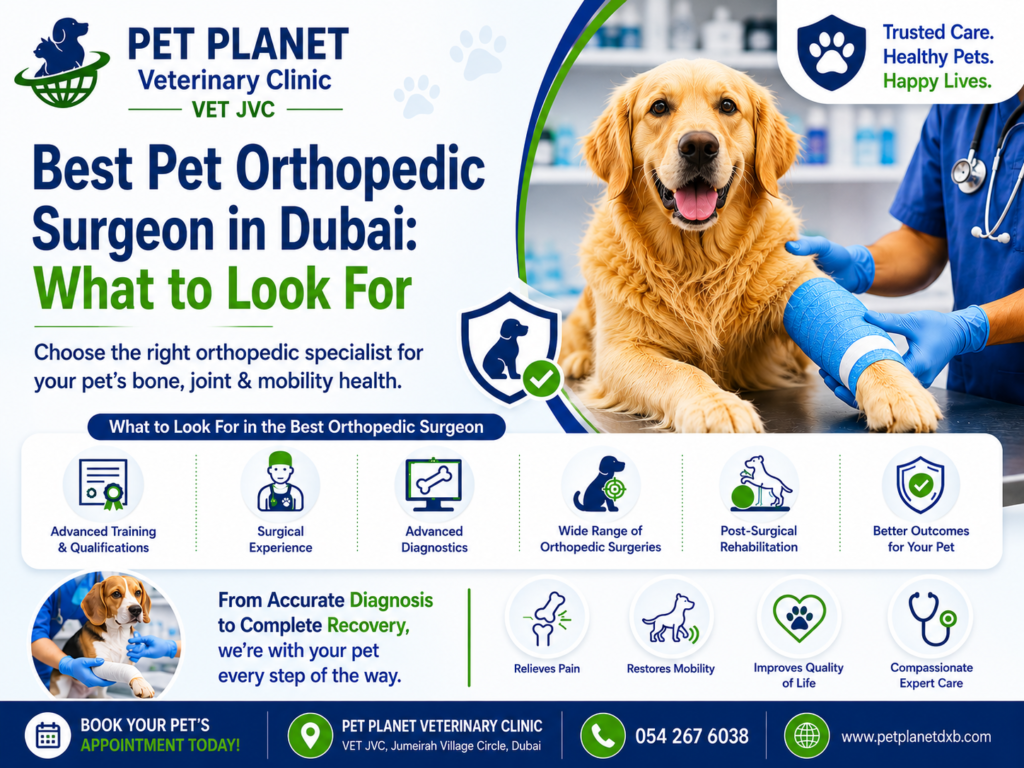
When a beloved pet starts limping, struggles to stand, or suffers a traumatic injury, finding the right orthopedic specialist becomes a top priority. Orthopedic conditions can significantly affect a pet’s mobility, comfort, and quality of life. Whether your dog has a torn ligament, your cat has suffered a fracture, or your pet is showing signs of joint disease, choosing an experienced pet orthopedic surgeon can make a substantial difference in treatment outcomes. At Pet Planet Veterinary Clinic, we understand how important it is for pet owners to make informed decisions about their pet’s orthopedic care. This guide explains what to look for when searching for the best pet orthopedic surgeon in Dubai and how specialized orthopedic treatment can help pets return to a healthy, active lifestyle. What Is a Pet Orthopedic Surgeon? A pet orthopedic surgeon is a veterinarian with advanced training and expertise in diagnosing and treating conditions affecting bones, joints, ligaments, tendons, and muscles. Unlike general veterinary practitioners, orthopedic specialists focus on complex musculoskeletal disorders that often require specialized surgical procedures and rehabilitation plans. Orthopedic surgeons commonly treat: Bone fractures Hip dysplasia Cranial cruciate ligament (CCL) injuries Patellar luxation Elbow dysplasia Osteoarthritis Joint instability Angular limb deformities Sports and trauma-related injuries These specialists use advanced diagnostic tools and surgical techniques to restore mobility and reduce pain in pets. Signs Your Pet May Need an Orthopedic Specialist Many orthopedic conditions develop gradually, while others occur suddenly following an accident or injury. Recognizing the warning signs early can improve treatment outcomes. Persistent Limping If your pet continues to limp for several days or weeks, it may indicate an underlying orthopedic issue that requires professional evaluation. Difficulty Standing or Walking Pets experiencing joint pain or musculoskeletal problems may struggle to rise from a lying position or show reluctance to walk and climb stairs. Joint Stiffness and Reduced Mobility Stiffness after rest, difficulty jumping, and reduced activity levels are common indicators of orthopedic disorders. Visible Swelling or Limb Deformity Swelling around joints, abnormal leg positioning, or noticeable deformities should never be ignored. Traumatic Injuries Falls, road accidents, and other traumatic incidents can lead to fractures, ligament tears, and joint injuries requiring immediate orthopedic assessment. Common Orthopedic Conditions Treated in Dubai Cranial Cruciate Ligament (CCL) Injuries Often compared to ACL injuries in humans, CCL tears are among the most common orthopedic problems in dogs. They can cause severe lameness and instability in the knee joint. Hip Dysplasia Hip dysplasia occurs when the hip joint develops abnormally, leading to pain, arthritis, and reduced mobility. Early diagnosis and treatment can significantly improve a pet’s quality of life. Patellar Luxation This condition occurs when the kneecap slips out of its normal position. It is particularly common in small dog breeds and can range from mild discomfort to severe mobility issues. Fractures and Bone Injuries Broken bones can result from accidents, falls, or trauma. Proper fracture repair is essential to ensure correct healing and long-term function. Elbow Dysplasia A developmental orthopedic condition commonly seen in large-breed dogs, elbow dysplasia can lead to chronic pain and arthritis if left untreated. Osteoarthritis As pets age, joint degeneration may lead to osteoarthritis. While some cases can be managed medically, others may benefit from surgical intervention. Qualifications to Look for in a Pet Orthopedic Surgeon Choosing the right surgeon involves evaluating their qualifications, experience, and available treatment options. Veterinary Licensing and Credentials Ensure the veterinarian is fully licensed and qualified to practice in the UAE. Professional certifications and continuing education are strong indicators of commitment to excellence. Specialized Orthopedic Training The best orthopedic surgeons pursue advanced training focused specifically on orthopedic diagnosis, surgery, and rehabilitation. Surgical Experience Experience matters. Surgeons who regularly perform orthopedic procedures are often better equipped to manage both routine and complex cases. Expertise in Advanced Procedures Look for a clinic experienced in performing procedures such as: TPLO Surgery Femoral Head Ostectomy (FHO) Fracture Repair Surgery Bone Plating (ORIF) Patellar Luxation Correction Total Hip Replacement DPO/TPO Procedures Juvenile Pubic Symphysiodesis (JPS) Why Advanced Diagnostic Technology Matters Successful orthopedic treatment begins with accurate diagnosis. Digital X-Rays High-quality digital radiography allows veterinarians to assess fractures, joint abnormalities, and bone conditions quickly and accurately. Comprehensive Orthopedic Examinations Physical assessments help identify pain points, joint instability, and mobility limitations. Pre-Surgical Planning Detailed diagnostic imaging allows surgeons to create customized treatment plans tailored to each patient’s condition. At Pet Planet Veterinary Clinic, advanced diagnostic capabilities support accurate treatment planning and improved surgical outcomes. Questions to Ask Before Choosing an Orthopedic Surgeon Before committing to surgery, pet owners should ask several important questions: How Much Experience Do You Have With This Procedure? Understanding the surgeon’s experience level can help build confidence and trust. What Treatment Options Are Available? A qualified orthopedic surgeon should explain both surgical and non-surgical options. What Is the Expected Recovery Time? Recovery timelines vary depending on the condition and procedure performed. What Are the Risks and Success Rates? Every surgery carries risks. Transparency regarding outcomes is essential. Do You Offer Rehabilitation Support? Post-operative rehabilitation often plays a critical role in successful recovery. The Importance of Post-Surgical Rehabilitation Orthopedic surgery is only one part of the recovery journey. Proper rehabilitation helps maximize surgical success and restore normal mobility. Rehabilitation may include: Controlled exercise programs Pain management protocols Regular follow-up examinations Mobility monitoring Lifestyle modifications Pets that receive appropriate post-operative care often experience faster recovery and better long-term outcomes. How to Evaluate a Veterinary Orthopedic Clinic in Dubai? Clinic Reputation Online reviews, testimonials, and client feedback can provide valuable insight into the quality of care offered. Emergency Care Availability Orthopedic emergencies require prompt treatment. Clinics offering emergency services provide added peace of mind. Modern Surgical Facilities A well-equipped surgical suite contributes to safer procedures and improved patient outcomes. Comprehensive Care Approach The best clinics provide diagnosis, surgery, rehabilitation, and long-term monitoring under one roof. Why Early Orthopedic Intervention Leads to Better Outcomes? Many orthopedic conditions worsen over time if left untreated. Early intervention can: Reduce chronic pain Improve mobility Prevent secondary

Best Pet Orthopedic Surgeon in Dubai: What Every Pet Owner Should Look For Read More »

Vet Orthopedic Surgery

Emergency Orthopedic Surgery for Pets in Dubai

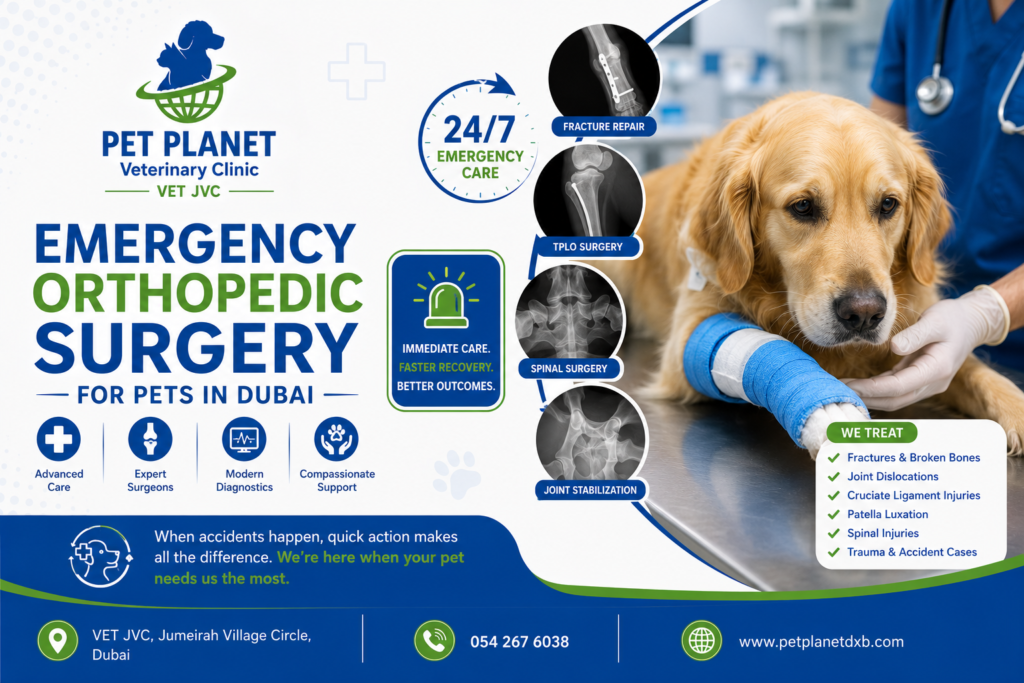
Orthopedic emergencies in pets can happen suddenly and without warning. Whether caused by a road accident, a fall, a sports injury, or trauma during play, orthopedic injuries often require immediate veterinary attention to prevent long-term complications. Broken bones, joint dislocations, spinal injuries, and ligament tears can cause severe pain and may permanently affect your pet’s mobility if not treated quickly. At Pet Planet Veterinary Clinic – VET JVC, we provide advanced emergency orthopedic surgery and trauma care for dogs and cats in Dubai. Our experienced veterinary team uses modern diagnostic imaging, advanced surgical techniques, and comprehensive post-operative care to help pets recover safely and comfortably. What Is Emergency Orthopedic Surgery for Pets? Emergency orthopedic surgery is a specialized branch of veterinary medicine focused on treating injuries affecting bones, joints, ligaments, muscles, and the spine. These procedures are often performed urgently after traumatic injuries to: Restore mobility Stabilize fractures Reduce pain Repair damaged joints Prevent long-term complications Orthopedic surgery may involve: Bone plating Pins and screws External fixation Ligament repair Joint stabilization Spinal decompression procedures Fast diagnosis and treatment significantly improve recovery outcomes. Common Orthopedic Emergencies in Pets Bone Fractures Fractures are among the most common orthopedic emergencies seen in veterinary clinics. Pets can suffer fractures from: Car accidents Falls from balconies or stairs Rough play Sports injuries Trauma Common fractures include: Leg fractures Pelvic fractures Jaw fractures Tail fractures Spinal fractures Symptoms of fractures may include: Severe limping Swelling Pain Inability to walk Visible deformity Prompt surgical stabilization is often necessary to ensure proper healing. Joint Dislocations Joint dislocations occur when bones move out of their normal position within a joint. Common dislocations include: Hip dislocation Elbow dislocation Knee dislocation Pets with dislocations often experience: Severe pain Swelling Sudden inability to use the limb Abnormal limb positioning Emergency treatment helps restore joint stability and reduce long-term arthritis risk. Cruciate Ligament Tears Cruciate ligament injuries are extremely common in dogs, especially active and larger breeds. This condition affects the knee joint and can cause: Sudden limping Difficulty standing Pain during movement Reduced activity Many dogs with cruciate ligament injuries require TPLO surgery (Tibial Plateau Leveling Osteotomy) or other orthopedic stabilization procedures. Patella Luxation Patella luxation occurs when the kneecap slips out of place. This condition may be congenital or caused by trauma. Common symptoms include: Skipping while walking Intermittent limping Difficulty jumping Knee pain Surgical correction may be required for severe cases. Spinal Injuries Spinal trauma is one of the most serious orthopedic emergencies in pets. Spinal injuries can occur after: Road traffic accidents Falls Blunt trauma Severe impact injuries Symptoms may include: Paralysis Weakness Difficulty walking Loss of bladder control Severe pain Emergency neurological evaluation and advanced imaging are critical for spinal injuries. Signs Your Pet Needs Emergency Orthopedic Care Pet owners should seek immediate veterinary attention if they notice: Sudden limping Inability to stand Severe swelling Visible bone deformity Dragging limbs Crying or vocalizing in pain Bleeding after trauma Refusal to bear weight Sudden paralysis Severe pain during movement Delaying treatment can worsen injuries and increase the risk of permanent complications. What Causes Orthopedic Injuries in Pets? Orthopedic injuries can happen for many reasons, including: Road Accidents Traffic accidents are a major cause of severe fractures and trauma in pets. Falls From Heights Cats and small dogs may suffer fractures after falling from balconies, stairs, or furniture. Sports & Play Injuries Active dogs may injure ligaments, joints, or bones during intense physical activity. Obesity Excess weight places additional stress on joints and increases injury risk. Age-Related Degeneration Older pets are more prone to arthritis, ligament weakness, and fractures. How Emergency Orthopedic Conditions Are Diagnosed At Pet Planet Veterinary Clinic – VET JVC, accurate diagnosis is the foundation of successful orthopedic treatment. Physical Examination Veterinarians first assess: Pain level Limb positioning Joint stability Neurological function Swelling and inflammation Digital X-Rays Digital X-rays are essential for diagnosing: Bone fractures Joint dislocations Spinal injuries Bone alignment problems X-rays also help veterinarians plan surgical procedures accurately. CT Scan & Advanced Imaging Advanced imaging may be recommended for: Complex fractures Spinal injuries Neurological conditions Surgical precision CT scans provide detailed images that improve treatment planning. Neurological Evaluation Pets with spinal trauma often require neurological assessment to determine: Nerve function Paralysis severity Surgical urgency Types of Emergency Orthopedic Surgery for Pets Fracture Repair Surgery Fracture repair surgery stabilizes broken bones using the following: Plates Screws Pins External fixators The goal is to restore normal bone alignment and healing. TPLO Surgery TPLO surgery is commonly performed for cruciate ligament injuries in dogs. This procedure: Stabilizes the knee joint Improves mobility Reduces pain Supports long-term recovery TPLO is considered one of the most effective surgical solutions for ACL injuries in dogs. Patella Luxation Surgery This procedure corrects kneecap instability by realigning the patella and stabilizing the joint. Joint Stabilization Procedures Joint stabilization surgery may be necessary for severe joint trauma or dislocations. Spinal Surgery Emergency spinal surgery may help relieve pressure on the spinal cord and improve neurological recovery. What Happens During Emergency Orthopedic Surgery? Orthopedic emergencies are managed carefully through multiple stages. Step 1: Emergency Assessment Veterinarians stabilize the pet and assess injuries. Step 2: Diagnostic Imaging X-rays or CT scans identify fractures and internal damage. Step 3: Pain Management & Stabilization Pain relief and emergency stabilization are provided before surgery. Step 4: Anesthesia Preparation The pet undergoes anesthesia monitoring and surgical preparation. Step 5: Surgical Repair Orthopedic surgeons repair fractures, stabilize joints, or perform ligament surgery. Step 6: Recovery Monitoring Pets are monitored carefully after surgery to ensure safe recovery. Step 7: Rehabilitation Planning Recovery plans include rest, medications, and rehabilitation exercises. Recovery After Pet Orthopedic Surgery Recovery is an important part of successful orthopedic treatment. Post-operative care may include the following: Pain medication Restricted activity Bandage care Rehabilitation therapy Follow-up examinations Pet owners play a major role in ensuring successful healing at home. How Long Does Recovery Take? Recovery times vary depending on the injury and surgical procedure. General Recovery Estimates: Minor injuries:

Emergency Orthopedic Surgery for Pets in Dubai Read More »