
Bringing home a new puppy is an exciting experience, but it also comes with important responsibilities — and one of the most essential is vaccination. Puppies are highly vulnerable to infectious diseases during the first few months of life because their immune systems are still developing. Early vaccination helps protect them from serious illnesses that can become life-threatening if left untreated.
Many new pet owners ask, “When should puppies get their first vaccine?” Understanding the right vaccination timeline can help your puppy grow into a healthy and protected adult dog.
At Pet Planet Veterinary Clinic – VET JVC, we provide personalized puppy vaccination programs designed to protect your pet at every stage of early development. Our veterinary team helps puppy owners in Dubai understand vaccination schedules, booster shots, parasite prevention, and overall preventive care.
Why Are Puppy Vaccines Important?
Puppies are born with temporary immunity passed from their mother through nursing. However, this protection gradually weakens over time, leaving puppies vulnerable to dangerous infectious diseases.
Vaccinations help stimulate your puppy’s immune system to safely recognize and fight harmful viruses and bacteria before they can cause serious illness.
Puppy vaccines help protect against diseases such as:
- Parvovirus
- Distemper
- Rabies
- Hepatitis
- Leptospirosis
- Kennel cough
Without vaccination, puppies face a much higher risk of severe illness, hospitalization, and even death from preventable diseases.
Vaccination also helps reduce the spread of contagious diseases among pets in the community.
When Should Puppies Get Their First Vaccine?
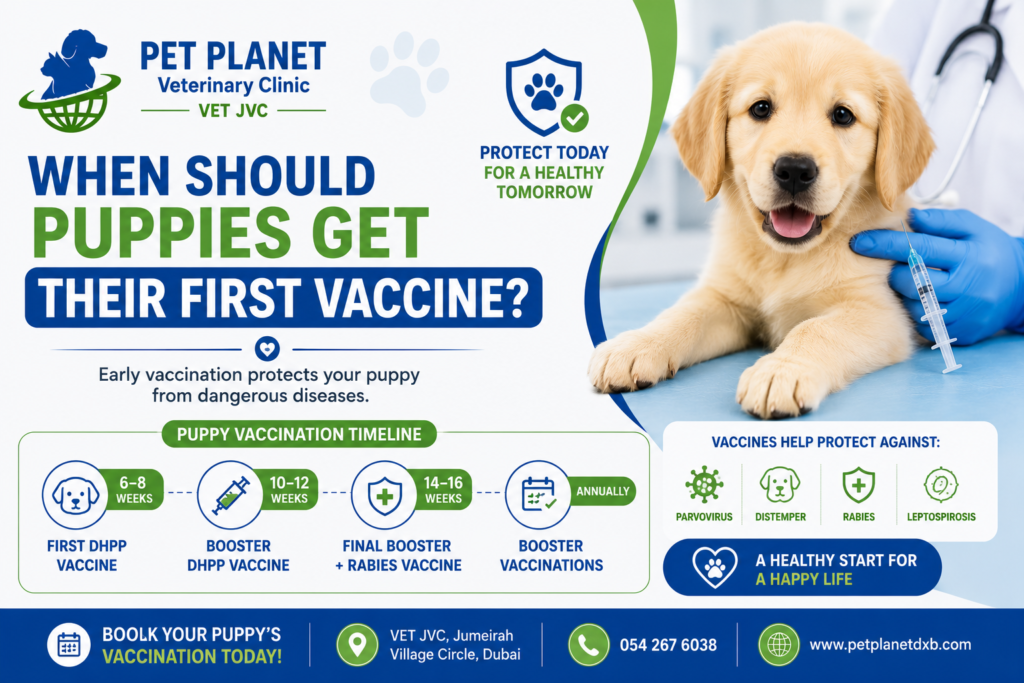
Most puppies should receive their first vaccine between 6 and 8 weeks of age.
This timing is important because maternal antibodies begin to decrease during this stage of development. Once these antibodies fade, puppies become more susceptible to infections.
The first vaccine helps begin building your puppy’s own immune protection against serious diseases.
Veterinarians may adjust the vaccination schedule slightly depending on:
- Breed
- Lifestyle
- Health condition
- Exposure risk
- Previous medical history
Starting vaccinations on time is essential for proper immune development and long-term disease prevention.
What Vaccines Do Puppies Need First?
DHPP Vaccine
The DHPP vaccine is usually the first core vaccine given to puppies.
It protects against:
- Distemper
- Hepatitis (Adenovirus)
- Parvovirus
- Parainfluenza
These diseases can spread rapidly among unvaccinated dogs and may become fatal without treatment.
The DHPP vaccine is considered one of the most important puppy vaccinations.
Rabies Vaccine
Rabies is a fatal viral disease that affects both animals and humans.
In many areas, rabies vaccination is legally required and plays a critical role in public health protection.
Veterinarians typically administer the rabies vaccine during later booster appointments based on local regulations and the puppy’s age.
Leptospirosis Vaccine
Leptospirosis is a bacterial disease that can affect both pets and humans.
It may spread through:
- Contaminated water
- Wildlife exposure
- Infected urine
This vaccine may be recommended depending on your puppy’s environment and lifestyle.
Kennel Cough Vaccine
The kennel cough vaccine helps protect against contagious respiratory infections often spread in:
- Boarding facilities
- Grooming salons
- Dog parks
- Training classes
Social puppies may benefit from this vaccine early in life.
Complete Puppy Vaccination Schedule
Below is a general puppy vaccination timeline recommended by veterinarians.
| Puppy Age | Recommended Vaccines |
|---|---|
| 6–8 Weeks | First DHPP Vaccine |
| 10–12 Weeks | Booster DHPP Vaccine |
| 14–16 Weeks | Final DHPP Booster + Rabies |
| Annually | Booster Vaccinations |
Some puppies may require additional vaccines depending on their health risks and lifestyle.
At Pet Planet Veterinary Clinic – VET JVC, our veterinary team creates customized vaccination plans tailored to each puppy’s needs.
Why Do Puppies Need Multiple Vaccine Boosters?
Many puppy owners wonder why vaccines are given in several stages instead of just one injection.
The reason is maternal antibodies.
Although maternal antibodies provide temporary protection, they can also interfere with vaccines during early puppyhood. Booster vaccines are needed to ensure the puppy develops strong and lasting immunity once maternal protection fades.
Booster vaccinations:
- Strengthen immune response
- Extend protection duration
- Improve long-term immunity
- Reduce infection risk
Completing the full vaccination schedule is extremely important for proper disease protection.
Can Puppies Go Outside Before Vaccination?
Puppies should avoid high-risk public areas until their vaccination schedule is complete.
Unvaccinated puppies are especially vulnerable to dangerous diseases like parvovirus, which can survive in the environment for long periods.
Before full vaccination, it is best to avoid:
- Dog parks
- Public pet areas
- Contact with unknown dogs
- Shared water bowls
- Contaminated outdoor surfaces
Safe socialization can still be introduced carefully in controlled environments with healthy vaccinated dogs.
Your veterinarian can guide you on when it is safe for your puppy to explore public spaces.
What Diseases Do Puppy Vaccines Protect Against?
Parvovirus
Parvovirus is one of the most dangerous viral infections in puppies.
Symptoms include:
- Severe vomiting
- Bloody diarrhea
- Dehydration
- Weakness
- Loss of appetite
Parvovirus spreads easily and can become fatal without aggressive treatment.
Distemper
Distemper affects multiple body systems, including:
- Respiratory system
- Nervous system
- Digestive tract
Symptoms may include:
- Fever
- Coughing
- Neurological signs
- Seizures
Vaccination is the best protection against distemper.
Rabies
Rabies attacks the nervous system and is almost always fatal once symptoms appear.
Vaccinating pets against rabies helps protect both animals and people.
Canine Hepatitis
This viral disease affects the liver and can cause:
- Fever
- Abdominal pain
- Eye problems
- Liver damage
Leptospirosis
Leptospirosis is a bacterial infection that may lead to:
- Kidney disease
- Liver damage
- Fever
- Vomiting
Vaccination reduces the risk of severe complications.
What Happens During a Puppy Vaccination Appointment?
A puppy vaccination appointment involves much more than a simple injection.
At Pet Planet Veterinary Clinic – VET JVC, our veterinarians perform a full health assessment before vaccination.
The appointment may include:
- Physical examination
- Weight monitoring
- Temperature check
- Parasite assessment
- Vaccine administration
- Nutrition guidance
- Deworming recommendations
These visits also allow pet owners to discuss behavioral concerns, feeding, and preventive healthcare.
Are Puppy Vaccines Safe?
Puppy vaccines are generally very safe and are carefully developed to protect against serious diseases.
Most puppies experience little or no discomfort after vaccination.
Some mild temporary reactions may include:
- Sleepiness
- Mild swelling at injection site
- Reduced appetite
- Slight fever
These symptoms usually resolve within a day or two.
Serious vaccine reactions are rare but should always be monitored.
When Should You Contact a Veterinarian After Vaccination?
Although severe reactions are uncommon, pet owners should contact a veterinarian immediately if their puppy develops:
- Facial swelling
- Difficulty breathing
- Persistent vomiting
- Severe lethargy
- Collapse
- Hives or severe itching
Prompt veterinary attention helps ensure puppy safety and rapid treatment if needed.
How Much Do Puppy Vaccines Cost in JVC Dubai?
Puppy vaccination costs in JVC Dubai may vary depending on:
- Vaccine type
- Number of boosters
- Wellness packages
- Veterinary clinic
- Additional services included
Many clinics offer preventive wellness plans that combine vaccinations, deworming, and health checkups.
Investing in preventive healthcare early can help avoid expensive medical treatment later.
Why Choose Professional Veterinary Vaccination?
Vaccines should always be administered by licensed veterinary professionals.
Professional veterinary clinics ensure:
- Proper vaccine storage
- Correct administration
- Health screening before vaccination
- Safe handling
- Accurate medical records
- Customized vaccination schedules
Vaccination is not just about injections — it is part of a complete preventive healthcare program.
Why Choose Pet Planet Veterinary Clinic – VET JVC?
At Pet Planet Veterinary Clinic – VET JVC, we provide compassionate puppy care and preventive veterinary services designed to support healthy growth and development.
Our clinic offers:
- Puppy vaccination programs
- Personalized vaccine schedules
- Wellness examinations
- Parasite prevention
- Puppy health monitoring
- Experienced veterinary care
- Friendly and stress-free environment
We believe early preventive care is the foundation of lifelong health for every puppy.
How to Keep Your Puppy Healthy Between Vaccines
Proper Nutrition
Balanced puppy nutrition supports healthy growth and strong immunity.
Deworming
Regular deworming helps prevent intestinal parasites that commonly affect puppies.
Safe Socialization
Controlled socialization supports behavioral development while reducing infection risk.
Routine Veterinary Checkups
Regular health exams allow early detection of medical issues.
Parasite Prevention
Flea, tick, and parasite prevention helps protect puppies from additional diseases.
