 Skip to content
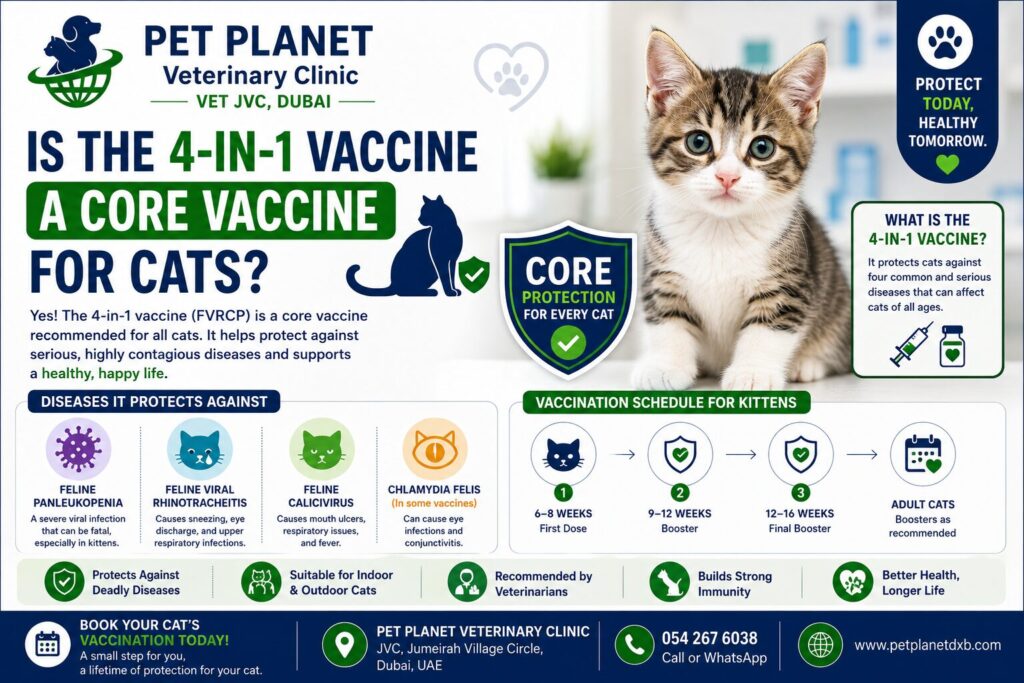
Yes, the 4-in-1 vaccine is generally considered a core vaccine for cats because it protects against several serious and highly contagious infectious diseases that can affect both indoor and outdoor cats. Veterinary organizations worldwide recommend core vaccinations as part of every kitten’s and most adult cats’ preventive healthcare program.
The 4-in-1 vaccine commonly protects against Feline Panleukopenia (FPV), Feline Viral Rhinotracheitis (FHV-1), Feline Calicivirus (FCV), and, in some formulations, Chlamydia felis. However, the exact combination can vary depending on the vaccine manufacturer and country, so it’s always best to confirm the specific formulation with your veterinarian.
Vaccinating your cat not only protects them from potentially life-threatening illnesses but also helps reduce the spread of infectious diseases within the feline population. Whether your cat lives indoors, outdoors, or both, staying up to date with core vaccinations is one of the most important steps in responsible pet ownership.
In this comprehensive guide, the veterinary team at Pet Planet Veterinary Clinic explains why the 4-in-1 vaccine is considered a core vaccine, the diseases it protects against, who should receive it, recommended vaccination schedules, possible side effects, and what every cat owner should know.
What Is a Core Vaccine for Cats?
A core vaccine is a vaccine recommended for almost every cat, regardless of breed, lifestyle, or whether the cat lives indoors or outdoors.
These vaccines protect against diseases that are:
- Highly contagious
- Common worldwide
- Potentially life-threatening
- Difficult or impossible to treat effectively
- Easily transmitted between cats
Core vaccines form the foundation of every cat’s preventive healthcare plan.
Core Vaccines vs Non-Core Vaccines
Understanding the difference helps owners make informed decisions about their cat’s health.
Core Vaccines
Core vaccines are recommended for nearly all cats because they protect against diseases that pose a significant health risk.
Examples include vaccines protecting against:
- Feline Panleukopenia Virus (FPV)
- Feline Herpesvirus (FHV-1)
- Feline Calicivirus (FCV)
Depending on local regulations, rabies vaccination may also be considered a core vaccine.
Non-Core Vaccines
Non-core vaccines are recommended only for cats with certain lifestyles or risk factors.
These may include vaccines for:
- Feline Leukemia Virus (FeLV)
- Bordetella
- Chlamydia (when not included in the primary vaccine formulation)
Your veterinarian will recommend these vaccines based on your cat’s:
- Age
- Lifestyle
- Outdoor access
- Boarding requirements
- Multi-cat household
- Local disease risks
Is the 4-in-1 Vaccine Considered a Core Vaccine?
Yes.
The 4-in-1 vaccine is generally regarded as a core vaccine because it protects cats against several serious infectious diseases that veterinarians consider essential to prevent.
Most 4-in-1 vaccines are based on the FVRCP vaccine, protecting against:
- Feline Viral Rhinotracheitis
- Feline Calicivirus
- Feline Panleukopenia
Some manufacturers also include Chlamydia felis, creating a true 4-in-1 combination.
Because vaccine formulations vary, always ask your veterinarian exactly which diseases your cat’s vaccine covers.
Regardless of the specific formulation, these vaccines form the foundation of feline preventive medicine and are recommended for kittens and most adult cats.
What Diseases Does the 4-in-1 Vaccine Protect Against?
Feline Panleukopenia (FPV)
Often called feline distemper, panleukopenia is one of the most dangerous viral diseases affecting cats.
It spreads rapidly and can cause:
- Severe vomiting
- Diarrhea
- Fever
- Dehydration
- Immune suppression
- Sudden death in kittens
Vaccination is the most effective way to prevent this potentially fatal disease.
Feline Viral Rhinotracheitis (FHV-1)
This virus causes upper respiratory infections commonly known as cat flu.
Symptoms may include:
- Sneezing
- Eye discharge
- Nasal discharge
- Fever
- Loss of appetite
- Conjunctivitis
Although infected cats may carry the virus for life, vaccination greatly reduces the severity of illness and lowers the risk of complications.
Feline Calicivirus (FCV)
Calicivirus is another common cause of respiratory disease.
Affected cats may develop:
- Mouth ulcers
- Sneezing
- Fever
- Eye inflammation
- Nasal discharge
- Difficulty eating
Some strains may also cause lameness or more severe systemic illness.
Vaccination helps reduce both the severity of disease and viral shedding.
Chlamydia felis (When Included)
Some 4-in-1 vaccines also include protection against Chlamydia felis, a bacterial infection that primarily affects the eyes.
It may cause:
- Red eyes
- Swollen eyelids
- Persistent conjunctivitis
- Eye discharge
Not every 4-in-1 vaccine includes Chlamydia, so owners should confirm the vaccine formulation with their veterinarian.
Why Is the 4-in-1 Vaccine So Important?
The diseases covered by the vaccine are highly contagious and can spread rapidly wherever cats come into contact.
Vaccination helps:
- Protect kittens during their most vulnerable months
- Reduce severe illness
- Lower hospitalization rates
- Prevent avoidable deaths
- Reduce virus transmission
- Support healthier cat communities
For many infectious feline diseases, prevention is significantly safer and more effective than treatment.
Do Indoor Cats Need the 4-in-1 Vaccine?
Many owners believe indoor cats don’t need vaccinations.
This is one of the biggest misconceptions in feline healthcare.
Indoor cats may still encounter infectious diseases through:
- Veterinary clinic visits
- Grooming facilities
- Boarding services
- Newly adopted cats
- Visitors’ clothing or shoes
- Open doors or windows
- Unexpected escapes
Even a cat that rarely leaves home can become exposed.
For this reason, veterinarians generally recommend core vaccinations for indoor cats as well.
Do Outdoor Cats Need Additional Vaccines?
Cats that spend time outdoors often face greater exposure to infectious diseases.
Depending on your cat’s lifestyle, your veterinarian may recommend additional vaccines such as:
- Rabies (where required or recommended)
- Feline Leukemia Virus (FeLV)
- Other lifestyle-based vaccines
The vaccination plan should always be tailored to your cat’s individual risk factors.
When Should Kittens Receive the 4-in-1 Vaccine?
Kittens receive temporary protection from their mother’s antibodies, but this immunity gradually declines.
To build long-lasting protection, multiple vaccine doses are required.
| Kitten Age | Vaccination |
|---|---|
| 6–8 weeks | First 4-in-1 vaccine |
| 9–12 weeks | Booster vaccination |
| 12–16 weeks | Final kitten booster |
| Adult | Booster as recommended by your veterinarian |
Completing the full kitten vaccination series is essential for developing reliable immunity.
Do Adult Cats Need Booster Vaccinations?
Yes.
Protection from vaccines decreases over time, so booster vaccinations help maintain immunity.
The appropriate booster interval depends on:
- Your cat’s age
- Lifestyle
- Previous vaccination history
- Overall health
- Current veterinary guidelines
During annual health examinations, your veterinarian will recommend the most appropriate booster schedule.
Is the 4-in-1 Vaccine Safe?
Yes.
The 4-in-1 vaccine has an excellent safety record and is routinely administered by veterinarians worldwide.
Like any medical treatment, mild side effects can occur.
Common temporary reactions include:
- Mild sleepiness
- Reduced appetite
- Mild fever
- Slight swelling at the injection site
- Less activity for a day or two
These effects usually resolve without treatment.
Serious reactions are uncommon but require immediate veterinary attention.
Seek veterinary care immediately if your cat develops:
- Facial swelling
- Difficulty breathing
- Collapse
- Persistent vomiting
- Severe weakness
Who Should NOT Receive the 4-in-1 Vaccine Immediately?
Although the 4-in-1 vaccine is considered safe for most healthy cats, there are situations where your veterinarian may recommend postponing vaccination until your cat is well enough to receive it.
Your veterinarian may delay vaccination if your cat:
- Has a fever
- Is showing signs of illness
- Has severe vomiting or diarrhea
- Is recovering from surgery
- Has an uncontrolled chronic medical condition
- Has previously experienced a serious vaccine reaction
- Is receiving medications that significantly affect the immune system
A complete physical examination before vaccination helps ensure your cat receives the vaccine at the safest and most appropriate time.
Never vaccinate a sick cat without veterinary advice.
What Happens During a Cat Vaccination Appointment?
A vaccination appointment involves much more than simply administering an injection. It is also an opportunity for your veterinarian to assess your cat’s overall health and detect any early medical concerns.
A typical appointment at Pet Planet Veterinary Clinic may include:
1. Comprehensive Physical Examination
Your veterinarian will examine your cat’s:
- Eyes
- Ears
- Nose
- Mouth
- Heart
- Lungs
- Abdomen
- Skin and coat
- Body condition
This ensures your cat is healthy enough for vaccination.
2. Weight Assessment
Your cat’s weight is recorded to monitor growth, nutrition, and overall health.
Weight changes can sometimes indicate underlying medical conditions.
3. Temperature Check
A normal body temperature helps confirm your cat is not developing an infection before receiving the vaccine.
4. Lifestyle Assessment
Your veterinarian may ask questions such as
- Does your cat live indoors or outdoors?
- Does your cat travel?
- Does your cat stay at boarding facilities?
- Are there other cats at home?
- Has your cat been vaccinated previously?
These answers help determine whether additional non-core vaccines may be appropriate.
5. Vaccine Administration
The vaccine is administered using a small needle, usually under the skin.
Most cats tolerate the injection very well, and the process only takes a few seconds.
6. Vaccination Certificate
Your veterinarian records:
- Vaccine type
- Batch number
- Administration date
- Next booster due date
Keeping vaccination records updated is important for boarding facilities, travel requirements, and future veterinary visits.
7. Post-Vaccination Advice
Before you leave, your veterinarian will explain:
- Normal side effects
- Warning signs
- Booster schedule
- Home monitoring
- When your cat can return to normal activities
Common Myths About the 4-in-1 Vaccine
Many misconceptions about vaccinations circulate online. Let’s separate myth from fact.
Myth 1: Indoor Cats Don’t Need Vaccinations
Fact:
Indoor cats can still be exposed to infectious diseases through:
- Veterinary clinics
- Visitors
- New pets
- Boarding
- Escape outdoors
- Contaminated objects
Core vaccines remain important even for indoor-only cats.
Myth 2: One Vaccine Protects My Cat Forever
Fact:
Immunity naturally decreases over time.
Booster vaccinations help maintain long-term protection according to current veterinary recommendations.
Myth 3: Vaccines Always Make Cats Sick
Fact:
Most vaccinated cats experience either:
- No side effects
- Mild sleepiness
- Slight soreness
- Reduced appetite for a day
Serious vaccine reactions are uncommon.
Myth 4: Vaccinated Cats Can Never Catch Cat Flu
Fact:
Vaccination greatly reduces the risk and severity of disease, but no vaccine provides 100% protection.
A vaccinated cat may still become infected, but illness is generally much milder than in an unvaccinated cat.
Myth 5: My Cat Is Healthy, So Vaccines Aren’t Necessary
Fact:
Vaccination is designed to keep healthy cats healthy by preventing diseases before they occur.
Waiting until a cat becomes sick defeats the purpose of preventive medicine.
Why Choose Pet Planet Veterinary Clinic for Cat Vaccinations?
At Pet Planet Veterinary Clinic, we believe prevention is one of the best ways to help cats live long, healthy lives.
Our experienced veterinary team provides personalized vaccination programs based on your cat’s:
- Age
- Lifestyle
- Medical history
- Vaccination status
- Individual health risks
Our vaccination services include:
- Comprehensive health examinations
- Kitten vaccination programs
- Adult booster vaccinations
- Personalized vaccine recommendations
- Vaccination reminders
- Vaccination certificates
- Preventive health advice
- Friendly, low-stress handling techniques
Whether you’ve recently adopted a kitten or your adult cat is due for a booster, we’re here to help protect them from preventable infectious diseases.
Frequently Asked Questions
Is the 4-in-1 vaccine mandatory for cats?
Requirements vary depending on local regulations. While it may not be legally mandatory in every region, veterinarians generally recommend it as a core vaccine because it protects against several serious infectious diseases.
Is FVRCP the same as the 4-in-1 vaccine?
Many 4-in-1 vaccines are based on the FVRCP vaccine, although some formulations also include Chlamydia felis. The exact components depend on the vaccine manufacturer.
Can indoor cats skip the 4-in-1 vaccine?
No. Indoor cats can still be exposed to infectious diseases and are generally recommended to receive core vaccinations.
How long does immunity last?
The duration of immunity depends on the vaccine used, your cat’s age, vaccination history, and current veterinary recommendations. Your veterinarian will advise when booster vaccinations are due.
Can adult cats start the 4-in-1 vaccination series?
Yes. Adult cats that have never been vaccinated can begin a vaccination program after a veterinary examination.
What happens if my kitten misses a booster?
Contact your veterinarian as soon as possible. Depending on the timing, your kitten may need the missed booster or an adjusted vaccination schedule.
Is the 4-in-1 vaccine painful?
The injection causes only brief discomfort for most cats. Some may experience mild soreness at the injection site for a short time afterward.
Can pregnant cats receive the 4-in-1 vaccine?
Vaccination during pregnancy should only be performed if your veterinarian determines it is appropriate. Always discuss your cat’s reproductive status before vaccination.
Can vaccinated cats still get cat flu?
Yes, but vaccination usually reduces the severity of illness and helps lower the risk of serious complications.
How much does the 4-in-1 vaccine cost?
The price varies depending on the veterinary clinic, consultation fees, and whether the vaccination is part of a kitten package or wellness program. Contact Pet Planet Veterinary Clinic for current vaccination packages and pricing.