
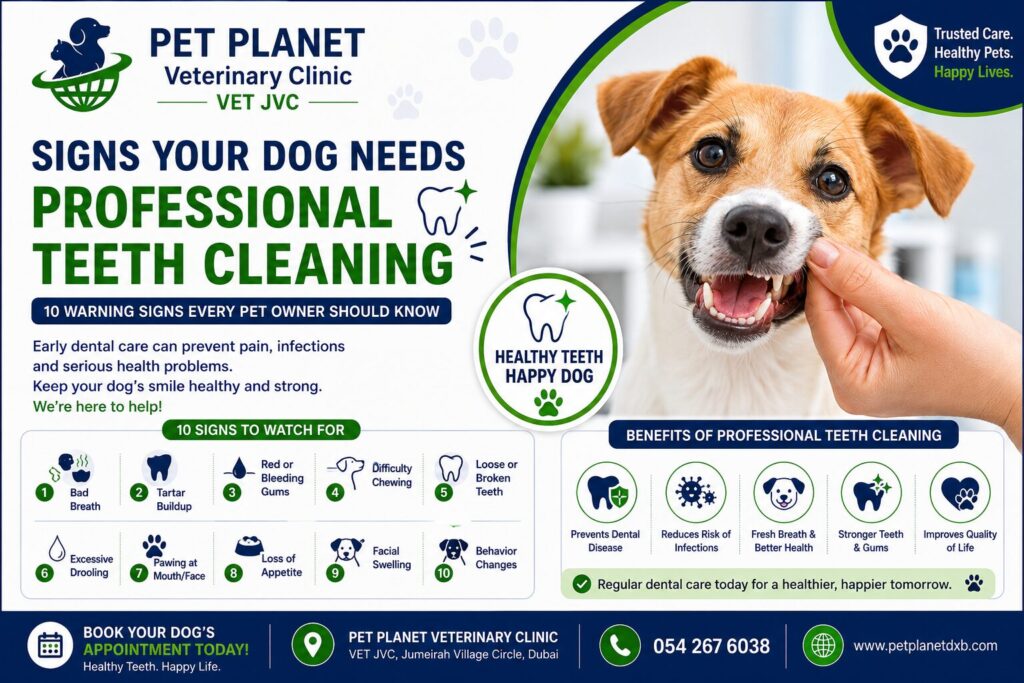
Dental disease is one of the most common health problems in dogs, yet it often goes unnoticed until it causes significant pain or discomfort. In fact, veterinarians estimate that most dogs over the age of three show signs of periodontal disease, even if they appear healthy. Because dogs instinctively hide pain, many pet owners don’t realize their dog has a dental problem until bad breath, difficulty eating, or loose teeth become obvious.
Recognizing the early signs that your dog needs professional teeth cleaning can help prevent serious oral infections, tooth loss, and costly treatments in the future. While brushing your dog’s teeth at home is an important part of preventive care, it cannot remove hardened tartar or treat dental disease below the gum line. Professional veterinary dental cleaning is essential for maintaining your dog’s oral health and overall wellbeing.
In this comprehensive guide, the experienced veterinary team at Pet Planet Veterinary Clinic explains the most common warning signs of dental disease, what happens during professional dog teeth cleaning, and when you should schedule a dental examination for your pet.
Why Professional Dog Teeth Cleaning Is Important
Professional dog teeth cleaning does much more than improve your dog’s breath. It removes plaque and tartar, treats early gum disease, and helps prevent painful oral conditions that can affect your dog’s overall health.
Without proper dental care, bacteria can build up beneath the gum line and lead to periodontal disease, one of the leading causes of tooth loss in dogs.
What Happens If Dental Disease Is Left Untreated?
Ignoring dental disease can result in:
- Persistent bad breath
- Painful gum infections
- Loose or missing teeth
- Difficulty eating
- Tooth root abscesses
- Jaw bone damage
- Chronic inflammation
- Increased risk of bacteria entering the bloodstream, potentially affecting the heart, liver, and kidneys
Early treatment is always easier, less invasive, and often more affordable than treating advanced dental disease.
Why Home Brushing Isn’t Always Enough
Daily brushing helps reduce plaque, but it cannot remove hardened tartar once it has formed. Professional dental cleaning uses specialized equipment to clean above and below the gum line, where harmful bacteria accumulate.
10 Signs Your Dog Needs Professional Teeth Cleaning
1. Persistent Bad Breath
Occasional dog breath is normal, but a strong, unpleasant odor that doesn’t improve may indicate periodontal disease or bacterial infection.
Persistent bad breath (halitosis) is often one of the earliest warning signs that your dog’s teeth need professional attention.
2. Yellow or Brown Tartar on the Teeth
If you notice yellow, brown, or hard deposits along your dog’s gum line, tartar has likely formed.
Unlike soft plaque, tartar cannot be removed by brushing alone and requires professional ultrasonic scaling by a veterinarian.
3. Red, Swollen, or Bleeding Gums
Healthy gums should appear light pink and firm.
Warning signs include:
- Redness
- Swelling
- Bleeding while chewing
- Bleeding during brushing
- Tender gums
These symptoms often indicate gingivitis, the earliest stage of periodontal disease.
4. Difficulty Chewing Food
Dogs experiencing dental pain may:
- Chew on one side of the mouth
- Drop food while eating
- Avoid hard kibble
- Eat more slowly
- Refuse treats they once enjoyed
Pain while eating should never be ignored.
5. Loose, Broken, or Missing Teeth
Adult dogs should not lose healthy teeth.
Loose teeth often indicate advanced periodontal disease that has damaged the supporting bone and surrounding tissues.
Broken teeth can also expose sensitive nerves and increase the risk of infection.
6. Excessive Drooling
An increase in drooling may be caused by:
- Oral pain
- Gum inflammation
- Tooth fractures
- Dental infections
- Foreign objects lodged in the mouth
If excessive drooling is accompanied by bad breath or swelling, a veterinary examination is recommended.
7. Pawing at the Mouth or Face
Dogs often paw at their mouths when experiencing dental discomfort.
You may notice your dog:
- Rubbing its face on furniture
- Pawing at its muzzle
- Shaking its head
- Avoiding mouth handling
These behaviors may indicate painful dental disease.
8. Reduced Appetite or Weight Loss
When chewing becomes painful, many dogs begin eating less.
Some dogs may:
- Skip meals
- Prefer soft food
- Lose weight
- Become less interested in treats
Loss of appetite should always be investigated by a veterinarian.
9. Facial Swelling
Swelling around the cheeks, jaw, or below the eye may indicate a tooth root abscess.
This is considered a serious condition that requires prompt veterinary treatment to relieve pain and prevent the infection from spreading.
10. Changes in Behaviour
Dental pain can affect your dog’s personality.
Some dogs become
- Less playful
- More irritable
- Reluctant to chew toys
- Less active
- Sensitive around the face
If your normally happy dog suddenly behaves differently, dental disease could be one of the underlying causes.
What Happens During Professional Dog Teeth Cleaning?
Professional veterinary dental cleaning is performed under carefully monitored general anesthesia to ensure your dog’s safety and comfort.
The procedure typically includes:
Comprehensive Oral Examination
A thorough examination identifies dental disease, damaged teeth, gum health, and other oral problems.
General Anesthesia
Modern anesthesia allows the veterinary team to clean below the gum line safely and thoroughly while keeping your dog comfortable.
Dental X-Rays (When Needed)
Dental radiographs help detect hidden problems beneath the gum line, including damaged tooth roots and bone loss.
Ultrasonic Scaling
Specialized ultrasonic instruments remove plaque and tartar from the teeth and beneath the gums.
Dental Polishing
After scaling, the teeth are polished to smooth the enamel surface and reduce future plaque accumulation.
Tooth Extraction (If Necessary)
Severely damaged or infected teeth may require extraction to eliminate pain and prevent further complications.How Often Should Dogs Have Professional Teeth Cleaning?
There is no one-size-fits-all schedule for professional dog teeth cleaning. The ideal frequency depends on your dog’s breed, age, genetics, diet, and overall oral health. While some dogs may only require a professional cleaning every few years, others—particularly small breeds—benefit from annual dental examinations and cleanings. During routine wellness visits, your veterinarian will assess your dog’s teeth and gums to determine the most appropriate dental care schedule.Factors That Affect How Often Your Dog Needs Dental Cleaning
Several factors influence how quickly plaque and tartar build up.Breed
Small and toy breeds are more likely to develop dental disease because their teeth are often crowded together, making plaque removal more difficult.Age
As dogs grow older, the risk of periodontal disease increases. Senior dogs may require more frequent dental evaluations to maintain healthy teeth and gums.Diet
Dogs that primarily eat soft food may develop plaque more quickly than those on an appropriate dry diet. However, diet alone cannot prevent dental disease.Home Dental Care
Daily tooth brushing, dental chews, and veterinarian-approved oral care products can help slow plaque accumulation between professional cleanings.Previous Dental Disease
Dogs that have already experienced periodontal disease may require more frequent professional cleanings to prevent recurrence.Which Dogs Are Most at Risk of Dental Disease?
Although any dog can develop dental disease, certain breeds are particularly susceptible due to their jaw structure and tooth alignment. Breeds commonly affected include:- Yorkshire Terrier
- Chihuahua
- Pomeranian
- Maltese
- Toy Poodle
- Shih Tzu
- Dachshund
- Cavalier King Charles Spaniel
How Can You Prevent Dental Disease in Dogs?
While professional dental cleaning is essential, good home care plays an important role in maintaining your dog’s oral health.Brush Your Dog’s Teeth Daily
Daily brushing is the most effective way to reduce plaque before it hardens into tartar. Use only veterinary-approved toothpaste, as human toothpaste can be harmful to dogs.Offer Veterinary-Approved Dental Chews
Dental chews can help reduce plaque buildup and support healthier gums. Choose products recommended by your veterinarian.Feed a Balanced Diet
A complete and balanced diet supports overall health, including healthy teeth and gums. Your veterinarian may also recommend prescription dental diets for dogs with ongoing dental concerns.Schedule Regular Veterinary Checkups
Routine examinations allow your veterinarian to identify early signs of dental disease before they become painful or require more extensive treatment.Don’t Wait Until Your Dog Is in Pain
Many dogs continue eating even with significant dental disease. Waiting until obvious symptoms appear often means the condition has already progressed. Preventive care is the best approach to maintaining your dog’s oral health.When Should You Visit a Veterinarian?
Schedule a dental examination as soon as possible if your dog experiences any of the following:- Persistent bad breath
- Yellow or brown tartar buildup
- Bleeding or swollen gums
- Difficulty chewing
- Loose or broken teeth
- Excessive drooling
- Facial swelling
- Reduced appetite
- Weight loss
- Pawing at the mouth
- Changes in behaviour related to eating or chewing
Why Choose Pet Planet Veterinary Clinic for Professional Dog Teeth Cleaning?
At Pet Planet Veterinary Clinic, we believe preventive dental care is one of the most important investments you can make in your dog’s long-term health. Our experienced veterinary team provides comprehensive dental services using modern equipment and advanced techniques to ensure your pet receives safe, comfortable, and effective treatment. Our dog dental services include the following:- Comprehensive oral examinations
- Professional ultrasonic teeth cleaning
- Dental scaling above and below the gum line
- Dental polishing
- Digital dental X-rays when required
- Safe anesthesia with continuous monitoring
- Tooth extractions when medically necessary
- Personalized dental care recommendations
- Follow-up examinations and preventive care guidance