 Skip to content

Tibial Tuberosity Advancement (TTA) Surgery for Dogs in JVC Dubai
Personalized orthopedic care for dogs with cruciate ligament injuries in JVC, Dubai.
Has your dog started limping on a back leg, struggling to stand after resting or hesitating before jumping into the car? A damaged cranial cruciate ligament may be responsible. Knee instability can make ordinary movements painful and gradually affect your dog's independence.
At Pet Planet Veterinary Clinic in Jumeirah Village Circle (JVC), Dubai, our veterinary team can assess your dog's knee, explain the available treatments and discuss whether tibial tuberosity advancement (TTA) is an appropriate option. We help you understand the diagnosis, potential surgical benefits, treatment costs and responsibilities during recovery before making a decision.
Compare TTA and TPLO →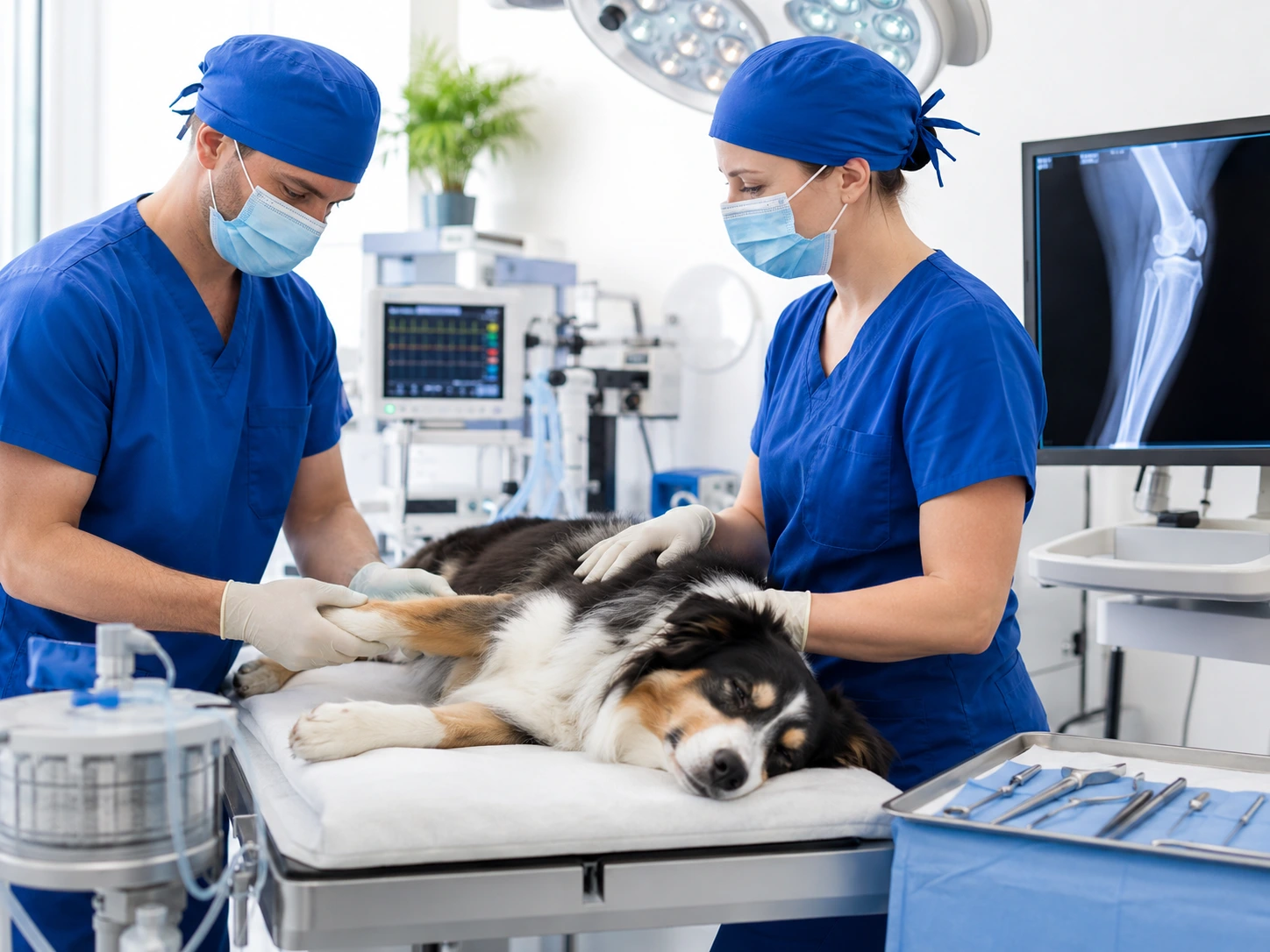
What is Tibial Tuberosity Advancement (TTA) surgery?
Tibial tuberosity advancement is an orthopedic procedure designed to stabilize a dog's knee when the cranial cruciate ligament (CCL) is damaged. The CCL is comparable to the anterior cruciate ligament (ACL) in humans. It normally limits abnormal forward movement of the shinbone relative to the thighbone when the dog bears weight.
When the ligament fails, the knee can become unstable. This may cause inflammation, discomfort, damage to the meniscus (a cushioning structure inside the joint) and progressive arthritis.
Rather than replacing the torn ligament, TTA changes the position of the tibial tuberosity, the bony prominence at the front of the upper shinbone where the patellar tendon attaches. Advancing this structure alters the direction of forces acting through the knee during weight-bearing. An orthopedic implant holds the adjusted bone while it heals.
The aim is to improve functional stability so suitable dogs can gradually regain more comfortable movement. Existing arthritis cannot be reversed by the operation.
What is TTA Rapid surgery in dogs?
TTA Rapid is a modification of the original tibial tuberosity advancement technique. Both procedures share the same principle, but they differ in how the advanced bone is supported and secured.
Traditional TTA surgery
Conventional TTA typically uses a spacer cage and a separate fixation construct, such as a plate, to maintain the new position of the tibial tuberosity. Implant designs vary. The surgeon selects the appropriate system using the dog's radiographic measurements and bone characteristics.
TTA Rapid surgery
TTA Rapid uses a specialized cage-based fixation system and typically preserves a connection between portions of the tibia. Its design differs from conventional TTA implants. Despite the name, TTA Rapid does not automatically mean faster bone healing or an earlier return to unrestricted exercise.
| Feature | Traditional TTA | TTA Rapid |
|---|---|---|
| Main objective | Functional knee stability | Functional knee stability |
| Fixation | Cage plus separate fixation construct, depending on system | Specialized cage-based construct |
| Bone adjustment | Required | Required |
| Planning | Individual radiographic measurements | Individual radiographic measurements |
| Recovery | Restricted activity until cleared | Restricted activity until cleared |
Ask Pet Planet Veterinary Clinic which technique is available or whether referral is appropriate for your dog's specific requirements.
Signs your dog may need cruciate ligament treatment
A cruciate ligament problem is not always caused by a dramatic accident. Gradual degeneration can weaken the ligament until routine activity becomes painful. Signs to look for include:
Sudden or recurring hind-leg limping, especially after exercise.
Difficulty rising from the floor or getting comfortable when sitting.
Hesitation when climbing stairs, jumping or entering a vehicle.
Reduced weight-bearing, toe-touching or holding a leg up.
Knee swelling, stiffness or reduced interest in walks.
Gradual loss of muscle around the affected thigh.
These symptoms can also occur with hip problems, kneecap disorders or other injuries. An orthopedic examination is the safest way to establish the cause.
Which dogs are suitable candidates for TTA?
A partial or complete CCL tear may make surgery worth considering, particularly when instability is causing persistent lameness. However, diagnosis alone does not establish that TTA is the best procedure.
Medium and large dogs
Active dogs and heavier patients may place substantial forces through an unstable knee. The veterinarian will evaluate knee geometry, bone quality, body condition and lifestyle rather than choosing a technique based solely on breed or weight.
Small dogs and senior patients
Selected small dogs may be suitable for TTA or a modified technique when their anatomy permits. Older dogs may also benefit if their health and anesthetic assessment support surgery. Pre-existing arthritis, heart disease or other conditions may change the treatment decision.
Sporting dogs and dogs with partial tears
For dogs involved in running or agility, the expected long-term workload is important. Partial tears can progress, so a dog that still walks reasonably well may nevertheless need treatment. Discuss the desired activity level and realistic recovery expectations with your veterinarian.
How we assess cruciate ligament injuries at Pet Planet
At Pet Planet Veterinary Clinic in JVC, Dubai, the consultation begins with understanding how your dog moves, when symptoms started and whether previous treatments have helped.
| Assessment | Purpose |
|---|---|
| Medical history and gait evaluation | Understand the pattern of pain and functional limitations |
| Orthopedic examination | Identify swelling, discomfort and abnormal joint motion |
| Cranial drawer and tibial thrust tests | Evaluate knee instability, sometimes with sedation |
| Digital X-rays | Assess bone geometry, joint changes and surgical planning measurements |
| Meniscal assessment | Investigate possible associated injury |
| Preoperative blood tests | Assess health and anesthetic suitability |
Standard X-rays do not generally show the torn ligament directly, but they provide valuable information about the knee. TTA planning requires particular attention to the relationship between the patellar tendon and the joint.
Explore our veterinary X-ray and ultrasound services and pet laboratory services.
How is TTA surgery performed on dogs?
The following overview explains what owners can expect rather than providing operative instructions.
The exact surgical approach depends on the chosen technique and individual patient. Ask the treating veterinarian to explain the proposed procedure, implant and expected follow-up schedule before consenting.
TTA vs TPLO surgery: which is better for your dog?
Both operations address cruciate ligament-related instability by altering the mechanics of the knee rather than reconstructing the original ligament. The distinction is the structure that is adjusted.
| Feature | TTA | TPLO |
|---|---|---|
| Full name | Tibial Tuberosity Advancement | Tibial Plateau Leveling Osteotomy |
| Main adjustment | Position of tibial tuberosity | Angle of tibial plateau |
| Mechanical effect | Alters patellar tendon forces | Alters forces associated with tibial plateau slope |
| Typical fixation | Cage-based system, with technique-specific fixation | Plate and screws |
| Patient selection | Knee geometry, health and activity | Knee geometry, health and activity |
| Recovery | Bone healing and controlled rehabilitation | Bone healing and controlled rehabilitation |
Research comparing the procedures is not uniform, and some studies favor TPLO for particular functional outcomes. TTA remains a treatment option for appropriately selected dogs. A recommendation should consider the individual patient's anatomy, meniscal condition, surgeon's experience and realistic rehabilitation arrangements.
If you have received different recommendations from two veterinary clinics, ask why each technique was suggested and what the expected risks are for your dog. You can also explore our dedicated TPLO surgery for dogs in Dubai page.
Explore TPLO SurgeryPotential benefits of TTA surgery
For suitable patients, improved functional stability may allow more comfortable weight-bearing, easier movement around the home and gradual restoration of muscle strength. The long-term objective is a better quality of life, including an appropriate return to walks and play.
The degree of improvement depends on the severity of joint disease, other injuries and recovery progress. Some dogs continue to need arthritis management even after successful bone healing.
How much does TTA surgery cost in Dubai?
A TTA surgery quotation depends on the dog's size, chosen implant system, diagnostic findings and individual medical needs. Pet Planet Veterinary Clinic in JVC can discuss an estimate following assessment, including whether the procedure can be provided locally or requires referral.
| Cost component | What to ask about |
|---|---|
| Orthopedic consultation | Initial assessment and treatment recommendation |
| Diagnostic imaging | Planning X-rays and any additional imaging |
| Preoperative tests | Blood work and health screening |
| Implants and surgical care | Cage, fixation system and procedure |
| Anesthesia and monitoring | Perioperative care and observation |
| Medication and hospitalization | What is included at discharge |
| Follow-up and rehabilitation | Recheck visits, X-rays and physiotherapy |
Request a written estimate and check whether follow-up imaging, treatment of meniscal damage and unexpected complications are included. TTA is not necessarily cheaper than TPLO; implant choice and treatment complexity affect both prices. For insurance claims, check preauthorization, waiting periods, limits and exclusions for pre-existing conditions before treatment.
View veterinary service prices or request a personalized TTA estimate on WhatsApp.
Request an individual estimate
Share your dog’s breed, age and previous diagnosis with the clinic team.
Request TTA Surgery QuoteTTA surgery recovery timeline: week by week
An improving gait is encouraging, but it does not prove that the bone is ready for unrestricted activity. Recovery depends on the implant, bone healing, complications and the operating veterinarian's instructions.
First 24–48 hours
Comfort, rest, prescribed medication and monitoring appetite and incision
Weeks 1–2
Wound healing, confinement and short controlled toilet breaks
Weeks 3–4
Carefully controlled movement if approved by the veterinarian
Weeks 5–8
Continuing bone healing and scheduled clinical or radiographic checks
Weeks 9–12
Reassessment and gradual rehabilitation when healing is satisfactory
Months 3–6
Progressive return to suitable activity following veterinary clearance
This schedule is illustrative, not a prescription. Dogs with delayed healing or additional injuries may need longer restrictions. Follow-up X-rays can help establish when progression is safe.
TTA aftercare for dog owners in JVC, Dubai
Prepare your home before surgery
Choose a quiet recovery area on one level, with supportive bedding and accessible water. Cover slippery tile or marble with secure non-slip mats. Block access to sofas, beds and stairs. Discuss safe lifting or support methods with your veterinary team if your dog is large.
Manage apartment living and outdoor breaks
For owners in Jumeirah Village Circle, lift access and busy shared corridors may complicate recovery. Keep your dog on a short lead during permitted toilet breaks, avoid excited encounters with other pets and use the lift rather than stairs when possible. During Dubai's hotter months, choose cooler times and shaded areas for necessary outdoor trips.
Protect the incision and manage medication
Use the protective collar or recovery garment recommended by the veterinarian. Check the wound daily without applying unapproved products. Give prescribed medication as directed and never administer human painkillers without veterinary authorization.
Rebuild strength safely
Controlled rehabilitation may help restore muscle and joint movement. A physiotherapy plan should be tailored to healing progress, not copied from another dog's schedule. Ask about food portions during reduced activity to help maintain a healthy body condition.
TTA surgery success rate and long-term results
Published veterinary research summarized by RCVS Knowledge has reported good or excellent outcomes in around 90% of dogs following TTA. This is a general research finding, not a clinic-specific success rate or a guarantee of recovery. Studies differ in the way they measure improvement, the dogs included and the duration of follow-up.
A successful outcome may mean more comfortable walking, improved weight-bearing and an appropriate return to activity. Existing arthritis, body condition, meniscal injury and adherence to postoperative restrictions all matter. Discuss your dog's likely outcome with the treating veterinarian.
Risks, complications and persistent limping after TTA
TTA is a major orthopedic operation. Possible complications include infection, fracture of the advanced bone or tibia, implant loosening or breakage, delayed bone healing, meniscal injury and anesthesia-related problems. Arthritis may continue to progress.
Some early limping is expected, but a sudden deterioration after initial improvement deserves particular attention. Muscle weakness, inflammation or another orthopedic problem can also contribute to persistent lameness. A clinical examination and imaging may be necessary to distinguish these possibilities.
Contact your veterinarian promptly if your dog develops increasing pain, swelling, wound discharge, wound opening, marked lethargy or sudden refusal to bear weight. Collapse, breathing difficulty or severe bleeding require immediate emergency veterinary attention.
Can TTA fail or require revision surgery?
Occasionally, a complication requires additional treatment or surgery. The decision depends on the underlying problem rather than the presence of limping alone. For example, a veterinarian may investigate implant stability, bone healing, infection or a meniscal injury. Follow-up appointments help detect issues early.
If your dog has already undergone TTA elsewhere and recovery is not progressing as expected, bring the operative report, implant details and previous X-rays to a second-opinion consultation at Pet Planet.
Can dogs have TTA surgery on both knees?
Cruciate ligament disease can affect both knees. Owners often worry that the previously operated leg will not be strong enough to support recovery after a second procedure. Veterinarians assess the healing and function of each leg, the dog's overall health and the home-care arrangements before recommending staged or simultaneous treatment in selected cases. New limping in the opposite leg should be assessed promptly.
Can a dog recover without cruciate ligament surgery?
Conservative management may be considered when the clinical condition, lifestyle or anesthetic risks make surgery unsuitable. It may involve prescribed pain relief, weight management and veterinary-directed activity or rehabilitation. These measures can improve comfort but may not restore adequate mechanical stability. Ask about expected long-term function, potential meniscal damage and arthritis when comparing options.
Why choose Pet Planet Veterinary Clinic for an orthopedic consultation?
Pet Planet Veterinary Clinic provides a convenient starting point for dog owners seeking orthopedic assessment in JVC, Dubai. Our team can help you understand the diagnosis, discuss treatment alternatives and identify the next steps for your pet. Our pet orthopedic surgery services, diagnostic imaging and laboratory services support the assessment journey.
We welcome owners from Jumeirah Village Circle, Jumeirah Village Triangle, Dubai Sports City, Motor City, Arjan, Dubai Production City and nearby communities. Bring previous veterinary records if you are seeking a second opinion.
Book a TTA surgery consultation in JVC, Dubai
Do not let persistent limping become your dog's new normal. Arrange an orthopedic assessment to discuss whether TTA, TPLO or another treatment is appropriate.
Pet Planet Veterinary Clinic – VET JVC
Jumeirah Village Circle (JVC), Dubai, UAE · Open daily, 10 AM–8 PM · 054 267 6038
Frequently asked questions about TTA surgery
1. What is tibial tuberosity advancement surgery in dogs?
TTA changes the position of the tibial tuberosity to alter forces within a cruciate-deficient knee. An implant supports the bone during healing. The aim is improved functional stability and mobility, rather than replacing the original damaged ligament.
2. What is the difference between TTA and TTA Rapid?
Both procedures advance the same bony structure. TTA Rapid uses a modified cage-based fixation approach. Implant design and bone preparation differ, but both require surgical planning, controlled activity and time for healing.
3. Is TTA or TPLO better for dogs?
Neither is universally appropriate for every patient. The veterinarian considers knee anatomy, activity, existing arthritis, associated injuries and surgical experience. Some research favors TPLO for certain outcomes; the decision should be personalized.
4. How much does TTA surgery cost in Dubai?
Costs depend on the implant, diagnostic testing, anesthesia, surgical complexity and postoperative care. Pet Planet Veterinary Clinic can discuss an individual estimate after assessing your dog. Ask which follow-up services are included.
5. How long does TTA surgery recovery take?
Initial recovery commonly spans several weeks, with reassessment around eight to twelve weeks as advised. Full functional improvement can take several months. The operating veterinarian determines when your dog may safely increase activity.
6. What is the success rate of TTA surgery?
Some published research reports favorable outcomes in approximately 90% of dogs. This does not guarantee an individual result. Existing joint disease, complications and rehabilitation affect recovery, and the figures do not represent Pet Planet's own results.
7. Why is my dog still limping after TTA surgery?
Early discomfort and muscle weakness may contribute, but persistent or worsening limping can indicate a complication or another orthopedic condition. Arrange a recheck rather than assuming the implant has failed.
8. Can TTA surgery fail?
Yes, complications such as infection, fracture, delayed healing or implant problems are possible. Some can be managed medically, while others may require additional surgery. Veterinary examination and imaging help determine the appropriate response.
9. Is TTA surgery safe for older dogs?
Age alone does not rule out surgery. Overall health, anesthetic risk, existing arthritis and expected quality-of-life improvement must be considered. Preoperative assessment helps determine whether surgery is a reasonable option.
10. Can small dogs have TTA surgery?
Selected small dogs can undergo TTA or a modified technique when their anatomy and implant requirements are suitable. Alternatives may be preferable for others, so an orthopedic assessment is essential.
11. When can my dog walk after TTA surgery?
Some dogs begin bearing weight early, but movement must remain within the prescribed restrictions. Controlled toilet breaks and subsequent exercise progression depend on the surgical team's instructions and healing assessment.
12. What happens if my dog jumps after TTA surgery?
Jumping can place sudden stress on the healing bone and implants. Prevent further uncontrolled movement and contact your veterinarian for advice, especially if your dog develops new pain, swelling or limping.
13. Can my dog climb stairs after TTA surgery?
Stairs are generally restricted during early recovery. If unavoidable, ask your veterinarian about safe support and supervision. Apartment residents in JVC should use lifts whenever possible during the restricted period.
14. Can my dog return to running or agility after TTA?
Some dogs return to demanding activities after appropriate healing and rehabilitation. The outcome depends on the joint condition and functional assessment. Do not resume agility, sprinting or jumping without veterinary clearance.
15. Can dogs undergo TTA surgery on both knees?
Yes, if both knees are affected and TTA is suitable. The veterinarian will consider whether staged treatment or another approach is preferable, including the strength of each leg and the practical recovery arrangements.
16. Can a torn cruciate ligament heal without surgery?
Conservative care may improve comfort in selected dogs, but a torn ligament may not regain normal function and instability can persist. Discuss nonsurgical management and its limitations with your veterinarian.
17. Does TTA surgery prevent arthritis?
TTA aims to improve mechanical stability, but it cannot reverse existing arthritis or guarantee that joint degeneration will stop. Long-term weight management and other arthritis treatments may still be needed.
18. Are TTA implants permanent?
Implants are generally left in place once healing is complete unless they cause a problem or the veterinarian recommends removal. Infection, irritation or another implant-related complication may change that decision.
19. Does pet insurance cover TTA surgery in Dubai?
Coverage depends on the insurer and policy. Check orthopedic benefits, exclusions for pre-existing conditions, waiting periods, limits and preauthorization. Ask for written confirmation before arranging treatment where possible.
20. Where can I get a TTA consultation in Dubai?
Contact Pet Planet Veterinary Clinic in JVC, Dubai, for an orthopedic assessment. Our team can discuss your dog's diagnosis, surgical suitability, availability or referral options and the next steps for treatment.