

Difference Between Neutering and Spaying

What’s the Difference Between Neutering and Spaying?

If you are a pet owner researching sterilization options, you have probably come across two common terms: Neutering and Spaying. Many people assume they mean the same thing, but there are important differences between the two procedures. In simple terms, Neutering is performed on male pets, while spaying is performed on female pets. Both procedures are designed to prevent reproduction, improve pet health, and reduce certain behavioral issues. However, the surgery type, recovery time, and medical approach differ depending on whether the pet is male or female. Whether you own a cat or a dog, understanding the difference between neutering and spaying can help you make informed healthcare decisions for your pet. At Pet Planet Veterinary Clinic – VET JVC Dubai, veterinarians help pet owners understand sterilization procedures and provide safe surgical care for both cats and dogs with proper anesthesia monitoring and recovery guidance. What Is Neutering? Neutering is a sterilization procedure performed on male pets, including male cats and male dogs. The surgery is commonly known as castration. During neutering, the veterinarian removes the testicles, which prevents reproduction and significantly reduces hormone-driven behaviors. Because testosterone production decreases after surgery, many behavioral and health-related improvements may follow. How Does Neutering Work? Neutering is generally considered a routine veterinary procedure. The process usually includes: Pre-Surgical Examination Before surgery, the veterinarian performs a health assessment to ensure your pet is fit for anesthesia. This may include: Physical examination Weight assessment Medical history review Blood testing if necessary Anesthesia To ensure comfort and safety, pets receive anesthesia during surgery. Veterinary teams carefully monitor: Heart rate Oxygen levels Breathing Temperature Surgical Procedure The veterinarian performs a small surgical procedure to remove the testicles. Because the surgery is less invasive compared to female sterilization, recovery is often quicker. Recovery Most male pets recover relatively fast and may return to normal activity sooner than female pets. Which Pets Are Neutered? Neutering is commonly performed on: Male cats Male dogs Veterinarians may recommend neutering at a suitable age depending on breed, size, and health condition. What Is Spaying? Spaying is a sterilization procedure performed on female pets. Unlike neutering, spaying involves abdominal surgery and is generally more complex. During the procedure, the veterinarian removes the ovaries and often the uterus to permanently prevent pregnancy. Spaying is also known medically as: Ovariohysterectomy While the medical term sounds complicated, the purpose is simple—prevent reproduction while helping protect long-term reproductive health. How Does Spaying Work? The spaying process usually involves several stages. Health Assessment Before Surgery Before surgery, veterinarians evaluate your pet’s overall health. This helps determine whether anesthesia is safe. Anesthesia Administration Your pet is placed under anesthesia to avoid pain and discomfort during surgery. Veterinarians closely supervise the entire process. Surgical Procedure A small incision is made to access the reproductive organs. The ovaries and uterus are carefully removed. Because spaying involves abdominal surgery, recovery is usually slightly longer than neutering. Post-Surgery Monitoring After surgery, veterinary staff monitor recovery to ensure the pet wakes comfortably from anesthesia. Which Pets Are Spayed? Spaying is performed on: Female cats Female dogs Many veterinarians recommend sterilization before pets experience reproductive complications later in life. What’s the Main Difference Between Neutering and Spaying? The biggest difference comes down to gender and surgical complexity. Although both procedures prevent reproduction, they are not identical. Factor Neutering Spaying Gender Male Pets Female Pets Procedure Type Testicle Removal Ovary/Uterus Removal Surgery Complexity Simpler More Complex Recovery Time Usually Faster Slightly Longer Purpose Prevent Breeding Prevent Pregnancy Hormonal Effects Reduces Testosterone Stops Heat Cycles Neutering Is for Male Pets Male cats and dogs are neutered to prevent reproduction and reduce hormone-related behaviors. Spaying Is for Female Pets Female pets are spayed to prevent pregnancy and eliminate reproductive heat cycles. Recovery Time Is Different Because neutering is less invasive, recovery tends to be quicker. Spaying often requires a little more healing time because it involves abdominal surgery. Cost May Differ In many cases, spaying costs more due to: Longer surgery time Greater surgical complexity Additional monitoring However, both procedures provide significant long-term health benefits. Why Do Pets Need Neutering or Spaying? Many pet owners think sterilization is only about preventing unwanted litters, but the benefits go far beyond reproduction. Prevents Unwanted Pregnancies One of the main reasons for sterilization is population control. Cats and dogs can reproduce quickly, leading to accidental litters that owners may struggle to care for. Sterilization helps reduce abandoned animals and overcrowding in shelters. Supports Better Long-Term Health Sterilization may reduce the risk of several reproductive health conditions. Benefits for Female Pets Spaying may help reduce risks associated with: Uterine infections Ovarian disorders Mammary tumors Pregnancy complications Benefits for Male Pets Neutering may help lower the likelihood of: Testicular disease Hormone-related behavioral issues Certain prostate concerns Reduces Roaming Pets driven by mating instincts often roam farther from home. Roaming can increase risks such as: Traffic accidents Fights with other animals Injuries Disease exposure Sterilized pets are often less likely to wander. Helps Reduce Aggression Some pets become territorial due to hormones. Sterilization may help reduce: Aggressive behavior Fighting Dominance-related issues Reduces Spraying and Marking Male cats, especially, may spray urine to mark territory. Neutering often helps reduce this behavior, making indoor living easier for pet owners. Neutering vs Spaying Recovery: Which Is Easier? One of the most common questions pet owners ask is: “Does neutering or spaying have a faster recovery?” The answer usually depends on the type of surgery and your pet’s individual health. Since neutering is generally less invasive than spaying, male pets often recover more quickly. Female pets may need a slightly longer healing period because spaying involves abdominal surgery. However, with proper aftercare and veterinary supervision, both procedures are usually safe and manageable. Recovery After Neutering Neutering is generally considered a quicker recovery procedure. Because the surgery is simpler, many pets begin returning to normal behavior within a short period. First 24 Hours Your pet may appear Sleepy Less active Slightly groggy from anesthesia This is normal after

What’s the Difference Between Neutering and Spaying? Read More »
Cat Sterilization in Dubai

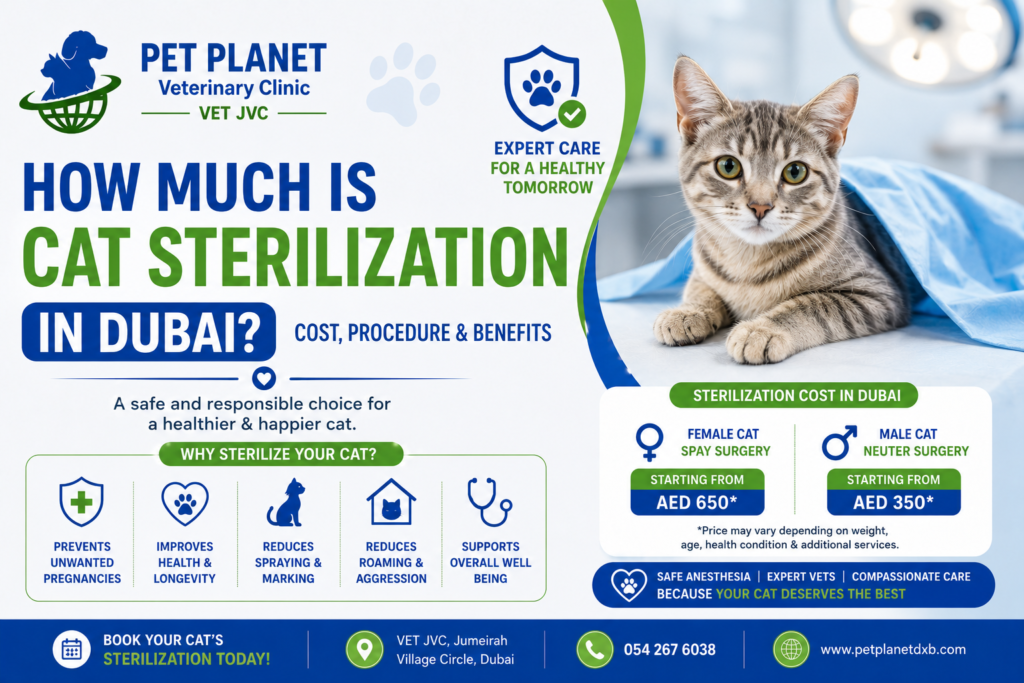
How Much Is Cat Sterilization in Dubai? Cost, Procedure & Benefits

If you are a cat owner in Dubai, one of the most important health decisions you can make for your pet is sterilization. Many pet parents search online asking, “How much is cat sterilization in Dubai?” because they want to understand the cost, safety, benefits, and recovery process before booking the procedure. Cat sterilization in Dubai can vary depending on factors such as whether your cat is male or female, the clinic, pre-surgical assessments, anesthesia, medication, and aftercare requirements. Beyond preventing unwanted litters, sterilization can significantly improve your cat’s long-term health and behavior. At Pet Planet Veterinary Clinic – VET JVC Dubai, experienced veterinarians provide professional cat sterilization procedures with compassionate care, safe anesthesia monitoring, and post-surgery guidance to help your cat recover comfortably. What Is Cat Sterilization? Cat sterilization is a surgical procedure performed to prevent reproduction. It is commonly recommended by veterinarians because it helps improve a cat’s health, reduces unwanted behaviors, and prevents accidental pregnancies. Depending on your cat’s gender, the procedure differs. Female Cat Sterilization (Spaying) Female cat sterilization is commonly called spaying. During the procedure, the veterinarian removes the reproductive organs, including the ovaries and usually the uterus. This prevents pregnancy and permanently stops heat cycles. Spaying can help reduce several health risks while also preventing unwanted breeding. Benefits of spaying female cats include: Preventing pregnancy Eliminating heat cycles Reducing loud mating behavior Lowering risk of uterine infections Helping prevent mammary tumors For many cat owners in Dubai, spaying provides peace of mind and helps improve indoor living conditions. Male Cat Sterilization (Neutering) Male cat sterilization is known as neutering or castration. The procedure involves removing the testicles to prevent reproduction. Neutering is generally quicker and less invasive than female sterilization. Benefits of neutering male cats include: Reduced spraying behavior Less territorial aggression Reduced roaming tendencies Lower chance of fights with other cats Prevention of unwanted breeding Male cats that are not sterilized are often more likely to wander outdoors, increasing the risk of injuries, infections, and accidents. How Much Does Cat Sterilization Cost in Dubai? One of the most common questions pet owners ask is “What is the cost of cat sterilization in Dubai?” The cost can vary depending on several medical and clinic-related factors. Generally, sterilization costs may differ based on: Male vs female cats Age and size of the cat Pre-surgical blood tests Type of anesthesia used Medication requirements Surgical complexity Post-operative care Female cat sterilization is usually more expensive because the procedure is more complex and involves abdominal surgery. Male cat neutering is typically simpler, requires less surgical time, and often involves faster recovery. When comparing clinics, it is important to consider more than price alone. Surgical safety, experienced veterinarians, proper anesthesia monitoring, and aftercare are equally important for your pet’s wellbeing. At Pet Planet Veterinary Clinic in JVC Dubai, veterinarians assess each cat individually and recommend the most appropriate treatment approach for safe and effective sterilization. What Factors Affect the Cost of Cat Sterilization? Several things can influence the final cost. 1. Gender of the Cat Female cats usually require a more detailed surgery. Spaying involves abdominal surgery, making it more time-intensive than male neutering. Male sterilization procedures are generally shorter and simpler. 2. Age of the Cat Kittens and adult cats may have different medical requirements. Older cats sometimes require additional health screening before surgery. 3. Pre-Surgical Blood Tests Veterinarians may recommend blood tests to ensure your cat is healthy enough for anesthesia. These tests help identify hidden health conditions before surgery. 4. Medication & Pain Management Pain management is an important part of recovery. Medication costs can vary depending on your cat’s needs. 5. Post-Surgery Care Some clinics include recovery monitoring and follow-up checks as part of the treatment package. Why Should You Sterilize Your Cat? Many pet owners think sterilization is only about preventing pregnancy, but the benefits go much further. Prevents Unwanted Litters One of the biggest reasons veterinarians recommend sterilization is population control. Cats reproduce quickly, and unexpected litters can become difficult to manage. Sterilization helps reduce the number of homeless and abandoned animals. Reduces Risk of Serious Diseases Sterilization may help reduce the likelihood of certain reproductive diseases. For female cats, spaying may lower the risk of: Uterine infections Ovarian disease Mammary tumors For male cats, neutering may reduce: Testicular disease Hormone-related problems Early sterilization is often associated with better long-term health outcomes. Helps Reduce Spraying & Marking Male cats frequently spray urine to mark territory. This behavior can become stressful for indoor pet owners. Neutering often helps reduce territorial marking and strong urine odors inside the home. Reduces Aggression Unsterilized cats may show more territorial or aggressive behavior. Sterilized cats are often calmer and less likely to fight. This can also lower the risk of injuries caused by cat fights. Prevents Roaming Cats driven by mating instincts may wander far from home. This increases risks such as: Road accidents Injuries Fights with stray animals Exposure to diseases Sterilized cats are generally less likely to roam long distances. Best Age for Cat Sterilization in Dubai Many pet owners ask: “When should I sterilize my cat?” Veterinarians usually recommend sterilization at an appropriate age depending on your cat’s breed, size, and overall health. Kittens Many kittens can be sterilized at a young age once they reach suitable health and weight milestones. Early sterilization may help prevent behavioral issues before they begin. Adult Cats Adult cats can still safely undergo sterilization. Even older cats may benefit from the procedure after veterinary evaluation. Female Cats in Heat Some owners wait until their female cat enters heat, but this may increase unwanted behavior such as loud vocalization and restlessness. Veterinarians can advise on the safest timing. Pregnant Cats In some situations, veterinarians may discuss available options depending on the pregnancy stage and health status. A professional consultation is always recommended. What Happens During Cat Sterilization Surgery? Many cat owners feel nervous before surgery. Understanding the process can help reduce anxiety. Step 1 – Pre-Surgical Examination Before surgery,

How Much Is Cat Sterilization in Dubai? Cost, Procedure & Benefits Read More »

rabies titer test for cats in Dubai

Rabies Titer Test for Cats in Dubai: Process, Cost & Requirements

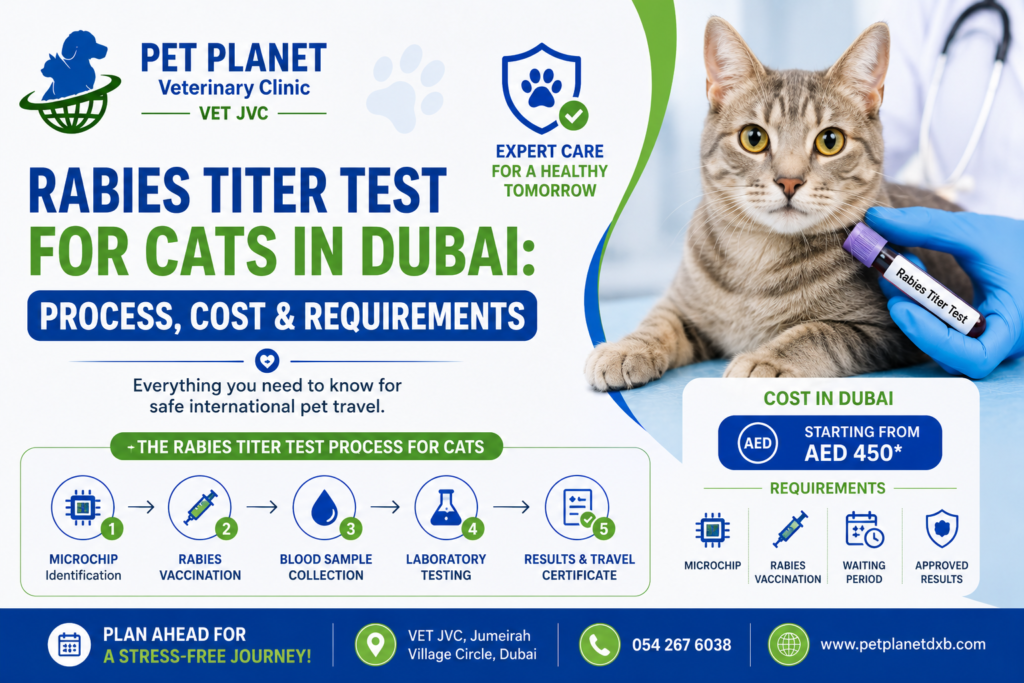
Pet relocation can be exciting, but if you are planning to travel internationally with your cat, there is one important requirement you should not overlook—the rabies titer test for cats in Dubai. Many countries have strict pet import laws to prevent the spread of rabies, and a rabies antibody blood test is often mandatory before your cat can legally enter the destination country. A rabies titer test checks whether your cat has developed enough antibodies after receiving a rabies vaccination. It is commonly required for international pet travel to countries such as Australia, New Zealand, Japan, and several European nations. Understanding the process, cost, timeline, and travel requirements can help avoid delays, rejected travel applications, or quarantine complications. At Pet Planet Veterinary Clinic in JVC Dubai, veterinarians assist cat owners with pet vaccinations, travel documentation, blood testing, and international pet relocation requirements to help ensure a smooth journey for both pets and owners. What Is a Rabies Titer Test for Cats? A rabies titer test, also known as a rabies antibody test, is a laboratory blood test used to measure the level of rabies antibodies in your cat’s bloodstream after vaccination. The main purpose of the test is to confirm that your cat has developed sufficient immunity against rabies. Many countries require this proof before allowing pets to enter because rabies is considered a serious infectious disease that can spread between animals and humans. Unlike a standard vaccination appointment, the rabies titer test does not vaccinate your pet. Instead, it confirms whether the vaccine already administered has produced enough protective antibodies. In simple terms: Rabies vaccine = ProtectionRabies titer test = Proof of protection Why Is the Rabies Titer Test Important? Several rabies-free or rabies-controlled countries have strict biosecurity regulations. These countries want evidence that imported cats are protected against rabies and do not pose a health risk. Without an approved rabies titer test certificate, your cat may face: Entry refusal Mandatory quarantine Delayed travel approval Additional testing requirements Airline restrictions For this reason, cat owners in Dubai planning overseas relocation should start the rabies titer testing process well in advance. Why Do Cats Need a Rabies Titer Test? Cats usually require a rabies titer test when they are: Moving abroad permanently Relocating with family Traveling internationally Being imported/exported to restricted countries Joining owners for long-term overseas stays Some countries consider the rabies titer test mandatory for all pets arriving from specific regions, including the UAE. Countries That Commonly Require Rabies Titer Testing for Cats Depending on your travel destination, a rabies titer test may be mandatory. Country Rabies Titer Test Required Waiting Period Australia Yes 180 Days New Zealand Yes 180 Days Japan Yes Strict Timeline United Kingdom Depends on travel route Varies European Union Countries Often Required Varies Singapore Sometimes Required Case Dependent Each country has its own import protocol, which is why veterinary guidance is highly recommended before making travel arrangements. When Does Your Cat Need a Rabies Titer Test? Timing is one of the most important factors in successful pet relocation. Most countries require the rabies titer test to be completed months before travel, especially for destinations with strict biosecurity measures. Your cat may need a rabies titer test if: You Are Relocating Internationally? Families moving overseas often need complete travel health documentation for their pets. Your Cat Is Flying to a Rabies-Free Country Countries with zero rabies tolerance usually request antibody verification. You Are Applying for Pet Import Approval Many embassies or import departments ask for a rabies titer certificate before granting pet entry permission. Your Destination Country Has Waiting Period Rules Some countries require a waiting period after blood collection before travel is allowed. For example, Australia typically requires planning at least 6 months ahead. Rabies Titer Test Process for Cats in Dubai (Step-by-Step) Understanding the process can help pet owners avoid mistakes and prepare properly. Step 1 – Microchipping Your Cat Before anything else, your cat must have a valid ISO-compliant microchip. The microchip acts as permanent identification and links all medical records, vaccinations, and laboratory test results to your pet. Most countries require: ISO standard microchip Scan verification Matching medical documents If your cat is vaccinated before microchipping, some countries may reject the vaccination history. This is why veterinarians usually recommend: Microchip first → Rabies vaccination second → Blood test third Step 2 – Rabies Vaccination Your cat must receive an approved and up-to-date rabies vaccine before blood can be collected for antibody testing. Important requirements include: Vaccine must still be valid Waiting period after vaccination may apply Booster shots may be required in some cases If the rabies vaccination has expired, the testing process may need to restart. Veterinarians in Dubai generally assess: Vaccination history Booster timing Travel timeline Country-specific regulations Step 3 – Blood Sample Collection Once the vaccination timeline is complete, a veterinarian will collect a blood sample from your cat. The procedure is: Quick Safe Minimally invasive Usually stress-free During the appointment: Microchip is scanned Vaccination record is reviewed Blood sample is collected Documents are prepared for laboratory submission The sample is then prepared for specialized rabies antibody testing. Step 4 – Laboratory Testing The blood sample is sent to an approved laboratory for analysis. The laboratory checks whether your cat’s rabies antibody level meets international import requirements. Most countries accept antibody levels of: 0.5 IU/ml or higher This confirms that your cat has adequate immunity protection against rabies. Laboratory processing time can vary depending on: Destination country Testing laboratory Courier logistics Documentation requirements Step 5 – Receiving the Rabies Titer Certificate After testing, you will receive an official laboratory report showing the antibody level. This certificate becomes an important travel document and may be required for: Airlines Government approvals Import permits Customs clearance Veterinary inspections The certificate should always be kept with your cat’s travel documents. Rabies Titer Test Cost for Cats in Dubai One of the most common questions pet owners ask is: “How much does a rabies titer test for cats cost in Dubai?”

Rabies Titer Test for Cats in Dubai: Process, Cost & Requirements Read More »

Puppies Get Their First Vaccine

When Should Puppies Get Their First Vaccine?

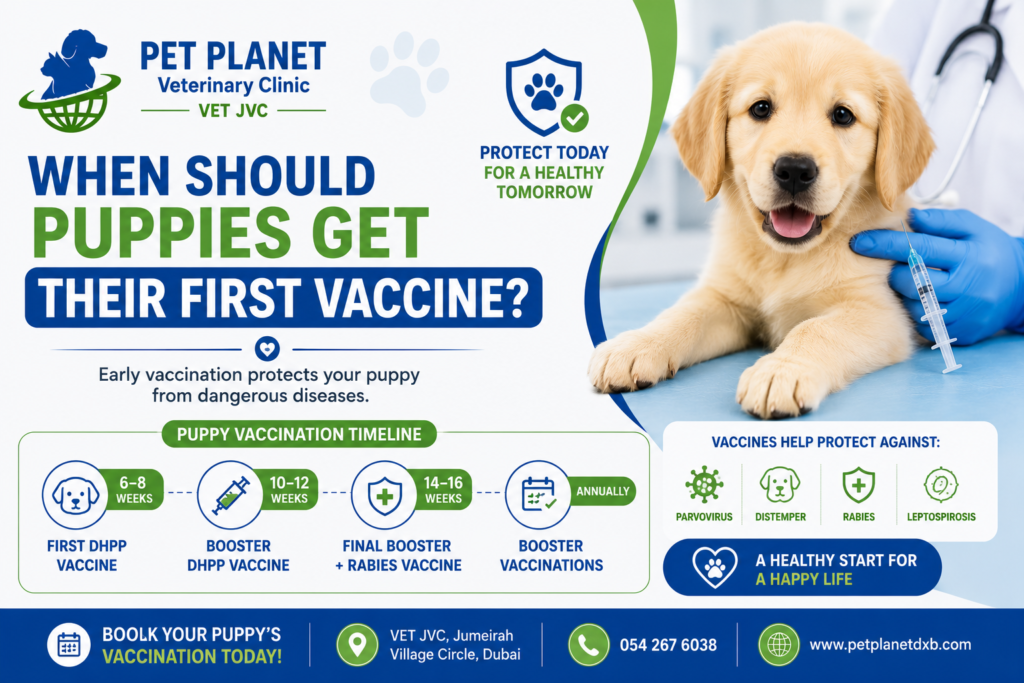
Bringing home a new puppy is an exciting experience, but it also comes with important responsibilities — and one of the most essential is vaccination. Puppies are highly vulnerable to infectious diseases during the first few months of life because their immune systems are still developing. Early vaccination helps protect them from serious illnesses that can become life-threatening if left untreated. Many new pet owners ask, “When should puppies get their first vaccine?” Understanding the right vaccination timeline can help your puppy grow into a healthy and protected adult dog. At Pet Planet Veterinary Clinic – VET JVC, we provide personalized puppy vaccination programs designed to protect your pet at every stage of early development. Our veterinary team helps puppy owners in Dubai understand vaccination schedules, booster shots, parasite prevention, and overall preventive care. Why Are Puppy Vaccines Important? Puppies are born with temporary immunity passed from their mother through nursing. However, this protection gradually weakens over time, leaving puppies vulnerable to dangerous infectious diseases. Vaccinations help stimulate your puppy’s immune system to safely recognize and fight harmful viruses and bacteria before they can cause serious illness. Puppy vaccines help protect against diseases such as: Parvovirus Distemper Rabies Hepatitis Leptospirosis Kennel cough Without vaccination, puppies face a much higher risk of severe illness, hospitalization, and even death from preventable diseases. Vaccination also helps reduce the spread of contagious diseases among pets in the community. When Should Puppies Get Their First Vaccine? Most puppies should receive their first vaccine between 6 and 8 weeks of age. This timing is important because maternal antibodies begin to decrease during this stage of development. Once these antibodies fade, puppies become more susceptible to infections. The first vaccine helps begin building your puppy’s own immune protection against serious diseases. Veterinarians may adjust the vaccination schedule slightly depending on: Breed Lifestyle Health condition Exposure risk Previous medical history Starting vaccinations on time is essential for proper immune development and long-term disease prevention. What Vaccines Do Puppies Need First? DHPP Vaccine The DHPP vaccine is usually the first core vaccine given to puppies. It protects against: Distemper Hepatitis (Adenovirus) Parvovirus Parainfluenza These diseases can spread rapidly among unvaccinated dogs and may become fatal without treatment. The DHPP vaccine is considered one of the most important puppy vaccinations. Rabies Vaccine Rabies is a fatal viral disease that affects both animals and humans. In many areas, rabies vaccination is legally required and plays a critical role in public health protection. Veterinarians typically administer the rabies vaccine during later booster appointments based on local regulations and the puppy’s age. Leptospirosis Vaccine Leptospirosis is a bacterial disease that can affect both pets and humans. It may spread through: Contaminated water Wildlife exposure Infected urine This vaccine may be recommended depending on your puppy’s environment and lifestyle. Kennel Cough Vaccine The kennel cough vaccine helps protect against contagious respiratory infections often spread in: Boarding facilities Grooming salons Dog parks Training classes Social puppies may benefit from this vaccine early in life. Complete Puppy Vaccination Schedule Below is a general puppy vaccination timeline recommended by veterinarians. Puppy Age Recommended Vaccines 6–8 Weeks First DHPP Vaccine 10–12 Weeks Booster DHPP Vaccine 14–16 Weeks Final DHPP Booster + Rabies Annually Booster Vaccinations Some puppies may require additional vaccines depending on their health risks and lifestyle. At Pet Planet Veterinary Clinic – VET JVC, our veterinary team creates customized vaccination plans tailored to each puppy’s needs. Why Do Puppies Need Multiple Vaccine Boosters? Many puppy owners wonder why vaccines are given in several stages instead of just one injection. The reason is maternal antibodies. Although maternal antibodies provide temporary protection, they can also interfere with vaccines during early puppyhood. Booster vaccines are needed to ensure the puppy develops strong and lasting immunity once maternal protection fades. Booster vaccinations: Strengthen immune response Extend protection duration Improve long-term immunity Reduce infection risk Completing the full vaccination schedule is extremely important for proper disease protection. Can Puppies Go Outside Before Vaccination? Puppies should avoid high-risk public areas until their vaccination schedule is complete. Unvaccinated puppies are especially vulnerable to dangerous diseases like parvovirus, which can survive in the environment for long periods. Before full vaccination, it is best to avoid: Dog parks Public pet areas Contact with unknown dogs Shared water bowls Contaminated outdoor surfaces Safe socialization can still be introduced carefully in controlled environments with healthy vaccinated dogs. Your veterinarian can guide you on when it is safe for your puppy to explore public spaces. What Diseases Do Puppy Vaccines Protect Against? Parvovirus Parvovirus is one of the most dangerous viral infections in puppies. Symptoms include: Severe vomiting Bloody diarrhea Dehydration Weakness Loss of appetite Parvovirus spreads easily and can become fatal without aggressive treatment. Distemper Distemper affects multiple body systems, including: Respiratory system Nervous system Digestive tract Symptoms may include: Fever Coughing Neurological signs Seizures Vaccination is the best protection against distemper. Rabies Rabies attacks the nervous system and is almost always fatal once symptoms appear. Vaccinating pets against rabies helps protect both animals and people. Canine Hepatitis This viral disease affects the liver and can cause: Fever Abdominal pain Eye problems Liver damage Leptospirosis Leptospirosis is a bacterial infection that may lead to: Kidney disease Liver damage Fever Vomiting Vaccination reduces the risk of severe complications. What Happens During a Puppy Vaccination Appointment? A puppy vaccination appointment involves much more than a simple injection. At Pet Planet Veterinary Clinic – VET JVC, our veterinarians perform a full health assessment before vaccination. The appointment may include: Physical examination Weight monitoring Temperature check Parasite assessment Vaccine administration Nutrition guidance Deworming recommendations These visits also allow pet owners to discuss behavioral concerns, feeding, and preventive healthcare. Are Puppy Vaccines Safe? Puppy vaccines are generally very safe and are carefully developed to protect against serious diseases. Most puppies experience little or no discomfort after vaccination. Some mild temporary reactions may include: Sleepiness Mild swelling at injection site Reduced appetite Slight fever These symptoms usually resolve within a day or

When Should Puppies Get Their First Vaccine? Read More »

Vet Orthopedic Surgery

Emergency Orthopedic Surgery for Pets in Dubai

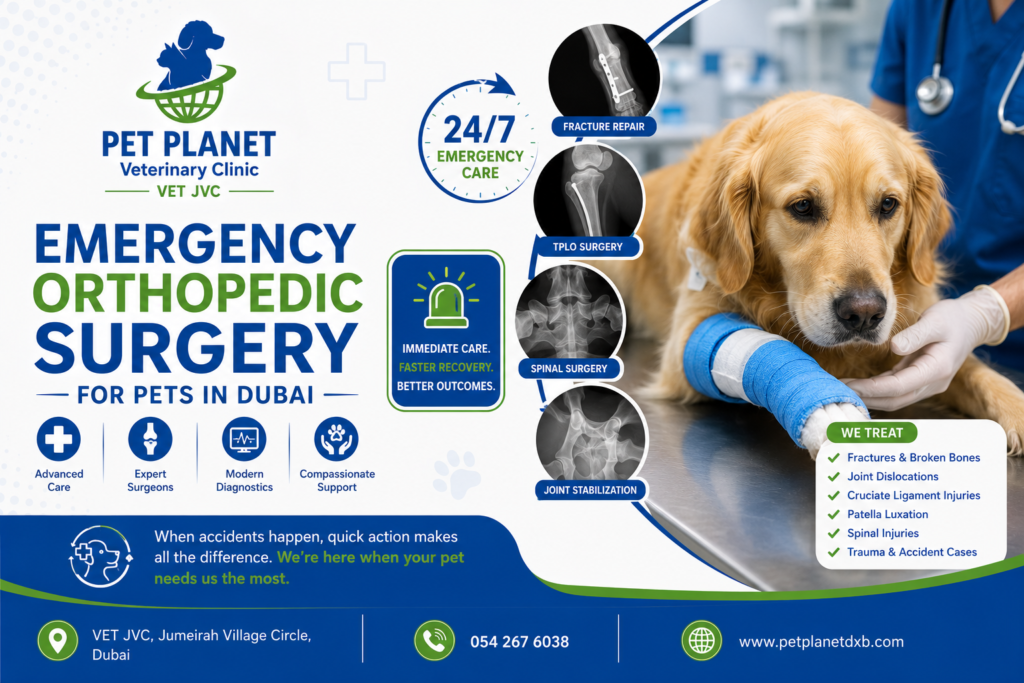
Orthopedic emergencies in pets can happen suddenly and without warning. Whether caused by a road accident, a fall, a sports injury, or trauma during play, orthopedic injuries often require immediate veterinary attention to prevent long-term complications. Broken bones, joint dislocations, spinal injuries, and ligament tears can cause severe pain and may permanently affect your pet’s mobility if not treated quickly. At Pet Planet Veterinary Clinic – VET JVC, we provide advanced emergency orthopedic surgery and trauma care for dogs and cats in Dubai. Our experienced veterinary team uses modern diagnostic imaging, advanced surgical techniques, and comprehensive post-operative care to help pets recover safely and comfortably. What Is Emergency Orthopedic Surgery for Pets? Emergency orthopedic surgery is a specialized branch of veterinary medicine focused on treating injuries affecting bones, joints, ligaments, muscles, and the spine. These procedures are often performed urgently after traumatic injuries to: Restore mobility Stabilize fractures Reduce pain Repair damaged joints Prevent long-term complications Orthopedic surgery may involve: Bone plating Pins and screws External fixation Ligament repair Joint stabilization Spinal decompression procedures Fast diagnosis and treatment significantly improve recovery outcomes. Common Orthopedic Emergencies in Pets Bone Fractures Fractures are among the most common orthopedic emergencies seen in veterinary clinics. Pets can suffer fractures from: Car accidents Falls from balconies or stairs Rough play Sports injuries Trauma Common fractures include: Leg fractures Pelvic fractures Jaw fractures Tail fractures Spinal fractures Symptoms of fractures may include: Severe limping Swelling Pain Inability to walk Visible deformity Prompt surgical stabilization is often necessary to ensure proper healing. Joint Dislocations Joint dislocations occur when bones move out of their normal position within a joint. Common dislocations include: Hip dislocation Elbow dislocation Knee dislocation Pets with dislocations often experience: Severe pain Swelling Sudden inability to use the limb Abnormal limb positioning Emergency treatment helps restore joint stability and reduce long-term arthritis risk. Cruciate Ligament Tears Cruciate ligament injuries are extremely common in dogs, especially active and larger breeds. This condition affects the knee joint and can cause: Sudden limping Difficulty standing Pain during movement Reduced activity Many dogs with cruciate ligament injuries require TPLO surgery (Tibial Plateau Leveling Osteotomy) or other orthopedic stabilization procedures. Patella Luxation Patella luxation occurs when the kneecap slips out of place. This condition may be congenital or caused by trauma. Common symptoms include: Skipping while walking Intermittent limping Difficulty jumping Knee pain Surgical correction may be required for severe cases. Spinal Injuries Spinal trauma is one of the most serious orthopedic emergencies in pets. Spinal injuries can occur after: Road traffic accidents Falls Blunt trauma Severe impact injuries Symptoms may include: Paralysis Weakness Difficulty walking Loss of bladder control Severe pain Emergency neurological evaluation and advanced imaging are critical for spinal injuries. Signs Your Pet Needs Emergency Orthopedic Care Pet owners should seek immediate veterinary attention if they notice: Sudden limping Inability to stand Severe swelling Visible bone deformity Dragging limbs Crying or vocalizing in pain Bleeding after trauma Refusal to bear weight Sudden paralysis Severe pain during movement Delaying treatment can worsen injuries and increase the risk of permanent complications. What Causes Orthopedic Injuries in Pets? Orthopedic injuries can happen for many reasons, including: Road Accidents Traffic accidents are a major cause of severe fractures and trauma in pets. Falls From Heights Cats and small dogs may suffer fractures after falling from balconies, stairs, or furniture. Sports & Play Injuries Active dogs may injure ligaments, joints, or bones during intense physical activity. Obesity Excess weight places additional stress on joints and increases injury risk. Age-Related Degeneration Older pets are more prone to arthritis, ligament weakness, and fractures. How Emergency Orthopedic Conditions Are Diagnosed At Pet Planet Veterinary Clinic – VET JVC, accurate diagnosis is the foundation of successful orthopedic treatment. Physical Examination Veterinarians first assess: Pain level Limb positioning Joint stability Neurological function Swelling and inflammation Digital X-Rays Digital X-rays are essential for diagnosing: Bone fractures Joint dislocations Spinal injuries Bone alignment problems X-rays also help veterinarians plan surgical procedures accurately. CT Scan & Advanced Imaging Advanced imaging may be recommended for: Complex fractures Spinal injuries Neurological conditions Surgical precision CT scans provide detailed images that improve treatment planning. Neurological Evaluation Pets with spinal trauma often require neurological assessment to determine: Nerve function Paralysis severity Surgical urgency Types of Emergency Orthopedic Surgery for Pets Fracture Repair Surgery Fracture repair surgery stabilizes broken bones using the following: Plates Screws Pins External fixators The goal is to restore normal bone alignment and healing. TPLO Surgery TPLO surgery is commonly performed for cruciate ligament injuries in dogs. This procedure: Stabilizes the knee joint Improves mobility Reduces pain Supports long-term recovery TPLO is considered one of the most effective surgical solutions for ACL injuries in dogs. Patella Luxation Surgery This procedure corrects kneecap instability by realigning the patella and stabilizing the joint. Joint Stabilization Procedures Joint stabilization surgery may be necessary for severe joint trauma or dislocations. Spinal Surgery Emergency spinal surgery may help relieve pressure on the spinal cord and improve neurological recovery. What Happens During Emergency Orthopedic Surgery? Orthopedic emergencies are managed carefully through multiple stages. Step 1: Emergency Assessment Veterinarians stabilize the pet and assess injuries. Step 2: Diagnostic Imaging X-rays or CT scans identify fractures and internal damage. Step 3: Pain Management & Stabilization Pain relief and emergency stabilization are provided before surgery. Step 4: Anesthesia Preparation The pet undergoes anesthesia monitoring and surgical preparation. Step 5: Surgical Repair Orthopedic surgeons repair fractures, stabilize joints, or perform ligament surgery. Step 6: Recovery Monitoring Pets are monitored carefully after surgery to ensure safe recovery. Step 7: Rehabilitation Planning Recovery plans include rest, medications, and rehabilitation exercises. Recovery After Pet Orthopedic Surgery Recovery is an important part of successful orthopedic treatment. Post-operative care may include the following: Pain medication Restricted activity Bandage care Rehabilitation therapy Follow-up examinations Pet owners play a major role in ensuring successful healing at home. How Long Does Recovery Take? Recovery times vary depending on the injury and surgical procedure. General Recovery Estimates: Minor injuries:

Emergency Orthopedic Surgery for Pets in Dubai Read More »

Best Pet Dental Cleaning

How Much Does Pet Dental Cleaning Cost in Dubai?

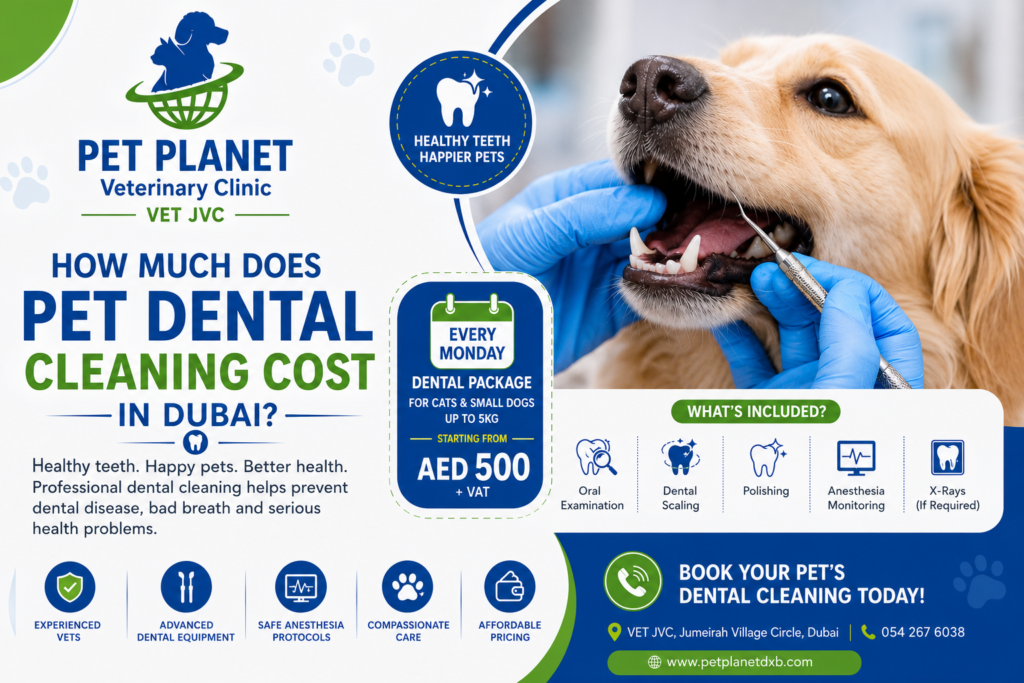
Pet dental health is one of the most overlooked aspects of pet care, yet it plays a major role in your pet’s overall health and wellbeing. Many dogs and cats in Dubai suffer from plaque buildup, tartar accumulation, gum infections, and periodontal disease without their owners even realizing it. Unfortunately, untreated dental disease can eventually lead to pain, tooth loss, bad breath, and even serious health complications affecting the heart, kidneys, and liver. One of the most common questions pet owners ask is, “How much does pet dental cleaning cost in Dubai?” The answer depends on several factors, including your pet’s size, dental condition, anesthesia requirements, and whether additional treatments such as extractions or dental X-rays are needed. At Pet Planet Veterinary Clinic – VET JVC, we believe preventive dental care should be accessible and affordable. That’s why we offer a special Monday pet dental cleaning package starting from AED 500 + VAT for cats and small dogs up to 5kg. In this guide, we’ll explain what pet dental cleaning includes, average costs in Dubai, factors affecting pricing, and why professional veterinary dental care is essential for your pet’s health. Why Is Pet Dental Cleaning Important? Dental disease is one of the most common medical conditions seen in pets. By the age of three, many dogs and cats already show signs of periodontal disease. Plaque and bacteria naturally accumulate on your pet’s teeth every day. If plaque is not removed, it hardens into tartar, leading to: Bad breath Gum inflammation Painful infections Tooth decay Bleeding gums Tooth loss Over time, oral bacteria can enter the bloodstream and affect major organs such as: Heart Kidneys Liver Routine dental cleaning helps prevent these complications and keeps your pet healthier and more comfortable. What Is Included in Pet Dental Cleaning? Professional Pet Dental Cleaning involves much more than simply brushing the teeth. Veterinary dental procedures are designed to thoroughly clean the mouth, identify hidden problems, and improve long-term oral health. Oral Examination The procedure usually begins with a detailed oral examination. Veterinarians assess the following: Teeth condition Gum health Signs of infection Loose or damaged teeth Plaque and tartar buildup This examination helps determine the severity of dental disease and whether additional treatment is required. Dental Scaling Dental scaling removes hardened tartar and plaque from the teeth using specialized ultrasonic equipment. Scaling includes: Cleaning above the gumline Deep cleaning below the gumline Removing bacteria buildup Reducing inflammation This is one of the most important parts of professional dental cleaning. Dental Polishing After scaling, the teeth are polished to smooth the tooth surfaces. Polishing helps reduce future plaque accumulation and keeps teeth cleaner for longer. Anesthesia Monitoring Professional pet dental cleaning is typically performed under anesthesia to ensure: Safety Comfort Thorough cleaning Reduced stress for pets Modern veterinary anesthesia is carefully monitored throughout the procedure by trained veterinary professionals. Dental X-Rays (If Required) In some cases, dental X-rays may be recommended to identify hidden dental problems such as: Root infections Bone loss Tooth fractures Impacted teeth Many dental diseases occur below the gumline and cannot be seen during a normal visual examination. How Much Does Pet Dental Cleaning Cost in Dubai? Pet dental cleaning costs in Dubai can vary depending on the clinic, your pet’s condition, and the complexity of treatment required. Generally, the cost may include: Oral examination Anesthesia Scaling and polishing Monitoring equipment Medications Dental X-rays if needed Average Pet Dental Cleaning Cost in Dubai Service Estimated Cost Basic Pet Dental Cleaning AED 500 – AED 1,500 Dental Scaling & Polishing AED 500 – AED 2,000 Tooth Extractions Additional Charges Dental X-Rays Additional Charges Advanced Dental Procedures Varies by Condition The final cost depends on the severity of dental disease and any additional procedures required. Affordable Monday Dental Package at Pet Planet Veterinary Clinic – VET JVC At Pet Planet Veterinary Clinic – VET JVC, we offer a special affordable dental cleaning package every Monday for: Cats Small dogs up to 5kg Package Price: AED 500 + VAT This package is designed to help pet owners maintain their pet’s oral health with affordable preventive dental care. Benefits of Our Monday Dental Package: Professional dental scaling Oral health examination Experienced veterinary team Safe anesthesia monitoring Modern dental equipment Preventive dental care support Appointments may be limited, so early booking is recommended. What Factors Affect Pet Dental Cleaning Cost? Several factors influence the cost of pet dental cleaning in Dubai. Pet Size Larger dogs generally require: More anesthesia Longer procedure times Additional medications This can increase the total treatment cost. Severity of Dental Disease Mild plaque buildup is easier and quicker to treat compared to advanced periodontal disease. Severe dental disease may require: Tooth extractions Antibiotics Additional dental procedures Follow-up treatment Anesthesia Requirements Safe anesthesia involves: Monitoring equipment Pre-anesthetic assessment Veterinary supervision Recovery monitoring High-quality anesthesia protocols are important for patient safety. Additional Procedures Some pets may require: Dental X-rays Blood tests Tooth extractions Pain medication Specialized oral surgery These procedures can increase the final treatment cost. Signs Your Pet May Need Dental Cleaning Many pets silently suffer from dental disease without obvious symptoms. Pet owners should watch for the following signs: Bad breath Yellow or brown tartar buildup Red or swollen gums Bleeding gums Drooling Difficulty chewing Reduced appetite Loose teeth Pawing at the mouth Mouth sensitivity If you notice any of these symptoms, it may be time for a professional dental examination. How Often Should Pets Get Dental Cleaning? Most pets benefit from professional dental cleaning once every year. However, some breeds are more prone to dental disease and may require more frequent cleanings. Routine veterinary dental checkups help identify problems early before they become severe and expensive to treat. Preventive dental care is often much more affordable than treating advanced periodontal disease. Is Anesthesia Safe for Pet Dental Cleaning? Many pet owners worry about anesthesia safety, especially for older pets. Fortunately, modern veterinary anesthesia is very safe when performed under professional supervision. At Pet Planet Veterinary Clinic – VET JVC,

How Much Does Pet Dental Cleaning Cost in Dubai? Read More »

Dog’s Breath Smells Bad

Why Does My Dog Have Bad Breath?

Many dog owners notice unpleasant odors coming from their dog’s mouth at some point. While mild “dog breath” can be normal occasionally, persistent bad breath is often a sign that something is wrong with your pet’s oral health or overall wellbeing. In many cases, bad breath in dogs is linked to dental disease, gum infections, plaque buildup, or even underlying medical conditions. At Pet Planet Veterinary Clinic – VET JVC, we regularly help pet owners identify the causes of bad breath in dogs and provide professional dental care to improve their pet’s health, comfort, and quality of life. In this guide, we’ll explain the most common causes of bad breath in dogs, when you should be concerned, and how professional veterinary dental care can help. Is Bad Breath in Dogs Normal? Occasional mild odor from your dog’s mouth may not always be a serious issue. For example, after eating certain foods or first thing in the morning, a slight smell can occur naturally. However, strong, persistent, or foul-smelling breath is usually not normal. Healthy dogs should not have severely unpleasant breath. If your dog’s breath smells rotten, fishy, metallic, or unusually strong, it could indicate dental disease, infection, or an underlying health condition that requires veterinary attention. Common Causes of Bad Breath in Dogs Poor Dental Hygiene The most common reason dogs develop bad breath is poor oral hygiene. Food particles, bacteria, and saliva combine to form plaque on the teeth. Over time, plaque hardens into tartar, which creates a strong odor and increases the risk of gum disease. Without regular dental care, bacteria continue to multiply inside the mouth, causing persistent bad breath and inflammation. Common signs include: Yellow or brown tartar buildup Red gums Difficulty chewing Mouth sensitivity Excessive drooling Regular brushing and professional dental cleanings are essential for maintaining canine oral health. Periodontal Disease Periodontal disease is one of the leading causes of bad breath in dogs. This condition affects the gums and supporting structures around the teeth. As bacteria spread beneath the gumline, infection and inflammation develop. If left untreated, periodontal disease can lead to: Bleeding gums Tooth loss Oral pain Bone damage Severe infection Many dogs silently suffer from dental pain without obvious symptoms, which is why regular veterinary dental checkups are extremely important. At Pet Planet Veterinary Clinic – VET JVC, our veterinary team performs comprehensive oral examinations to detect early signs of dental disease before they become severe. Tooth Decay or Broken Teeth Broken teeth, tooth fractures, or decayed teeth can expose sensitive nerves and create infections inside the mouth. These infections often produce a rotten or extremely foul odor. Dogs that chew hard objects such as bones, rocks, or hard toys are more likely to develop dental fractures. Signs may include: Pawing at the mouth Difficulty eating Swelling around the face Bleeding from the mouth Sudden refusal to chew food Prompt veterinary treatment is necessary to prevent worsening infection and pain. Something Stuck in the Mouth Sometimes bad breath occurs because a foreign object becomes trapped between the teeth or gums. Sticks, bones, hair, food debris, or fabric fibers can remain lodged inside the mouth and cause bacterial growth. This can lead to: Gum irritation Infection Swelling Mouth ulcers Severe odor A professional oral examination can identify hidden debris that may not be visible at home. Digestive Problems In some cases, bad breath may originate from digestive issues rather than the mouth itself. Gastrointestinal disorders, acid reflux, or stomach infections can contribute to unpleasant-smelling breath. Dogs with digestive problems may also experience: Vomiting Appetite loss Diarrhea Excessive gas Weight changes If dental disease is ruled out, veterinarians may investigate digestive health as a possible cause. Kidney Disease Kidney disease can cause a dog’s breath to smell like ammonia or urine. This occurs because toxins build up in the bloodstream when the kidneys are not functioning properly. Additional symptoms may include: Increased thirst Frequent urination Weakness Weight loss Loss of appetite Kidney disease is a serious medical condition that requires immediate veterinary evaluation. Diabetes Dogs with diabetes sometimes develop sweet-smelling or fruity breath due to ketone buildup in the body. Other signs of diabetes include: Excessive thirst Frequent urination Weight loss Increased hunger Fatigue If your dog’s breath suddenly changes and is accompanied by these symptoms, it is important to seek veterinary care promptly. Liver Disease Liver problems may also contribute to unusual breath odors. Dogs with liver disease can develop musty or foul-smelling breath along with symptoms such as: Vomiting Yellow gums or eyes Appetite loss Lethargy Weight loss A veterinary examination and blood testing can help diagnose underlying systemic diseases. Why Does My Dog’s Breath Smell Like Fish? Fishy-smelling breath in dogs is commonly associated with: Dental infections Severe tartar buildup Gum disease Anal gland issues Bacterial overgrowth Sometimes dogs lick their anal area excessively, transferring odor-causing bacteria into the mouth. However, persistent fishy breath should still be professionally evaluated to rule out oral disease. Why Does My Puppy Have Bad Breath? Puppies can also experience bad breath, especially during the teething stage. As baby teeth fall out and adult teeth emerge, mild odor may temporarily occur. However, severe bad breath in puppies can indicate: Retained baby teeth Oral infections Gum inflammation Foreign objects in the mouth Routine veterinary dental examinations help ensure healthy tooth development in young dogs. Signs Your Dog Needs a Veterinary Dental Checkup You should schedule a dental evaluation if your dog shows any of the following symptoms: Persistent bad breath Bleeding gums Swollen or red gums Loose teeth Difficulty chewing Drooling excessively Facial swelling Tooth discoloration Pawing at the mouth Sudden appetite changes Early treatment can prevent more serious dental complications and improve your dog’s comfort. How Veterinarians Diagnose Bad Breath in Dogs At Pet Planet Veterinary Clinic – VET JVC, diagnosing bad breath begins with a thorough oral and physical examination. Our veterinary team may recommend: Oral health assessment Dental X-rays Blood tests Gum examination Infection screening Evaluation for systemic diseases Dental X-rays are

Why Does My Dog Have Bad Breath? Read More »

🏡 Dental Care at Home

Why Dental Health Is Essential for Pets in Dubai When thinking about pet health, most owners focus on vaccinations, nutrition, and exercise. But one of the most common diseases in dogs and cats is dental disease  and it can silently affect their heart, kidneys, and overall well-being. At Pet Planet Veterinary Clinic in Dubai, we believe prevention is always better than cure. Let’s explore how to keep your pet’s teeth clean and healthy. 🏡 At-Home Dental Care for Dogs and Cats Brushing Your Pet’s Teeth https://youtube.com/shorts/RlD93CtUtM4?feature=share The gold standard of dental care is daily tooth brushing using pet-safe toothpaste (never human toothpaste). Flavours like poultry or fish make it more enjoyable for pets. 💡 Dr Abdelwahab’s Tip: Hold the brush at a 45° angle and focus on the outer surfaces of the upper molars, where tartar builds up the most.

🏡 Dental Care at Home Read More »

Worm Protection for Pets in Dubai

At Pet Planet Veterinary Clinic, Dubai’s leading veterinary care provider, we’ve helped over 5,000 pets overcome dangerous worm infestations. Our veterinary team, led by Dr Abdelwahab, shares this comprehensive guide to protect your furry family members.     Section 1: Dubai’s Most Common Pet Worms 1. Roundworms (Toxocara) Dubai Prevalence: 62% of puppies affected Risk Areas: Parks, beaches, and shared pet spaces Pet Planet’s Detection Method: Advanced fecal PCR testing 2. Tapeworms Hotspots: Jumeirah, Marina, and communities with stray cats Unique Risk: Flea transmission is 3x higher in coastal areas 3. Heartworms Dubai Alert: 30% increase in cases since 2022 Critical Prevention: Monthly chewables (ask about our ProHeart® program) Section 2: Warning Signs Every Dubai Pet Owner Should Know 🆘 Emergency Symptoms Coffee-ground vomit Sudden weight loss >10% Lethargy lasting >24 hours Section 3: Pet Planet’s Proven Protection Plan For Puppies/Kittens First deworming at 2 weeks Monthly treatments until 6 months Complimentary fecal exam at 12 weeks For Adult Pets Basic Protection: Quarterly treatments (AED 120/session) Premium Protection: Our VIP Wellness Package includes: Biannual faecal tests Flea/tick prevention 15% discount on all medications Section 4: Why Dubai Chooses Pet Planet Veterinary Clinic Our Advanced Services DNA-based worm detection Weight-adjusted dosing Multilingual veterinary staff

Worm Protection for Pets in Dubai Read More »

🚫 Forbidden Foods for Dogs & Cats

A Quick Guide for Pet OwnersPrepared by Dr. Abdel Wahab     ⚠️ Toxic Foods List 1. Chocolate Toxic to: Dogs & Cats Harmful ingredient: Theobromine & caffeine Dangers: Vomiting, diarrhea, seizures, death 2. Onions, Garlic, Leeks, Chives (Allium family) Toxic to: Dogs & Cats Form: Raw, cooked, powdered Dangers: Anemia, pale gums, weakness 3. Grapes & Raisins Toxic to: Mainly Dogs Dangers: Kidney failure, vomiting, lethargy 4. Xylitol (Artificial Sweetener) Toxic to: Dogs Found in: Sugar-free gum, candy, peanut butter, toothpaste Dangers: Low blood sugar, liver failure, seizures 5. Alcohol & Raw Dough Toxic to: Dogs & Cats Dangers: Ethanol poisoning, bloating, tremors, coma 6. Caffeine (Coffee, Tea, Energy Drinks) Toxic to: Dogs & Cats Dangers: Rapid heart rate, restlessness, tremors, seizures 7. Cooked Bones Dangerous for: Dogs & Cats Dangers: Choking, digestive tract tears, blockages 8. Milk & Dairy Products Problematic for: Many adult pets Dangers: Diarrhea, bloating (due to lactose intolerance) 9. Fatty Meats, Skin & Grease Dangerous for: Dogs & Cats Dangers: Pancreatitis, vomiting, abdominal pain 10. Raw Meat, Eggs, or Fish (Without Vet Guidance) Risk: Bacteria (Salmonella, E. coli), nutrient deficiency Cats: Raw fish destroys thiamine → neurological issues ✅ Safe Foods for Humans in Small Quantities Plain cooked chicken or turkey (no seasoning) Carrot sticks or cucumber slices Apple slices (no seeds) Green beans Vet-approved treats 🧠 Final Tips Never give human food without checking safety first Avoid sharing sweets, sauces, or leftovers Keep all harmful foods out of reach Read ingredient labels carefully

🚫 Forbidden Foods for Dogs & Cats Read More »